

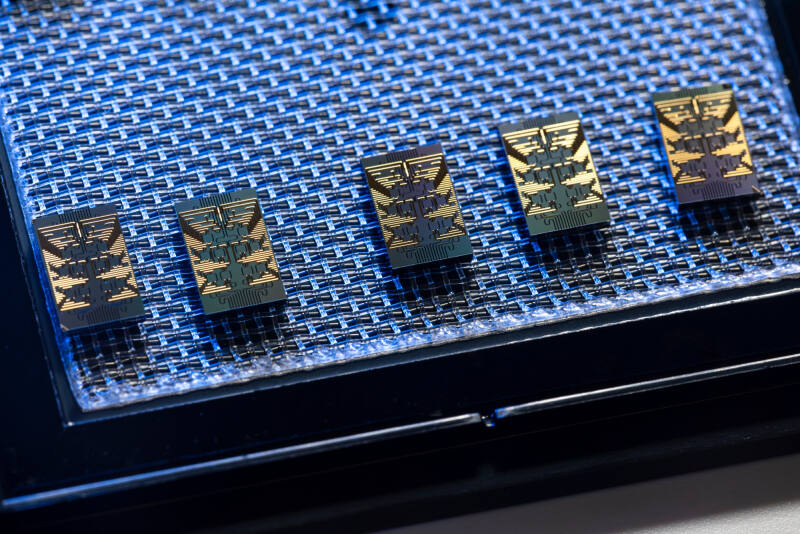
Cisco has unveiled a prototype Universal Quantum Switch to link quantum computers and sensors from different vendors into one coherent network, moving entangled photons while preserving their quantum state. The pitch is simple and ambitious: if quantum hardware is going to scale beyond lab demos, it will probably need to interoperate more like conventional data center gear and less like a collection of fragile one-off experiments.
The company is targeting one of the field’s ugliest bottlenecks. Most quantum systems only talk to others that use the same encoding scheme, which makes a multi-vendor network awkward at best. Cisco’s answer is a conversion system that translates between the main quantum modes on the fly, so a machine built on one architecture can work with another without either side being redesigned.
What the Universal Quantum Switch actually does
Cisco says the prototype can handle the four main encoding methods used in quantum systems: polarization, time, frequency, and path. It is designed to switch dynamically between them, and the company says it has been tested with polarization so far. That matters because the broader quantum market is still splintered across rival hardware approaches, from neutral atoms to trapped ions and photonic systems, none of which has yet emerged as the obvious winner.
Unlike a lot of quantum hardware that still leans on specialized environments, this switch runs at room temperature, on telecom frequencies, over standard fiber-optic cable. No cryogenic circus. No exotic infrastructure. Cisco is clearly trying to make the product look like something an operator could imagine living inside an existing data center rather than a science museum exhibit.
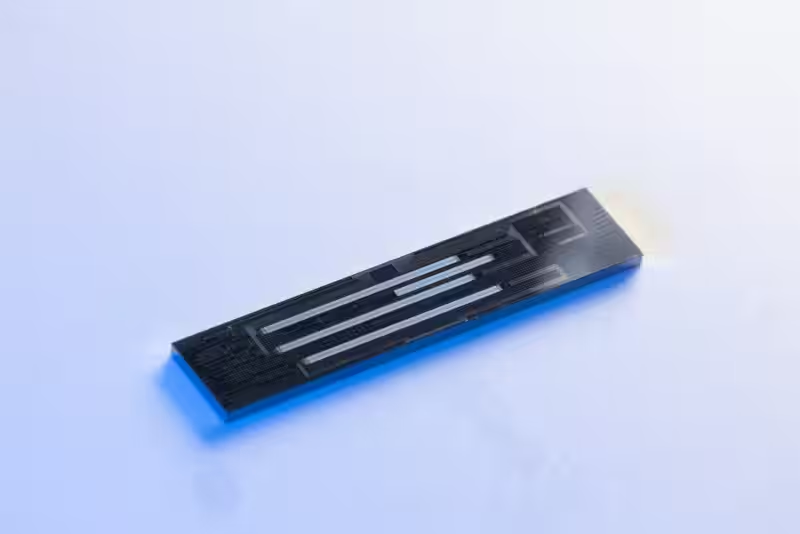
Why quantum networking is becoming the real fight
The larger problem is scaling. Quantum machines are already being used as specialized coprocessors for certain hard problems, but the long-term promise depends on reaching systems with millions of qubits. That is hard to do with a single monolithic machine, so the industry is drifting toward a networked model: connect multiple quantum computers, possibly from different vendors, and make them behave like one system.
That strategy also gives Cisco a cleaner commercial story than chasing a single dominant quantum architecture. If the market stays fragmented – and right now it very much looks that way – the company does not need to pick a winner. It can sell the plumbing.

Cisco Quantum Labs is building the stack
Cisco says the switch is part of a broader Quantum Labs effort that spans chips, protocols, and applications. The company also says the current reach is up to 100 km outside data centers, with the implication that distance should become less of a constraint over time. That is the sort of claim every networking vendor makes before physics gets a vote, but the direction is clear enough: quantum networking is moving from theory toward infrastructure.
Last year, Cisco showed a prototype quantum networking chip for generating entangled photons, aimed at scaling systems by linking quantum processors into a shared fabric. The new switch pushes that idea further. If Cisco can make heterogeneous quantum gear cooperate reliably, it could become one of the few companies selling something the entire sector needs, regardless of which hardware camp wins the race.