

NASA has shared a striking iPhone video from Artemis II that turns a familiar space milestone into something more intimate: Christina Koch, floating in Orion, lit by Earthshine as the spacecraft cruised roughly 33,800 miles (54,500 km) from home. It is a neat reminder that the best camera in the room is sometimes the one already in your pocket – even when the room is a capsule heading around the Moon.
The clip was captured on the mission’s second flight day and shows Koch’s face glowing in reflected sunlight from Earth before she pivots the phone toward the window. The result is part astronaut selfie, part deep-space postcard, and exactly the kind of footage NASA knows how to weaponize in public outreach: human, dramatic, and just technical enough to make people stop scrolling.
What the Artemis II iPhone clip shows
Earthshine is the effect at work here: sunlight bounces off Earth and lights the Orion cabin from outside the frame. That makes the video more than a pretty space shot. It captures how much of lunar missions is still about the basics – light, reflections, timing – even when the hardware is as advanced as Orion.
- Mission: Artemis II
- Subject: astronaut Christina Koch
- Camera: iPhone
- Distance from Earth: roughly 33,800 miles (54,500 km)
Why NASA keeps leaning on iPhone footage
NASA has been increasingly happy to show that off-the-shelf consumer tech belongs in serious missions, and that has a useful side effect: it makes the Artemis program feel less like a distant contractor brochure and more like a lived experience. Space agencies have long understood the value of visual proof – Apollo had stills, the Shuttle era had camcorders, and now the iPhone gets its moment in orbit.
That also helps explain why the clip traveled quickly on social platforms. A clean, emotionally readable image does what press releases cannot: it gives the mission a face, literally. And if the Moon race is as much about public patience as propulsion, that matters a lot.
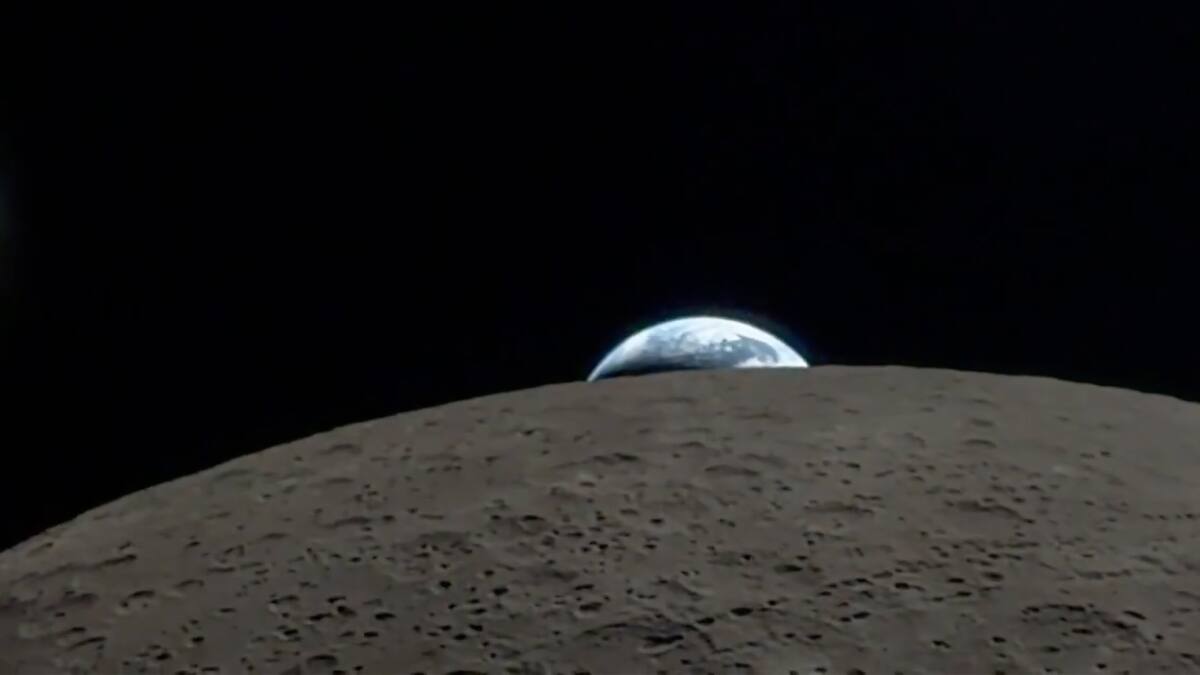
NASA’s Artemis II Earthshine image
Expect NASA to keep pushing this kind of material as Artemis II moves forward. The agency is competing not just with other space programs, but with the attention span of anyone who can swipe past a launch in half a second. A video like this buys something rare: a few extra seconds of awe.