

Samsung has added a hood-integrated induction cooktop to its Infinite Line home appliance lineup in South Korea, and the pitch is pretty straightforward: fewer kitchen fixtures, more cooking power, and a cleaner-looking open-plan setup. The new model tops out at 7,400W when all burners are running, which is the sort of spec-sheet bragging right that matters if you actually cook instead of just posing near a ceramic pan.
Infinite Line cooking features
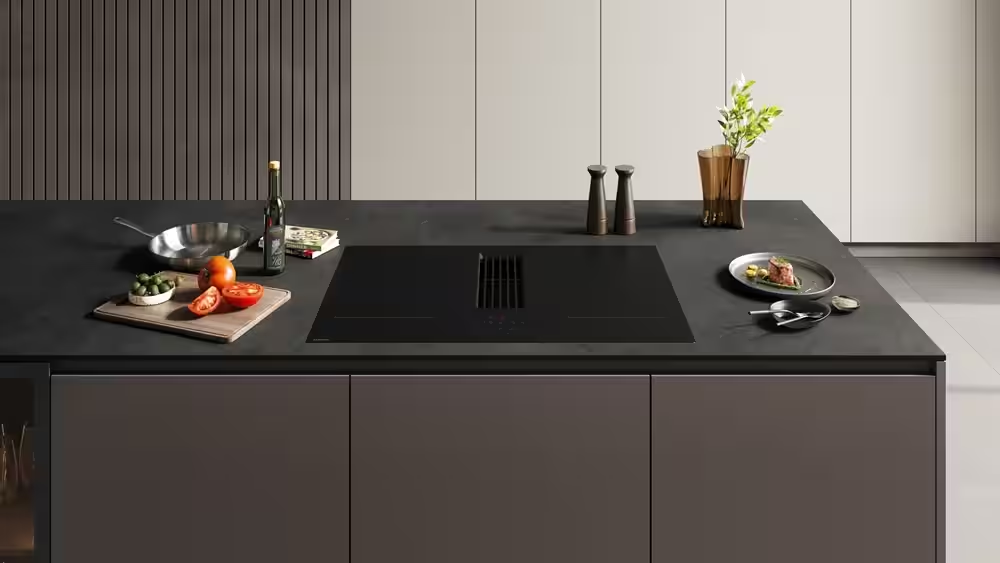
The cooktop uses an ”All Flex Zone” layout, which means burners are not locked into a rigid, old-school grid. Samsung pairs that with nine heat levels, a boost function and a ”Keep Warm” mode, so the appliance is aimed as much at convenience as it is at raw output. Built into the design is Samsung’s matte-finish ”Infinite Glass,” keeping the premium look consistent with the rest of the range.
There is also a practical reason this kind of product keeps showing up: ceiling-mounted hoods are still common, but they are not exactly friendlier to open kitchens or compact urban homes. Integrated extraction has become a familiar move from premium rivals in Asia and Europe, because once the hood disappears from overhead, the room can feel bigger even if the price tag does not get smaller.
How the integrated hood works
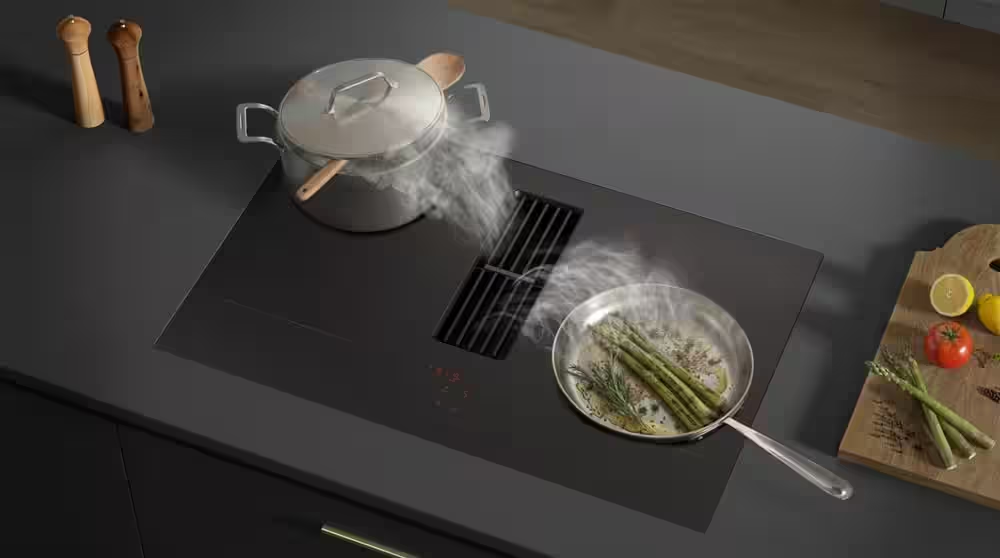
Samsung says the hood pulls smoke and odour from between the burners, and it uses a four-stage filtration system to do it. That includes a grill to block larger objects, a tray for spilled oil, a grease filter for oil droplets, and a deodoriser for smells. The company also says the hood has a Smart Mode that detects pollution levels and adjusts suction speed automatically.
That automatic behavior is the kind of feature that sounds minor until you have to babysit it yourself. Sensor-driven ventilation is becoming a standard premium-appliance trick because it reduces friction, and it also gives brands a way to claim intelligence without leaning too hard on app-driven gimmicks nobody asked for.
Samsung Infinite Line price in South Korea
Samsung says the induction cooktop carries Grade 1 efficiency. In South Korea, it is priced at KRW 4.79 million, or $3,234. If you want the duct version, the price rises to KRW 4.989 million, or $3,368.
- Heat output: up to 7,400W with all burners in use
- Cooking controls: nine levels, plus boost and Keep Warm
- Extraction: 4-stage filtration with Smart Mode
- Finish: matte ”Infinite Glass”
- Price: KRW 4.79 million, or KRW 4.989 million with duct
The obvious question is whether Samsung keeps this product confined to its home market or expands it into more regions where luxury kitchens are already a battleground for built-in appliances. If it does, the real competition will not just be with ovens and hobs, but with the brands that have spent years convincing buyers that invisible ventilation is worth paying a premium for.