

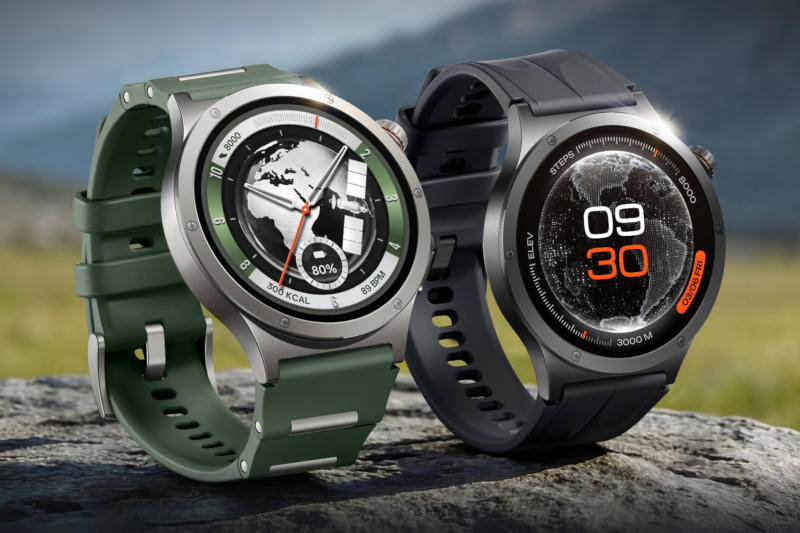
OnePlus has shown the Watch 4, a new smartwatch running Wear OS 6, but the headline feature is not a fresh chip or a radical redesign. The company has kept the same Qualcomm Snapdragon W5 and BES 2800 setup used in the previous generation, making this feel more like a careful refresh than a clean break.
That approach is very OnePlus: improve the polish, keep the platform stable, and avoid spending silicon budget where it may not be needed. It is also a reminder that smartwatch upgrades are increasingly about display, battery life, and software rather than raw processor bragging rights.
Titanium body, brighter display
The OnePlus Watch 4 comes in a titanium alloy case measuring 47.4 × 47.4 × 11 mm and weighing about 43 g without the strap. On the front is an LTPO OLED panel with a 466 × 466 resolution, 310 pixels per inch, and sapphire protective glass. Peak brightness reaches 600 cd/m² in normal use and 3000 cd/m² in sports mode, which should help outdoors far more than a minor chip bump would.
Battery life and connectivity
Inside, the watch carries 2 GB of RAM, 32 GB of storage, and a 646 mAh battery. OnePlus says that is good for three days in intensive use or 16 days in power-saving mode, which is the kind of claim that will matter more to buyers than another line in a spec sheet. Wear OS watches still live or die on endurance, and that has been true since Google decided battery anxiety was a personality trait.
- Bluetooth 5.2
- Wi-Fi 2.4 GHz and 5 GHz
- NFC
- Dual-band GNSS L1+L5
- No eSIM support

Rugged specs, same old chip
The OnePlus Watch 4 is rated for 5 atm, roughly 50 m of water resistance, and also carries IP69, IP68, and MIL-STD-810H protection. Software duties are split between Google Wear OS 6.0, based on Android 16, and Oxygen OS Watch 8. The color options are Evergreen Titanium and Midnight Titanium.
What OnePlus has not said yet is just as interesting: price and release date are still unannounced. That leaves the Watch 4 in an awkward but familiar spot for the company, with the hardware public and the business case still waiting in the wings. If OnePlus prices it aggressively, this could be a strong alternative to Samsung’s and Google’s own watches; if not, the unchanged chip will be the first thing critics circle with a smile.