

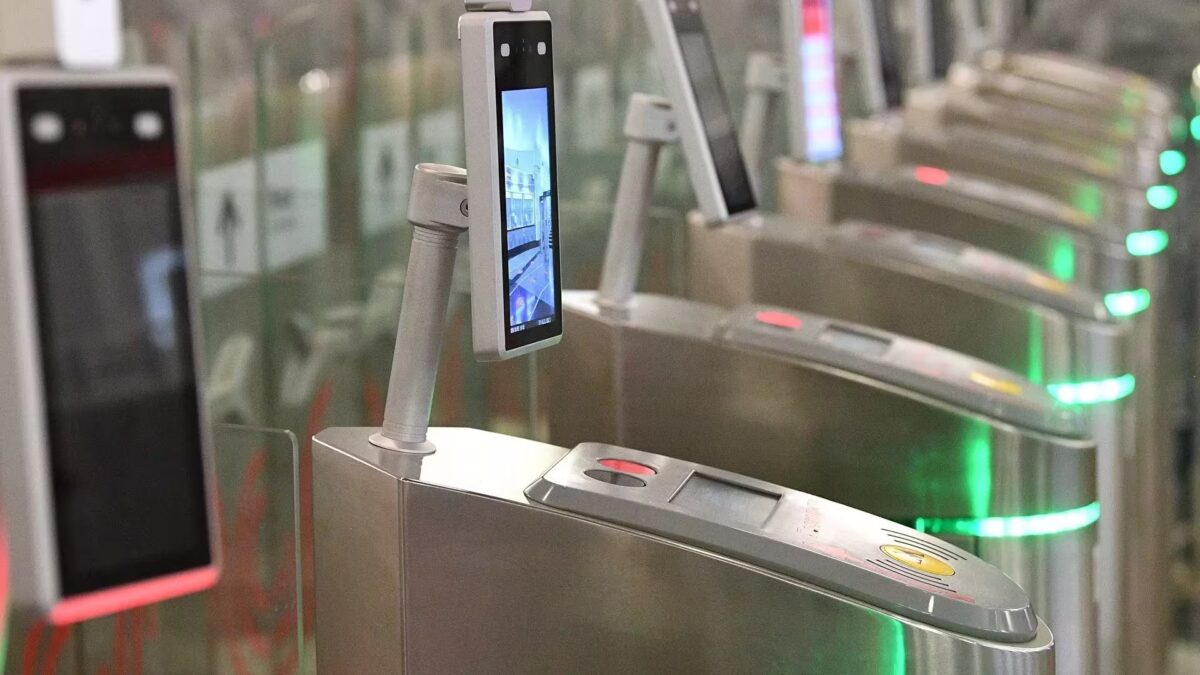
Imagine standing at the checkout in a Russian grocery store without your phone or wallet-and still paying simply by looking at the terminal’s camera. Far from a niche tech trick, biometric payments have exploded across Russia, with nearly 200 million transactions recorded in 2025 alone.
Data from Forbes shows that Russian consumers completed almost 146 million biometric payments in just the first three quarters of 2025, with transaction volume jumping from 21.6 billion to 112.6 billion rubles. By year’s end, the total hit 195.6 million payments-six times more than the previous year. This biometric payment technology has moved past early adopters and into the mainstream.
How biometric payments work in Russia
Russia operates two parallel biometric payment systems, both relying on the country’s centralized biometric database.
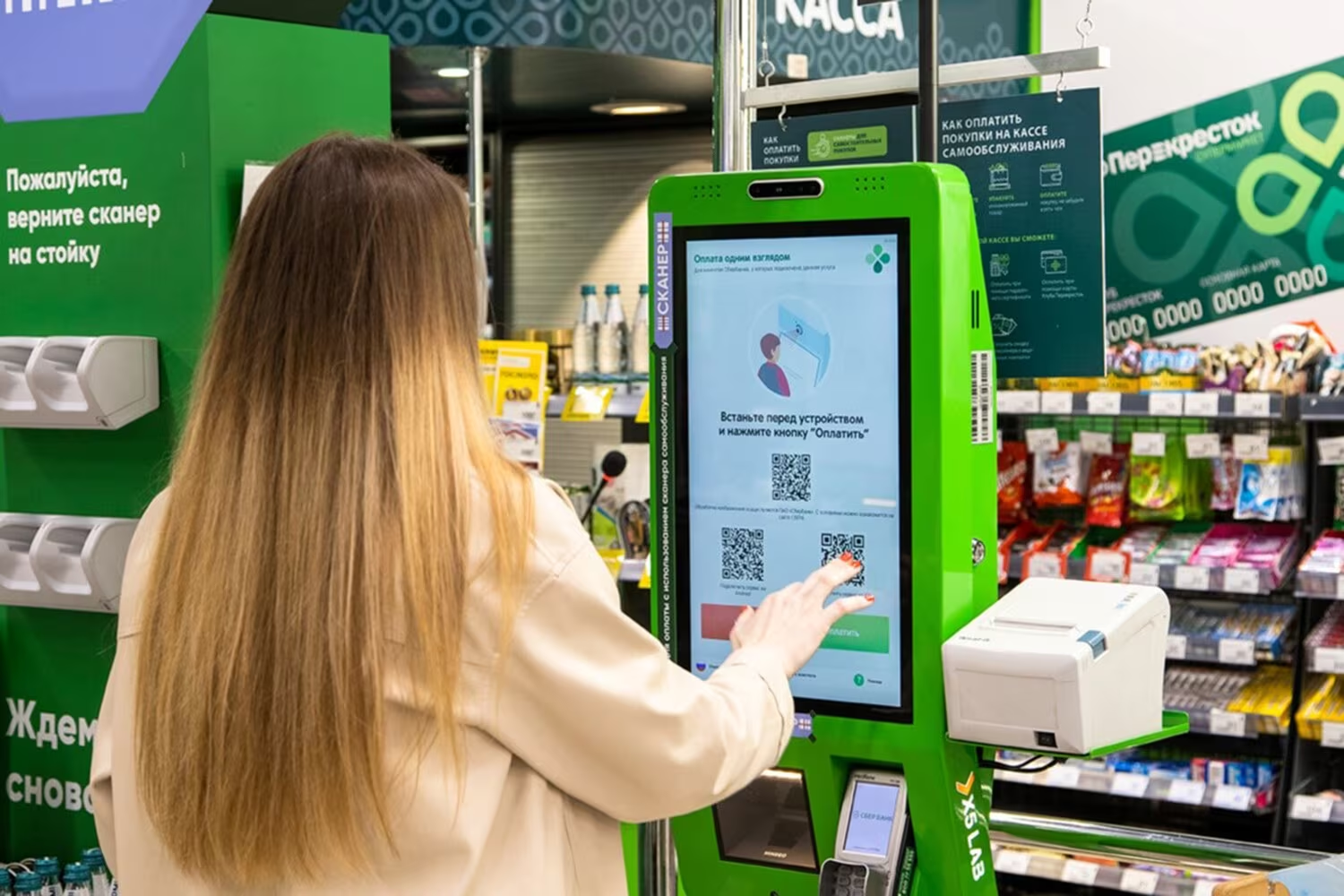
Sberbank’s ”Smile to Pay” launched in summer 2023. The process is simple: approach a terminal, confirm the amount on screen, select ”Pay with a smile,” look at the camera-and the payment is done. By the end of 2025, Sberbank installed about 2 million such terminals nationwide-roughly half of all payment terminals in Russia.
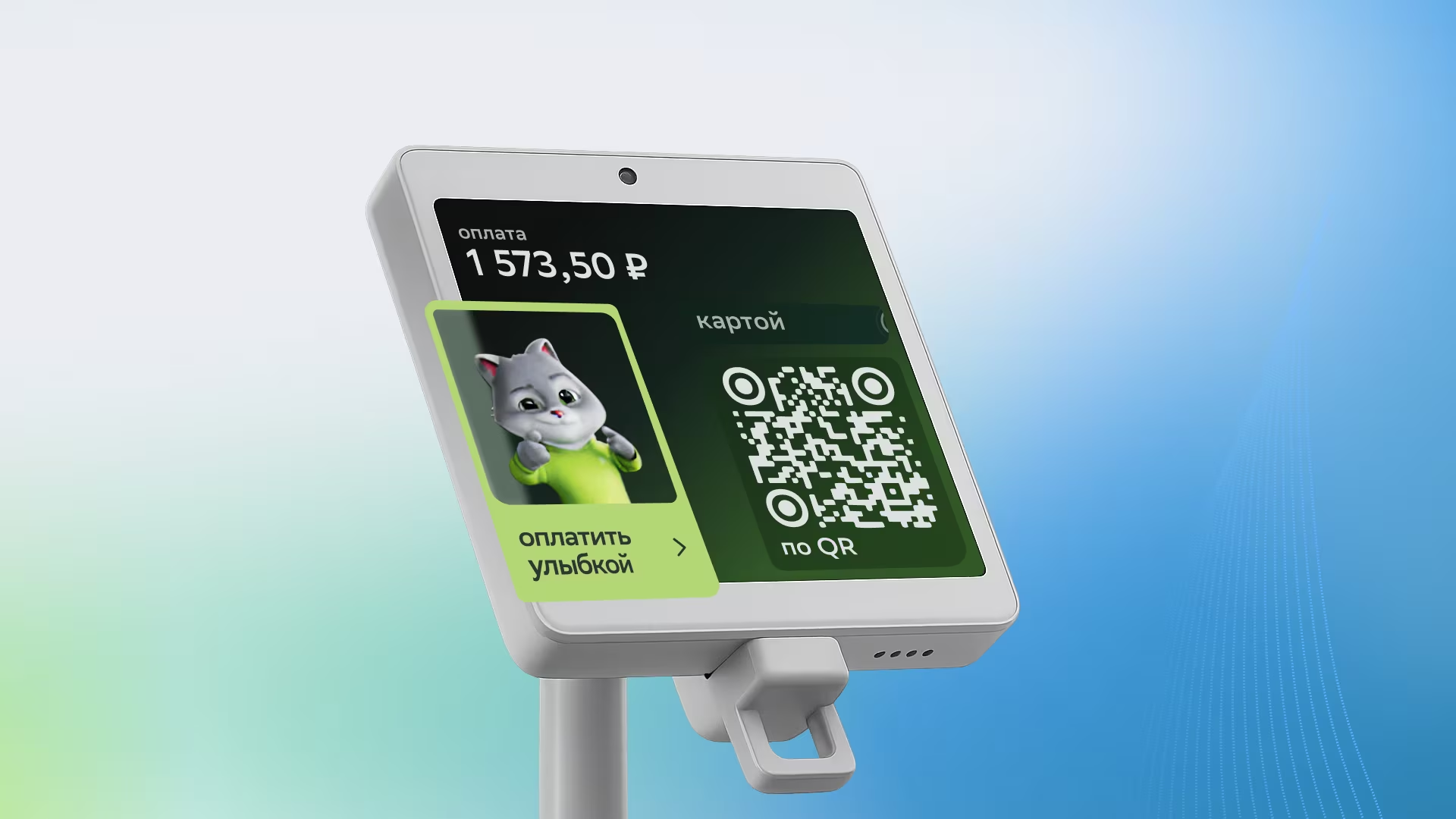
National System of Payment Cards (NSPK) Bioacquiring provides an interbank biometric payment network independent of Sberbank. By late 2025, 15 companies-including major banks like T-Bank-had joined. Users pay with their face, and payments debit cards from any participating bank.
Both systems leverage Russia’s Unified Biometric System (EBS), a government-run centralized database. When a customer’s face is scanned, the terminal sends the image to EBS, which compares it against stored biometric data and returns a yes/no authentication response-usually in under a second. Despite the ”Smile to Pay” branding, no smiling is actually needed.
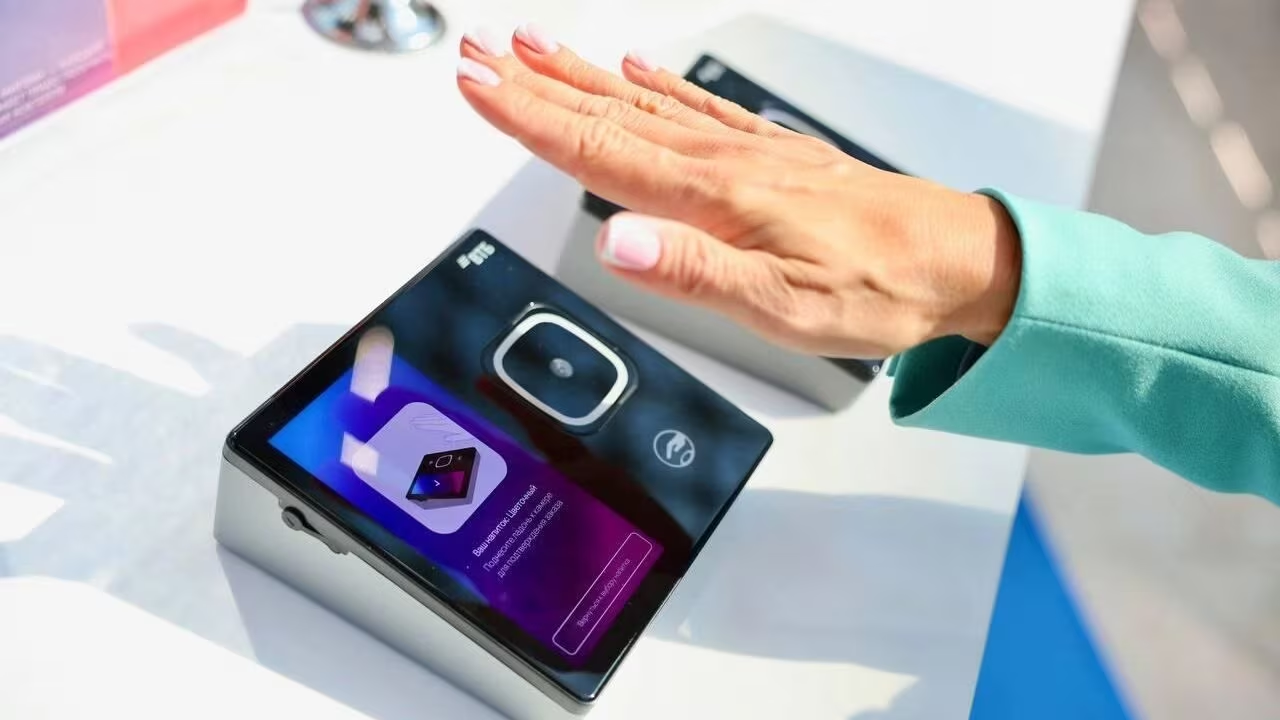
Palm vein payments are currently in development. Sberbank showcased this tech at Finopolis 2025, with plans to launch in 2026. The scanner reads vein patterns beneath the skin, a significantly more secure marker than facial features since veins cannot be photographed or publicly shared.
Locations accepting biometric payments in Russia
Shoppers commonly use biometric payments in outlets like Krasny & Bely (Red & White), VkusVill, Bristol, Fix Price, Lenta, Spar, and April pharmacies. Top chains like Pyaterochka and Perekrestok offered facial payment terminals in 4,100 stores nationwide by the end of 2025.
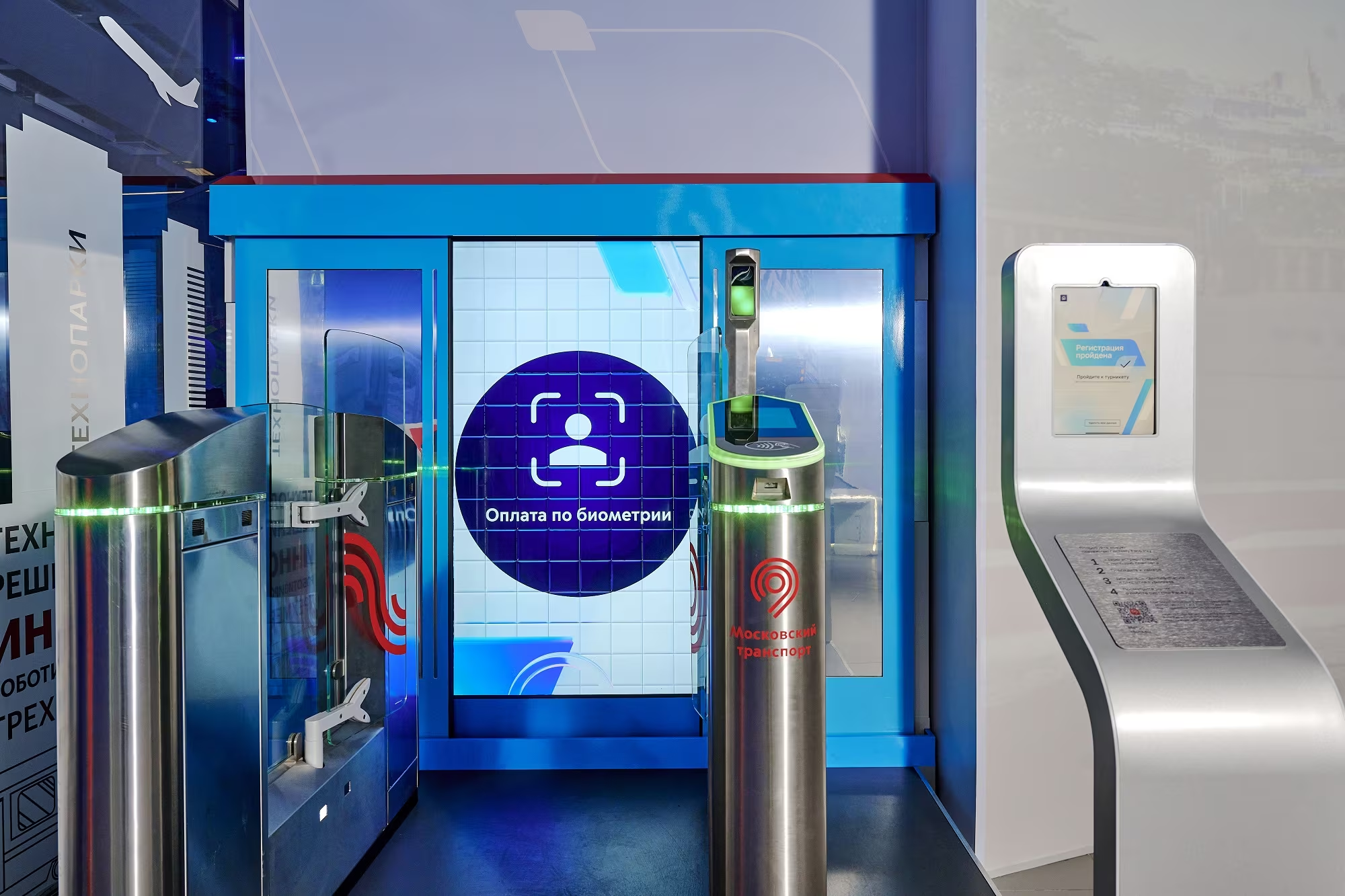
Beyond retail, biometric payments have moved into aviation and transport. Aeroflot tested facial recognition for boarding, while metro systems in Yekaterinburg and Nizhny Novgorod allow passengers to pay with their face-without cards or phones. Six Russian cities accept biometric metro payments, and since autumn 2025, long-distance train boarding has gradually adopted biometric IDs.
The largest biometric transaction recorded was a 5.7 million ruble car purchase in Saint Petersburg, followed by a 2 million ruble jewelry purchase in Moscow.
Reasons behind the rise of biometric payments
- Apple Pay and Google Pay shut down operations in Russia in 2022, leaving customers used to seamless phone and wearable payments scrambling for alternatives. Biometric payments proved more convenient-no unlocking devices, no fetching wallets.
- A less romantic but significant factor: new regulations require foreigners to register in the Unified Biometric System (EBS) before purchasing SIM cards. This added millions of new, albeit reluctant, users pushing overall adoption.
By the end of 2025, 9 million Russians voluntarily registered in EBS-an 18-fold increase in two years. Russian pollsters at VTsIOM reported that biometric authentication had become the most trusted method for online identity verification in 2025.
Biometric data security concerns and protections
The worry about biometric data breaches is real and justified. Facial biometrics aren’t stored as photos but as encrypted mathematical vectors-complex numerical codes representing 3D facial geometry. These vectors can’t be reverse-engineered into images, analogous to how password hashes protect original passwords.
Even if such digital profiles leaked online, without separate decryption keys stored on distinct servers under the Russian Unified Identification and Authentication System (ESIA), the data would be useless. Accessing both databases simultaneously is technically very difficult.
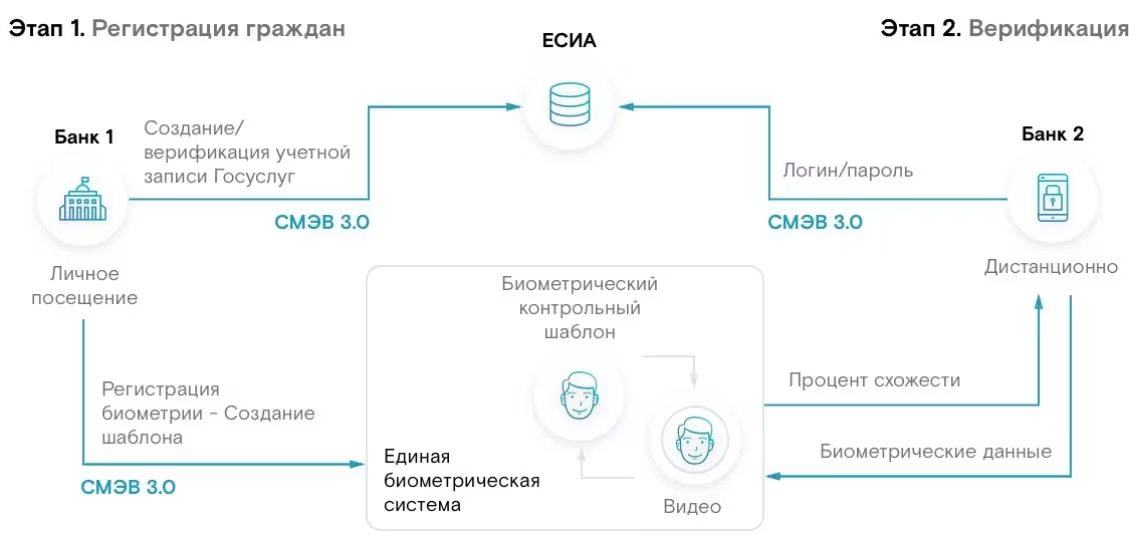
Data transfers are audited by Russia’s Federal Service for Technical and Export Control (FSTEC), and all banks connected to EBS have undergone rigorous security evaluations. From early 2024 through July 2025, over 150 million biometric transactions were processed with zero cases of fraud-not low, but zero.
Despite this, about 80% of Russian citizens remain apprehensive about submitting biometric data to these systems-an understandable caution since biometrics aren’t changeable like passwords. Your face is one of a kind.
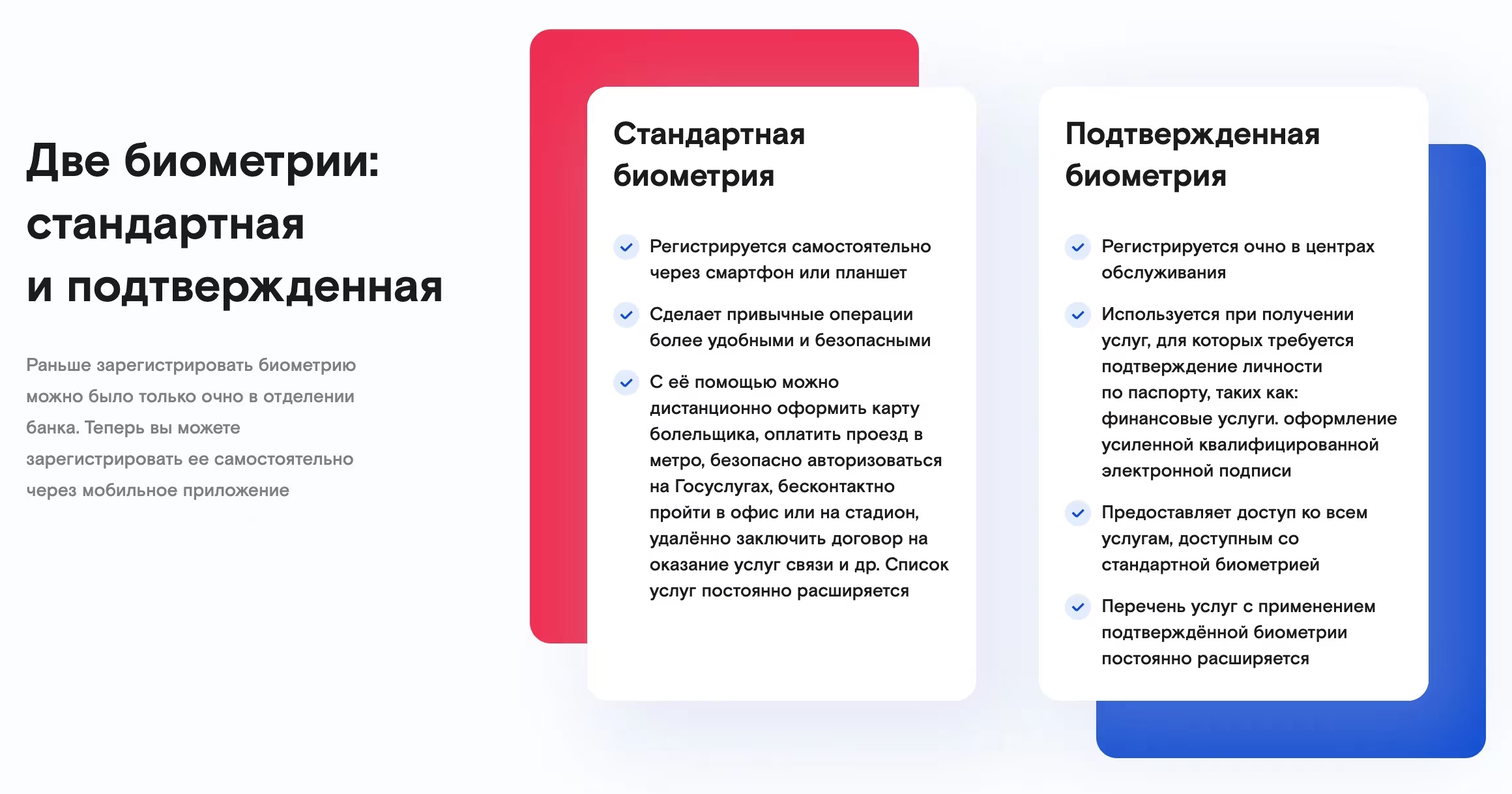
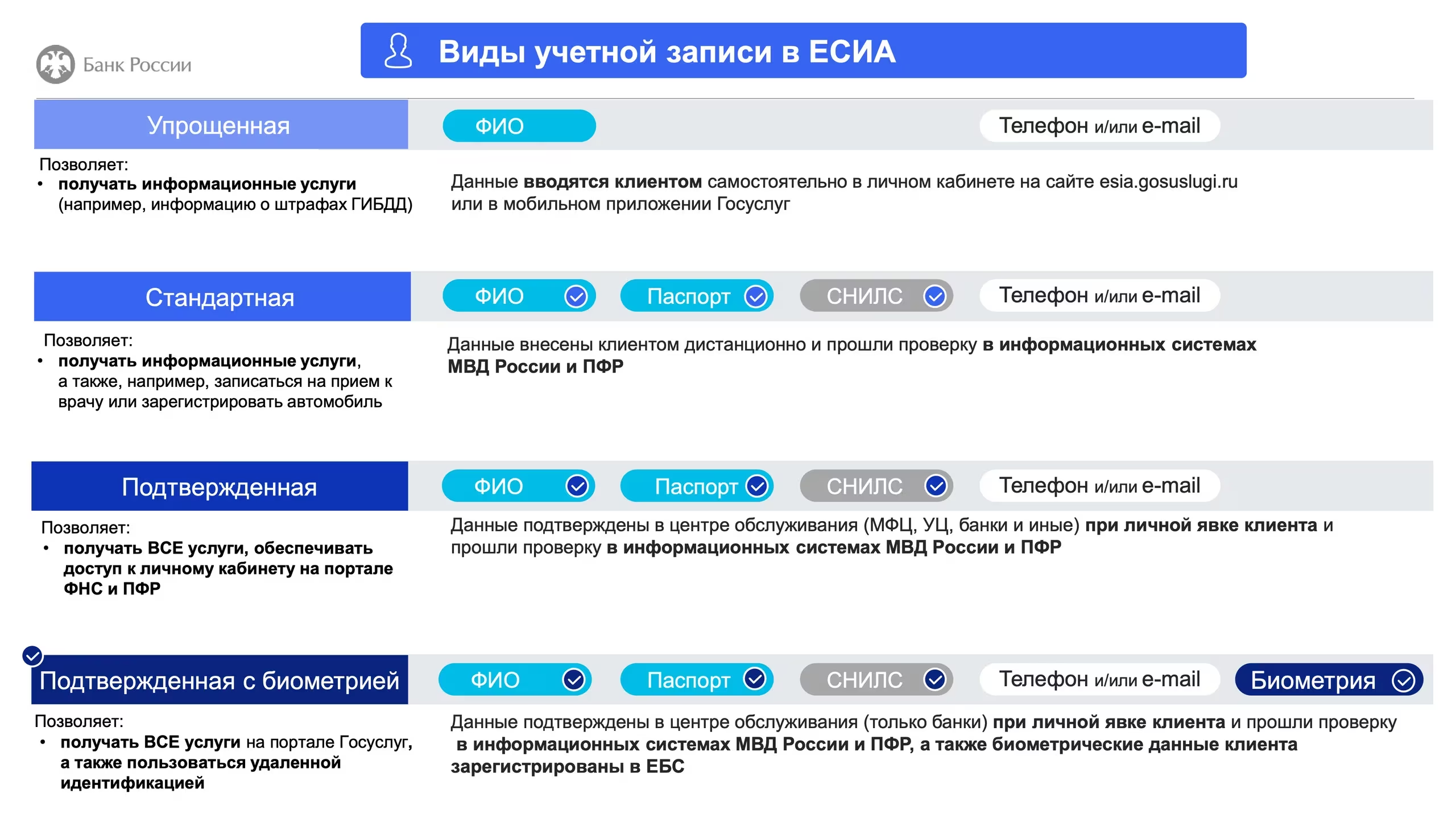
Registration in the Unified Biometric System is voluntary. Users can opt out anytime via the ”Biometrics” section on the government services portal Gosuslugi, deleting their data. Russian law (No. 572) fines operators who collect biometrics without consent.
Future outlook for biometric payments in Russia
The FinTech Association forecasts continued growth in 2026, driven by expanded terminal coverage, wider adoption of interbank biometric acquiring, and new regulations-for example, mandatory biometric ID for microloans. Starting July 1, 2026, real estate transactions can be completed entirely online with identification through EBS, using face and voice recognition.
With nearly 200 million biometric payments in 2025, Russia ranks among global leaders integrating biometric authentication into daily life. Paying with your face in a neighborhood store is no longer science fiction or an experiment-it’s just another way to pay, like credit cards two decades ago.
* The palm vein payment technology belongs to Meta, a company banned as extremist in Russia and prohibited from operating in the country.