

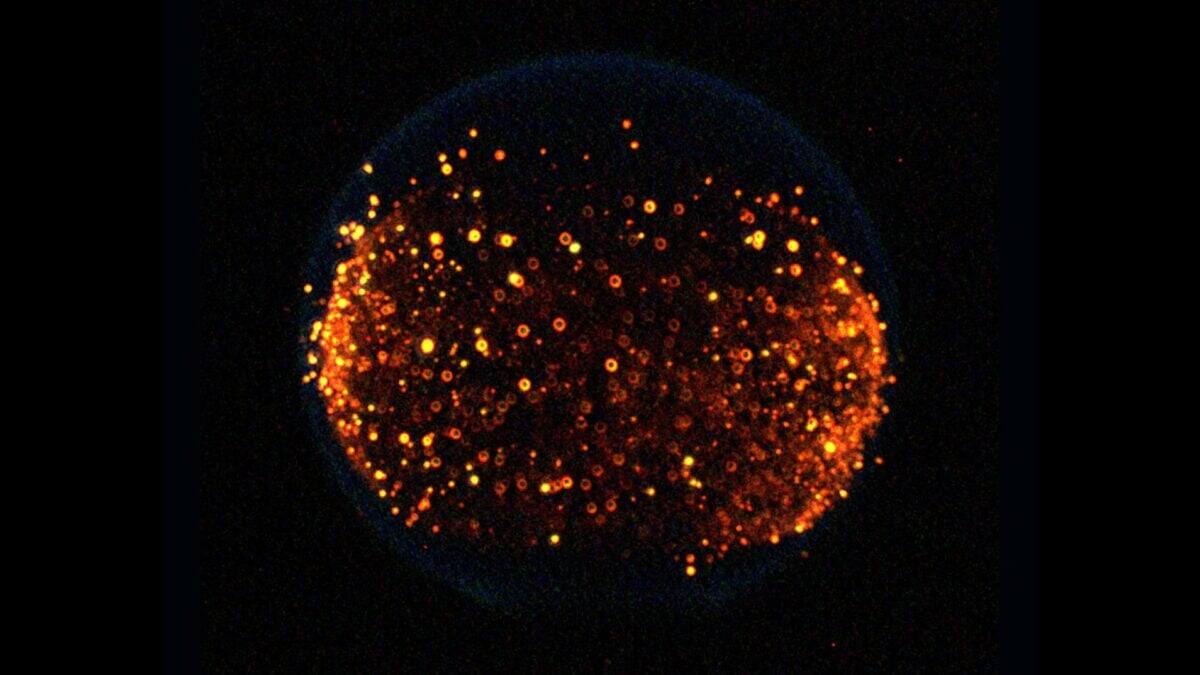
NASA is planning to light four solid fuel samples on the Moon in late 2026, and the point is not drama for drama’s sake. The Flammability of Materials on the Moon mission, or FM2, is meant to answer a blunt question: how does fire behave under lunar gravity, and what does that mean for astronauts, suits, and hardware built to survive the trip?
That sounds obvious until you remember that most of what NASA knows about fire comes from Earth and microgravity experiments, not the Moon itself. If the agency can finally measure flame spread in partial gravity, it gets more than a science demo – it gets data that could tighten safety rules for future Artemis missions and expose weak assumptions hidden inside current material tests.
What NASA will test on the Moon
The FM2 experiment is set to send four solid fuel samples to a lunar environment and record their flame characteristics over an extended period. NASA researchers say the results will serve as benchmark data for understanding how lunar gravity affects flammability, which is a polite way of saying the agency still has questions about what catches, how fast it burns, and what should never be used in the first place.
This is not a brand-new concern. NASA already uses combustion standards such as NASA-STD-6001B to screen materials for spaceflight, and the agency has run plenty of fire studies over the years. But a test in lunar gravity is different from a test in orbit, because the Moon sits in a messy middle ground between Earth’s full gravity and the near-weightlessness of space station life.
Why lunar gravity could be trickier than microgravity
Fire on Earth rises and stretches because hot gases move upward while cooler air is pulled down. In microgravity, that tidy behavior collapses, and flames tend to become rounder and more spherical. Lunar gravity changes the rules again, and NASA’s researchers say current numerical and experimental evidence suggests it could be more hazardous because flame spread rate depends on gravity peaks in certain partial-gravity environments.
That is the part worth watching. If lunar gravity encourages faster or stranger flame spread than engineers expect, then the materials that look safe in one environment may need a second look before crews rely on them for long stays on or near the surface.
- Launch target: late 2026
- Payload: four solid fuel samples
- Goal: record flame characteristics under lunar gravity
- Broader use: benchmark data for material and suit design
Artemis missions are the real backdrop
The timing lines up neatly with NASA’s Artemis roadmap. After Artemis 2, officials have already started talking up Artemis 3, with later missions expected to push humans closer to a sustained lunar presence. That matters because NASA’s own researchers say direct material qualification tests on the Moon will not be practical until an extended human presence is established.
So FM2 is doing a very NASA thing: collecting just enough evidence now to reduce risk later, before the agency has the infrastructure to do it the easy way. If the experiment works, future crews should get safer systems; if Artemis expands as planned, scientists get a much richer lab than Earth orbit can offer.
Space suits may be part of the answer
The researchers also say the findings could affect suit design, which is the kind of detail that sounds small until something goes wrong. A suit is a human life-support system wrapped around a physics problem, and every material choice has to survive heat, pressure, friction, and the possibility that fire behaves like a jerk in partial gravity.
That is why FM2 feels less like a novelty and more like overdue housekeeping. NASA has spent decades studying combustion in space, but the Moon is not zero-gravity space station life, and it is not Earth either. The agency is finally testing the awkward middle.
If the mission launches on schedule in late 2026, the next question is how quickly NASA turns the results into updated rules. The Moon is becoming busy again, and the first new lesson may be the oldest one in engineering: don’t guess your fire behavior if you can measure it.