

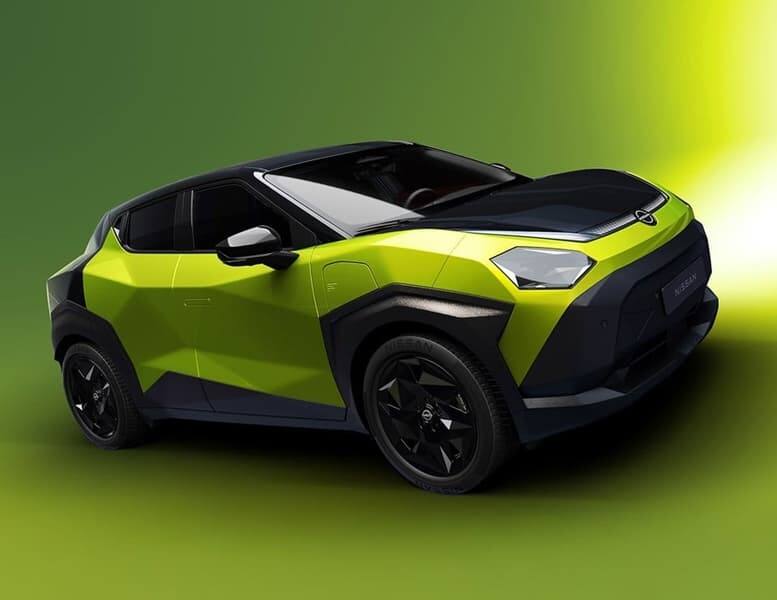
Nissan is giving the Juke a full electric reset. The third-generation compact crossover will switch to the CMF-EV platform, be built in Sunderland, and go on sale in spring 2027, while the current hybrid version stays in the lineup for buyers not ready to plug in.
The electric Nissan Juke is more than a badge swap. CMF-EV is the same architecture used by the Nissan Leaf and Ariya, plus Renault Megane E-Tech and Renault Scenic E-Tech, which puts the Juke into a more standardized electric family instead of treating it like a one-off conversion. That usually helps with packaging, costs, and speed to market – all handy when rivals are stuffing their own small EVs into the same crowded segment.
Electric Nissan Juke V2G support
Like the Leaf, the new Juke will support vehicle-to-grid, or V2G, technology. In plain English, the car should be able to send electricity back to the grid, not just pull it in. Nissan says that could let owners sell energy during peak demand, which is the sort of feature that sounds futuristic until your utility bill arrives.
For Nissan, V2G is also a neat way to separate its EVs from the usual ”same crossover, different grille” routine. Few mainstream brands are pushing grid interaction this hard in a compact model, even if the real-world economics will depend on local power rules and tariffs rather than marketing decks.
What Nissan has confirmed so far
- Third-generation Nissan Juke
- Fully electric powertrain
- CMF-EV platform
- Production in Sunderland, United Kingdom
- Test production begins in the coming weeks
- Market launch planned for spring 2027
- Current hybrid Juke stays on sale
The Juke will join Nissan’s expanding electric range, which already includes the new Micra. Another compact A-segment model is also on the way, and Nissan is making no secret of the fact that Europe is the center of gravity for this push. Prices and technical specs for the UK have not been revealed yet, so the company is asking buyers to admire the direction before handing over the numbers.
Europe is where Nissan is placing its bets
That focus makes sense. Small electric crossovers are where many brands are trying to win volume, from Renault’s own electric lineup to a long list of Chinese and European rivals. Nissan’s problem – and its opportunity – is that the Juke already has a recognizable name, which gives the company a head start if the electric version keeps the character that made the original stand out.
The open question is whether Nissan can make the electric Juke feel distinct rather than merely compliant. If it delivers sensible range, competitive pricing, and a useful V2G setup, it could become one of the more interesting mainstream EV crossovers to watch in 2027.