

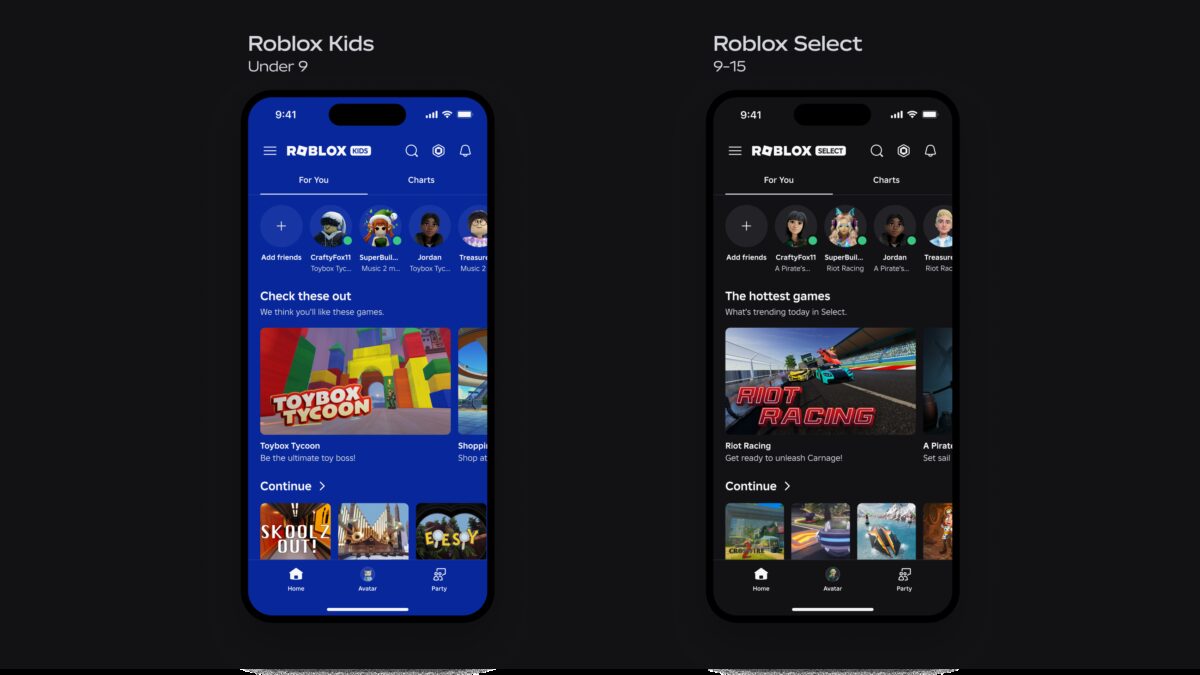
Roblox is splitting younger players into two new account tiers, ”Roblox Kids” and ”Roblox Select,” as it tries to make chat and game access match a user’s age more closely. The Roblox account rollout starts globally at the beginning of June, and it arrives after the company already turned on mandatory age checks in January for anyone who wants to use chat. That’s the tell here: Roblox is no longer treating age verification as a side feature. It is becoming the gatekeeper.
Users who have not completed age checks will be pushed toward a limited set of games rated for younger audiences. Roblox says the new accounts will rely on the same age-check system it already uses, which means the company is building a more rigid funnel around a platform that has long marketed itself as open-ended. That openness is great for growth. It is also a headache when regulators and parents are watching every corner of the app.
How Roblox Kids and Roblox Select work
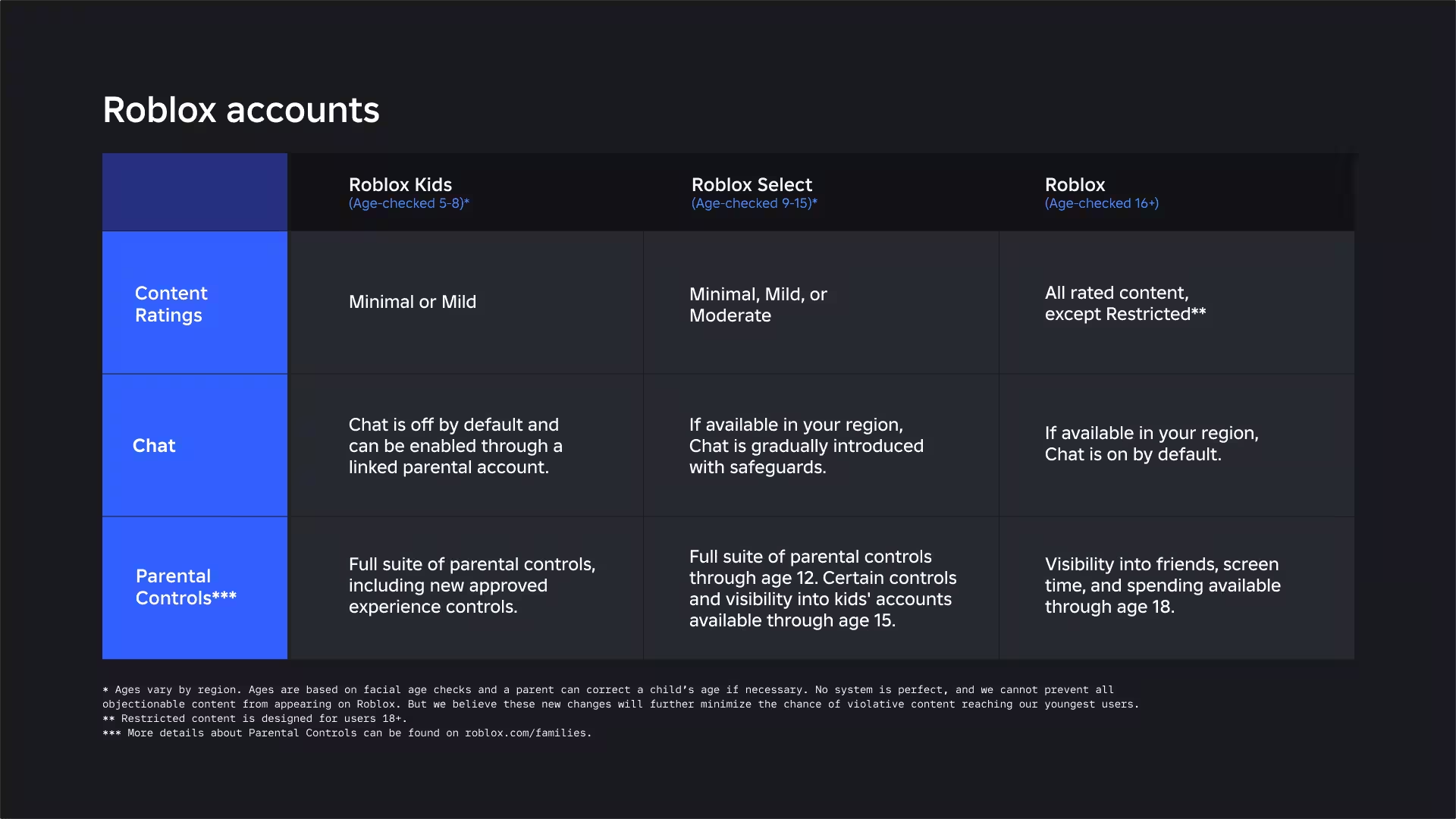
Roblox Kids is for users aged five to nine. Those accounts can access games with ”Minimal” or ”Mild” ratings, while chat stays off by default for children younger than nine. If a parent wants messaging to happen at all, it has to be with specific people approved in advance. Roblox Select covers users aged nine to 15 and opens the door to games rated up to ”Moderate,” plus chat with users in a similar age group.
Parents can also override the defaults and approve specific games that sit outside a child’s account settings. That is a sensible escape hatch, especially for siblings who want to play the same title, but it also underlines the broader strategy: Roblox is trying to keep the social layer alive without pretending every child should have the same access.
The new account rules for older users
Users 16 and older will stay on standard Roblox accounts, but only users 18 and older can enter ”Restricted Content,” which includes strong violence, romantic themes, strong language, and more. That cutoff is stricter than many parents probably expected from a game platform best known for user-generated worlds and kid-friendly branding. It also shows Roblox leaning into a more segmented system, similar to what some social apps and entertainment services have done under pressure from child-safety rules.
- Roblox Kids: ages five to nine
- Roblox Select: ages nine to 15
- Standard Roblox: ages 16 and up
- Restricted Content: 18 and older only
Developer checks and the Roblox Plus push
The awkward part is that younger-user access also depends on what developers do. Games must pass a three-step screening process, starting with developer verification. Developers under 16 need ID verification or a linked parent account, two-step verification, and an active Roblox Plus subscription. Roblox Plus launched last week at $4.99 per month and includes exclusive benefits, discounts on in-game items and avatars, and more.
That subscription wrinkle matters. Roblox Premium will stop taking new sign-ups once Roblox Plus launches on April 30, so the company is not just tightening safety controls – it is also reshaping the way creators pay to stay in the ecosystem. For a platform with millions of user-made games, any new friction for developers can ripple fast.
Before a game reaches younger accounts, Roblox will also run a real-time evaluation using users aged 16 and older, whose feedback and reports help determine whether the game is suitable. The company says its multimodal moderation system will also scan for rule-breaking, and games must meet specific gameplay criteria and carry the right maturity label. In other words, the vetting is becoming more industrial, which is probably what happens after lawsuits start piling up.
Child safety pressure is forcing the Roblox redesign
Roblox’s moves follow a wave of lawsuits, including cases from the attorneys general of Louisiana and Texas, over child-safety concerns. Those complaints came after reports that young users were being exposed to grooming and explicit content. The company is clearly trying to show regulators that it can police itself before someone else does it for them.
The bigger question is whether these layers of checks, age bands, and parent approvals will keep the platform fun enough to hold onto kids while satisfying adults who want fewer horror stories. If Roblox gets that balance wrong, the next wave of growth may belong to services that are either simpler for parents or messier in all the ways regulators hate.