


Google News is now surfacing Polymarket bets alongside mainstream reporting, and in some cases putting them in front of users as if they belong there. That is a neat little boost for Polymarket, a prediction market that already likes to dress wagering up as insight, and it gives Google one more reminder that algorithmic ranking and editorial judgment are not the same thing.
The most obvious sightings are in the ”For you” feed, where Polymarket blocks can sit among regular news links. In one test, a Polymarket page about Bitcoin was the very first result. That is a strange look for a product that claims to summarize the future while functioning, in practice, like a very fast casino with a newsroom costume.
Polymarket shows up in Google News feeds
It does not stop at the homepage. Searching for topical phrases can surface a Polymarket bet directly under credible publishers, including Reuters, The Guardian, and Financial Times. In one example tied to the Strait of Hormuz, a prediction-market link appeared just below standard reporting about the passageway. That is exactly the sort of placement that makes these products feel more authoritative than they really are.

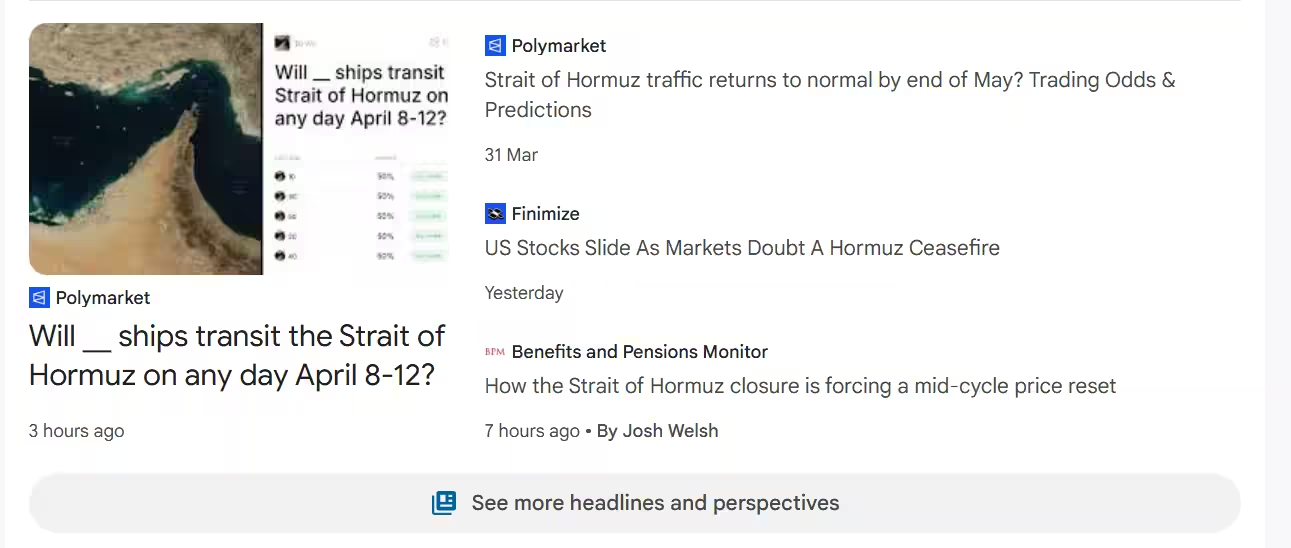
Google is treating Polymarket like a source
The bigger tell is that Google News lets people search for Polymarket and then select it as a ”source,” which leads to an aggregated page of Polymarket items. Kalshi, Polymarket’s main rival, does not get the same treatment. Reddit and X can also be selected as sources, so Google is clearly comfortable blurring the line between publishers, platforms, and everything in between. But only one of those options is built on bets about what might happen next.
This all fits a broader industry pattern. Prediction markets have spent months trying to borrow credibility from real news brands, including a CNN tie-up for live broadcasts and a Dow Jones deal to pipe data into its publications. Google News adding Polymarket to the mix looks like the most useful kind of laundering for the platform: quiet, automatic, and wrapped in the authority of search.
Why Polymarket is so algorithm-friendly
Polymarket is tailor-made for recommendation systems because it produces a flood of constantly changing pages, each one dressed up as a developing event. That makes it look fresh, searchable, and newsy even when the underlying product is still gambling. Google’s systems may love the machine-readability, but readers are left to sort out whether a bet is a useful signal or just another shiny object with odds attached.
There is also a reputational problem the company cannot bet its way out of. Prediction markets have repeatedly faced criticism over insider trading concerns, misleading framing, and the creepy habit of turning real-world crises into tradable entertainment. If Google keeps elevating them inside news surfaces, the next question is not whether Polymarket gets more traffic. It is how long before the distinction between reporting the news and wagering on it gets even harder to see.