

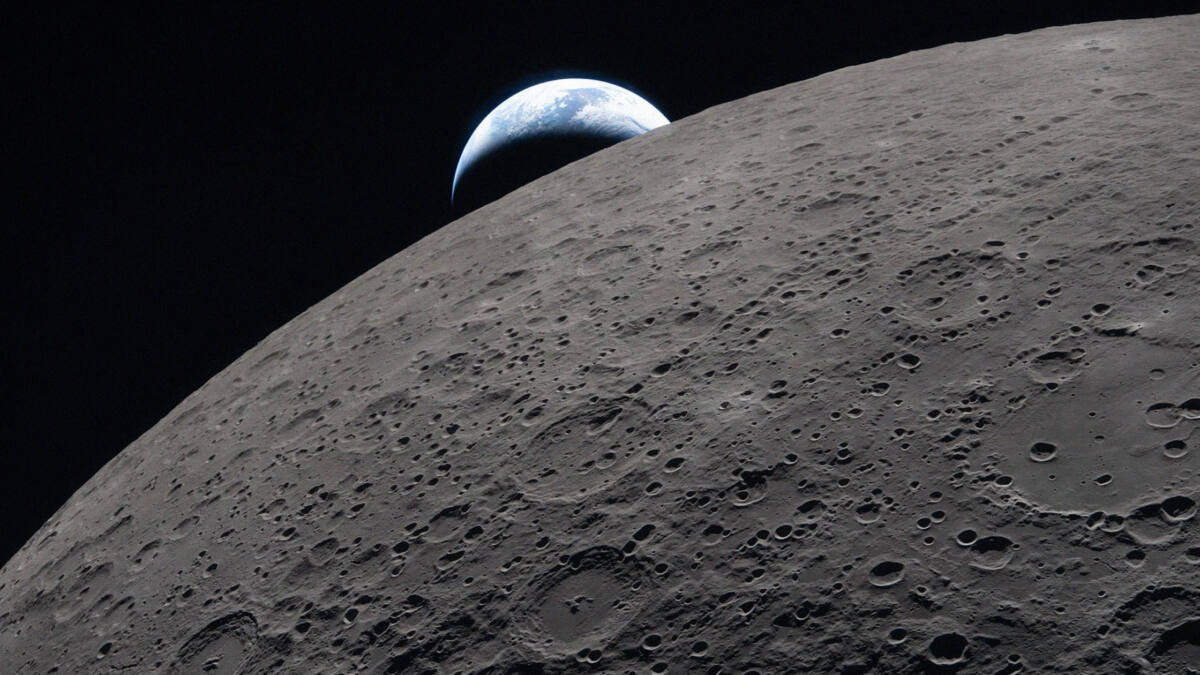
NASA’s Artemis 2 astronauts caught micrometeorite strikes on camera during their trip around the Moon, giving mission control a rare live look at tiny impacts on the lunar surface. The surprise is useful, not just cinematic. Every flash is a reminder that the Moon is not a calm destination for long-term human life; it is a place where anything outside a shelter is getting pelted by space debris with zero atmospheric mercy.
The crew reported at least six impacts during an almost one-hour total solar eclipse on the far side of the Moon, with commander Reid Wiseman saying the team saw multiple impact flashes and ruling out the usual boring explanations such as thruster glint. Mission science lead Kelsey Young said the reaction at Houston included ”audible screams of delight,” which is exactly the sort of response you want from a science team and exactly the sort of sentence that makes you wish more live mission feeds were emotionally unfiltered.
What Artemis 2 saw on the far side of the Moon
The observation happened while the spacecraft passed over the Moon’s heavily cratered far side, giving the crew a close look at terrain that already advertises the problem: the Moon has no protective atmosphere, so even tiny rocks hit at enormous speed instead of burning up harmlessly. Wiseman said the flashes were clearly real impacts, and not some trick of sunlight or hardware reflection, which matters because science loves a dramatic moment but still insists on being correct.
That reaction also hints at how rare direct observations like this are. Astronauts and instruments have long inferred that the lunar surface gets peppered, but seeing the flashes from orbit turns the threat from abstract model output into live evidence. For NASA, that is a nice piece of validation wrapped in a slightly alarming fireworks show.
Why lunar dust and rocks are a habitat problem
Micrometeorites are a headache because the Moon offers almost no natural defense. Earth’s atmosphere burns up most incoming debris; the Moon just takes the hit. That means even minuscule particles can strike at tens of miles per second, which is a polite way of saying future lunar housing will need to be engineered like a bunker.
- NASA-backed estimates have put annual strikes on a habitat the size of the International Space Station at 15,000 to 23,000 particles.
- The particles in that study ranged from a millionth of a gram to ten grams.
- NASA’s lunar south pole is still being eyed for an initial Artemis base because some areas appear less battered.
- Deeper craters and lava tubes are also on the table as natural shelters from both impacts and radiation.
That last point is where the Moon stops sounding like a destination and starts sounding like a construction project with very bad neighbors. If NASA or its partners ever want a permanent foothold there, the winning design will probably look less like a sci-fi outpost and more like a buried survival pod.
The real value of a surprise impact report
The immediate win for Artemis 2 is simple: the crew got the kind of science data planners hoped for while also proving that astronauts can still contribute meaningful observations during a high-profile mission. But the bigger payoff is strategic. Direct sightings from orbit can sharpen future shielding plans, and any extra evidence about where the Moon gets hit hardest will matter if NASA keeps pushing toward a base at the south pole.
The unanswered question is whether these fresh observations will change the risk models or just decorate them. Either way, the message is already clear: the Moon is not waiting to become easier, so the people who want to live there will have to get smarter about where they build and how much armor they bring.