

Apple gave the MacBook Neo 512 GB of storage, apparently because 512 GB was the ceiling someone in the room liked best. But one modder looked at the machine’s iPhone 16-style internals and decided that was negotiable: if the same SoC can pair with 1 TB in an iPhone 16 Pro, why not try the larger NAND in the laptop too?
That is exactly what happened in a recent hardware swap from dosdude1. The 256 GB flash chip came out, a 1 TB K8A5 chip went in, and the machine walked away with a fourfold storage upgrade plus a modest bump in read and write speed.
The NAND swap fits the board
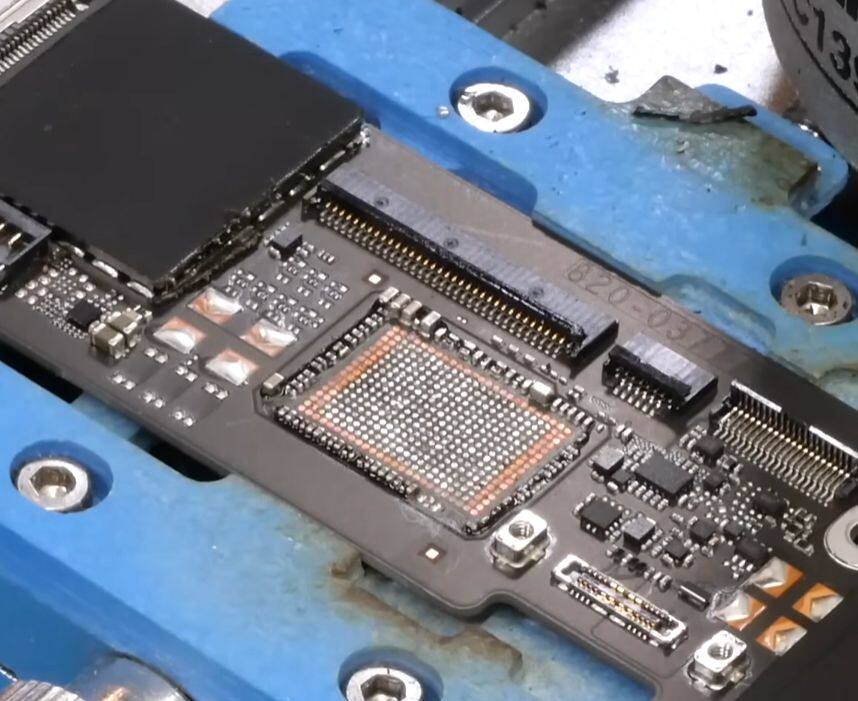
The trickiest step was removing the old BGA chip without tearing up the surrounding parts. Underfill had to be cleared first, and a few capacitors were taken off temporarily so the package could be lifted cleanly. That sort of repair is not for the faint of heart, or for anyone who thinks ”hot air gun” sounds like a lifestyle choice.
Once the footprint was exposed, it showed a ring of unused pads around the chip area, hinting that Apple may have planned for more than one NAND package option. That is the kind of detail that keeps repair people awake at night, because it suggests the hardware was never as locked down as the product page implied. The 1 TB chip installed successfully, and the result was a Neo with far more room to breathe.
Apple’s storage limit looks self-imposed
The bigger story is not the upgrade itself, but how ordinary it makes Apple’s 512 GB cap look. When the same family of silicon can accept 1 TB in another product, the restriction starts to look less like engineering necessity and more like segmentation with a glossy finish. That is a familiar move in laptop and phone land, where the cheapest way to make a premium model feel premium is to leave a little hardware on the table.
For MacBook Neo owners, the obvious question is whether this opens the door to a whole cottage industry of replacements. Maybe. The existence of matching footprints is the sort of thing modders pounce on, and component reuse across product lines has a long history of making official limits look flimsy. For everyone else, it is another reminder that ”non-upgradable” usually means ”non-upgradable unless you are willing to become your own service center.”
The next test is whether other storage sizes or package variants will work just as cleanly. If they do, the Neo may end up becoming one of those machines that is more interesting after Apple is done with it than before.