

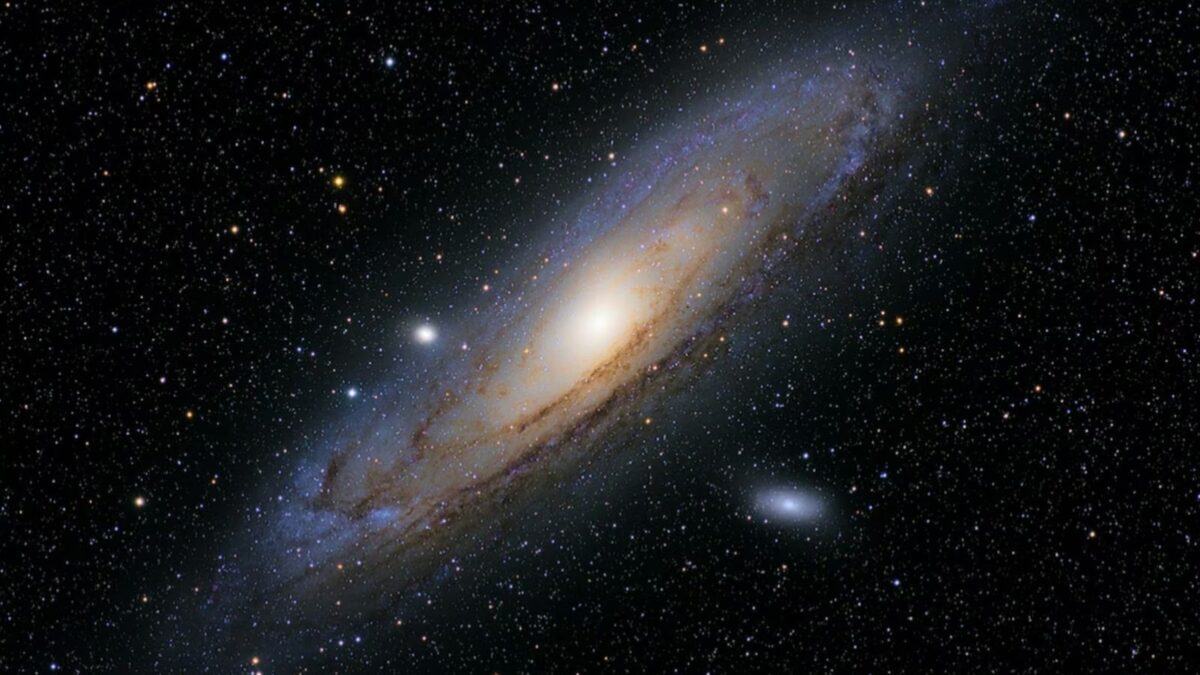
The Andromeda galaxy, our nearest large galactic neighbor, just got company. European astronomers have identified a brand-new dwarf satellite galaxy orbiting close to Andromeda, opening a fresh window into the nearby universe.
The newly found galaxy, dubbed Andromeda XXXVI, falls into the category of ultra-faint dwarf galaxies-tiny, dim collections of stars with loose structures dominated by dark matter. This faint companion was confirmed by a research team led by Joanna D. Sakowska from the Institute of Astrophysics of Andalusia, who spotted it using data from the Pan-Andromeda Archaeological Survey, an extensive project mapping Andromeda’s surroundings.
Located roughly 2.53 million light-years from the Milky Way, Andromeda XXXVI sits about 388,000 light-years from the main body of Andromeda itself, which lies approximately 2.5 million light-years away. It shines with an absolute magnitude of -6.0 and spans around 208 light-years in radius. Its stars formed some 12.5 billion years ago, making it a relic from the early universe.
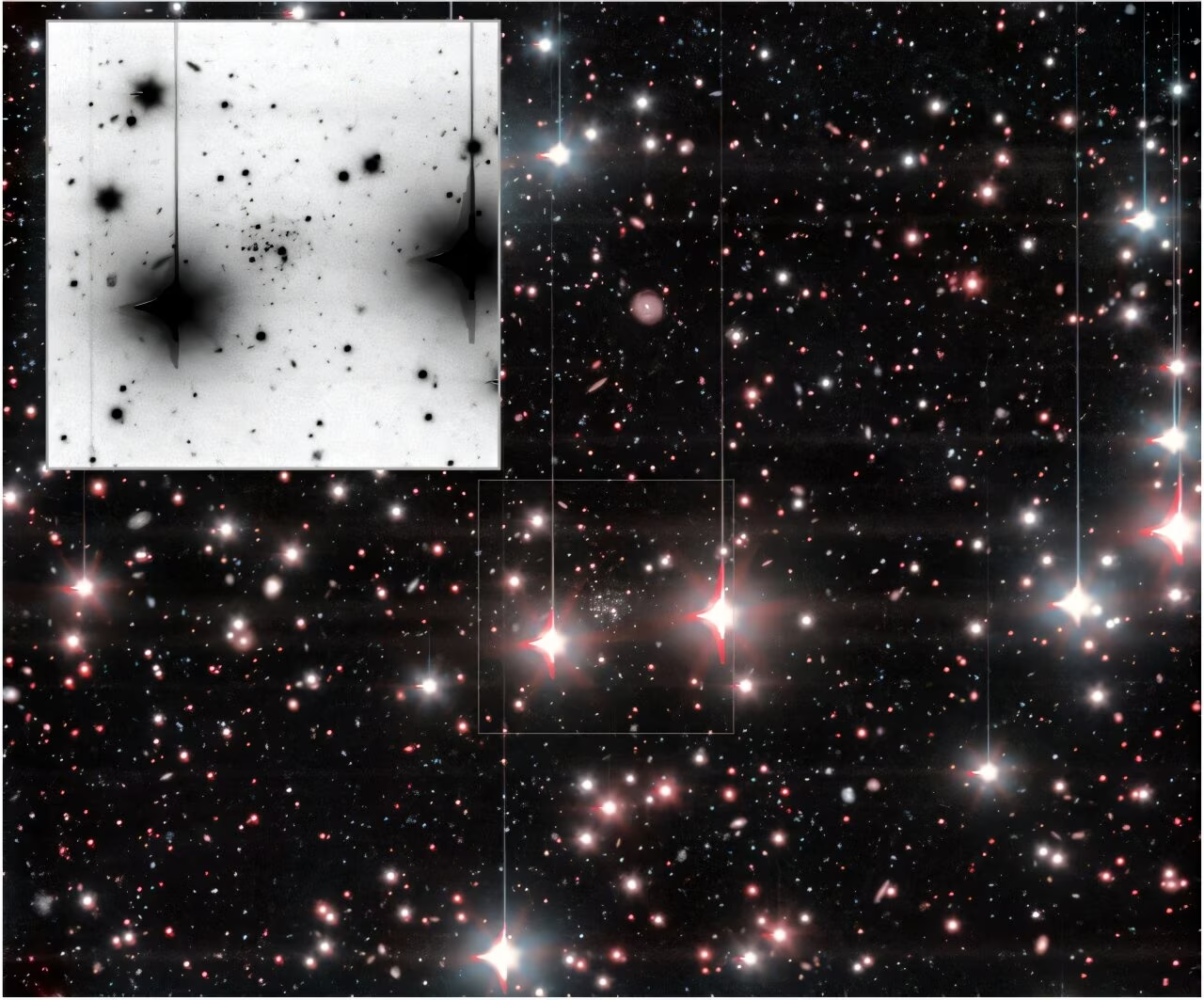
This discovery is important because dwarf satellite galaxies like Andromeda XXXVI help us understand how the early universe evolved. These dim companions are notoriously elusive; spotting them requires deep, meticulous surveys. In contrast to our Local Group, where the Milky Way and Andromeda each have dozens of known satellites, Andromeda is believed to host over a hundred such faint dwarf galaxies, suggesting many more to uncover with continued observations.
Compared to satellite galaxies around the Milky Way, which have been studied extensively thanks to surveys like Gaia, Andromeda’s satellite population is still being fleshed out. Each new discovery helps astronomers piece together the complex gravitational dance shaping galaxy formation and the mysterious role of dark matter.
As telescopes and survey techniques improve, astronomers will likely find many more ultra-faint dwarf satellites circling Andromeda-and perhaps even beyond. These feeble companions are tiny cosmic time capsules, and tracing their properties could unlock secrets about galaxy assembly and the very nature of dark matter in our cosmic neighborhood.