

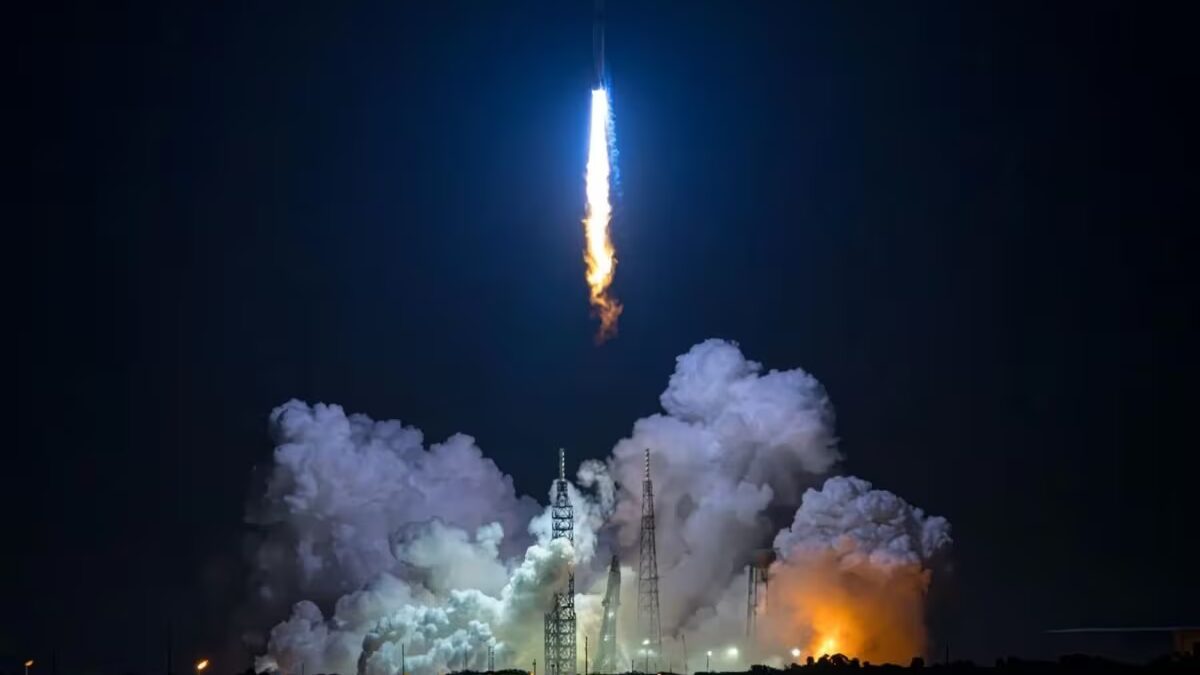
Blue Origin is shifting gears. For the first time since its founding, Jeff Bezos’s space venture is looking beyond its billionaire backer, aiming to raise around $10 billion in funding at a $130 billion valuation, according to DealBook. This marks a major change for Bezos’s space business, which has long relied heavily on his personal cash infusions. Now it’s chasing institutional investors to keep pace with rivals like SpaceX.
This funding round is still open, but the stakes are already clear. Bezos himself plans to invest roughly $2 billion, Coatue Management may chip in about $4 billion, and Blue Origin hopes to secure the balance from other investors. Until now, Bezos bankrolled much of the operation through proceeds from selling his Amazon stock.
Morningstar analyst Nicholas Owens, who tracks SpaceX, sums up the move bluntly: Bezos doesn’t want to be Blue Origin’s only major financier anymore. That’s a savvy move. SpaceX has proven that private space firms can pull in tens of billions from investors and contracts, rapidly boosting its valuation on secondary markets. Compared to SpaceX’s momentum, Blue Origin still looks like Bezos’s private project with limited capital avenues.
The $130 billion valuation isn’t pulled from thin air. Blue Origin holds sizable government contracts, is developing the heavy-lift New Glenn rocket, participates in lunar programs, and is tied to Amazon’s orbital internet initiative, Project Kuiper (now called Amazon Leo). Still, the company lags SpaceX in scale and speed. This fundraising round isn’t just insurance-it’s a bid to accelerate growth.
Blue Origin’s investments and competition with SpaceX
The backdrop is clear: Blue Origin is in nearly head-to-head competition with SpaceX. Since 2008, SpaceX has secured about $15.7 billion in U.S. government contracts, while Blue Origin has won only around $2.9 billion. That huge gap reflects who’s become NASA’s, the Pentagon’s, and commercial clients’ go-to rocket builder.
But there’s a nuance that often gets overlooked. If all of Blue Origin’s contract options with NASA are exercised, their potential value could approach $30 billion-just shy of SpaceX’s $27.6 billion. Though not guaranteed funds today, this signals NASA’s clear intent to cultivate a strong second player. This was evident last year when NASA awarded Blue Origin a $3.4 billion Artemis contract to build a second crewed lunar lander. NASA’s reasoning was straightforward: it wants competition, not reliance on a single supplier.
The satellite internet race tells a similar story. SpaceX already operates over 10,000 Starlink satellites-the largest constellation worldwide. By July 2026, Amazon’s Leo project expects 375+ satellites launched. It’s like a sprint where SpaceX is nearing the finish line, and Blue Origin/Amazon is just hitting its stride.
This all means one thing: Bezos’s bankroll alone can’t bridge this gap. Building heavy rockets, satellite networks, engines, lunar vehicles, and production sites demands tens of billions and a long-term commitment. SpaceX generates revenue from launches, Starlink subscriptions, and government contracts, while Blue Origin needs a broader investor base or risks falling behind.
Another critical factor is the current status of New Glenn-the company’s heavy, reusable rocket expected to launch Amazon’s satellites. On May 28, a test vehicle was lost in an accident. Blue Origin says it plans to resume flights this year, but in aerospace any delay quickly translates to added costs and deferred revenue.
The market understands the stakes. According to Quilty Space, the global space economy has already topped $500 billion, with much of future growth tied to launches and satellite internet. Morgan Stanley has predicted the space sector could exceed $1 trillion by 2040. Against this backdrop, $10 billion isn’t excessive-it’s an entry fee for the next phase of the space race.
If this funding round closes as planned, Blue Origin will gain more than just capital-it will face a rigorous test of market trust. After a quarter-century of being tied mostly to Bezos’s ambitions, this round will mark a crossroads. Between the funding outcome and New Glenn’s return to flight by late 2026, we’ll learn whether Blue Origin can evolve from a billionaire’s pet project into a robust space contender with a diverse investor base.