

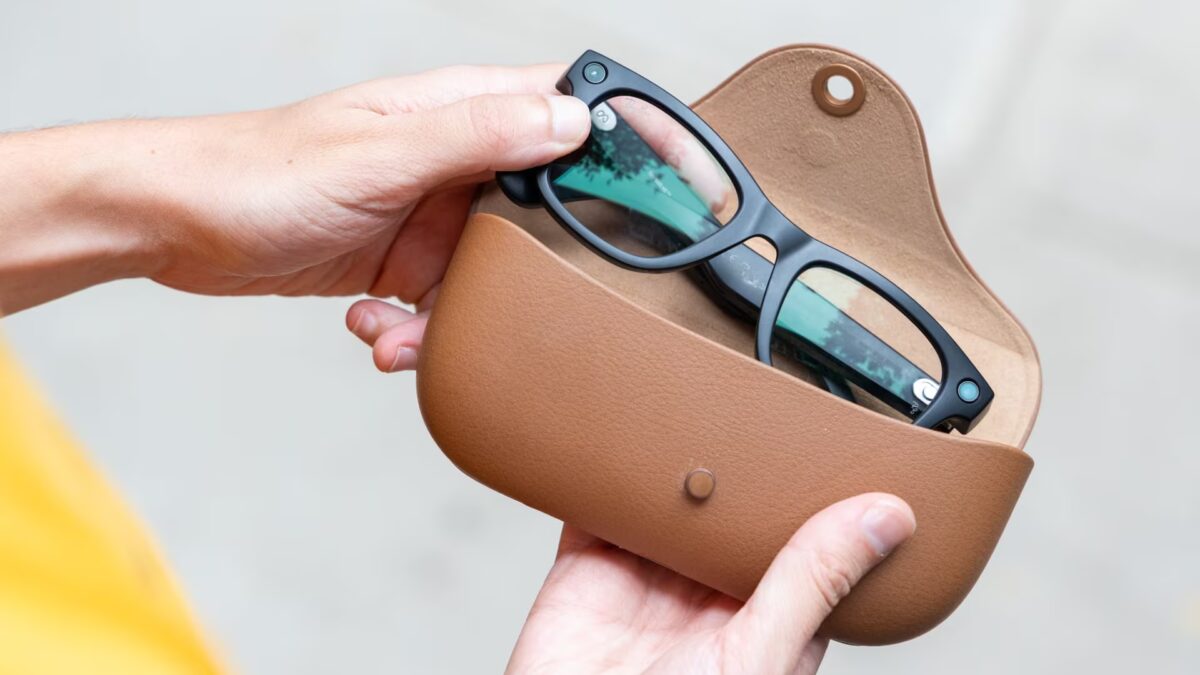
Meta is testing a new prototype of smart glasses that could capture everything around the wearer every few seconds, essentially turning the device into a continuous surveillance tool. According to the Financial Times, Meta internally refers to the technology as ”super-sensing”-the glasses are designed to help AI remember everyday details, from lost keys to snippets of conversation. The most controversial aspect: the prototype apparently won’t have any external LED indicator to signal when the camera is recording.
This marks a significant departure from the current Ray-Ban Meta smart glasses, which require users to start recording via voice commands or a button on the frame and feature a front-facing LED light to notify others. If the Financial Times’ report is accurate, the new Meta glasses would automatically capture visual data with minimal user input, leaving bystanders unaware they are being recorded.
Inside Meta, questions remain unsettled about where to store the large volume of data generated and whether it can be used to train AI models. This is a sensitive issue not only because of the sheer amount of personal footage but also due to Meta’s fraught reputation on privacy. A Swedish newspaper previously reported that Meta’s training datasets-reviewed by human contractors-contained private and sensitive content, including intimate scenes, bathroom footage, and banking information. Continuous recording would vastly increase the quantity of such material.
There are also practical challenges. Constant video capture drains battery life rapidly, and compact smart glasses already struggle to match smartphone stamina. Meta could reduce video quality, switch to capturing fewer frames, or add external battery packs, but each option compromises either convenience or the core concept of always-on sensing.
Privacy concerns with Meta smart glasses prototype
Smart glasses have a history of triggering public privacy concerns. During the Google Glass era, ”No Recording” signs became common in the US and Europe, and ”Glasshole” became a meme long before the current boom in AI-powered wearables. Since then, the industry adopted a basic rule: any camera on a wearable device should be clearly visible to others.
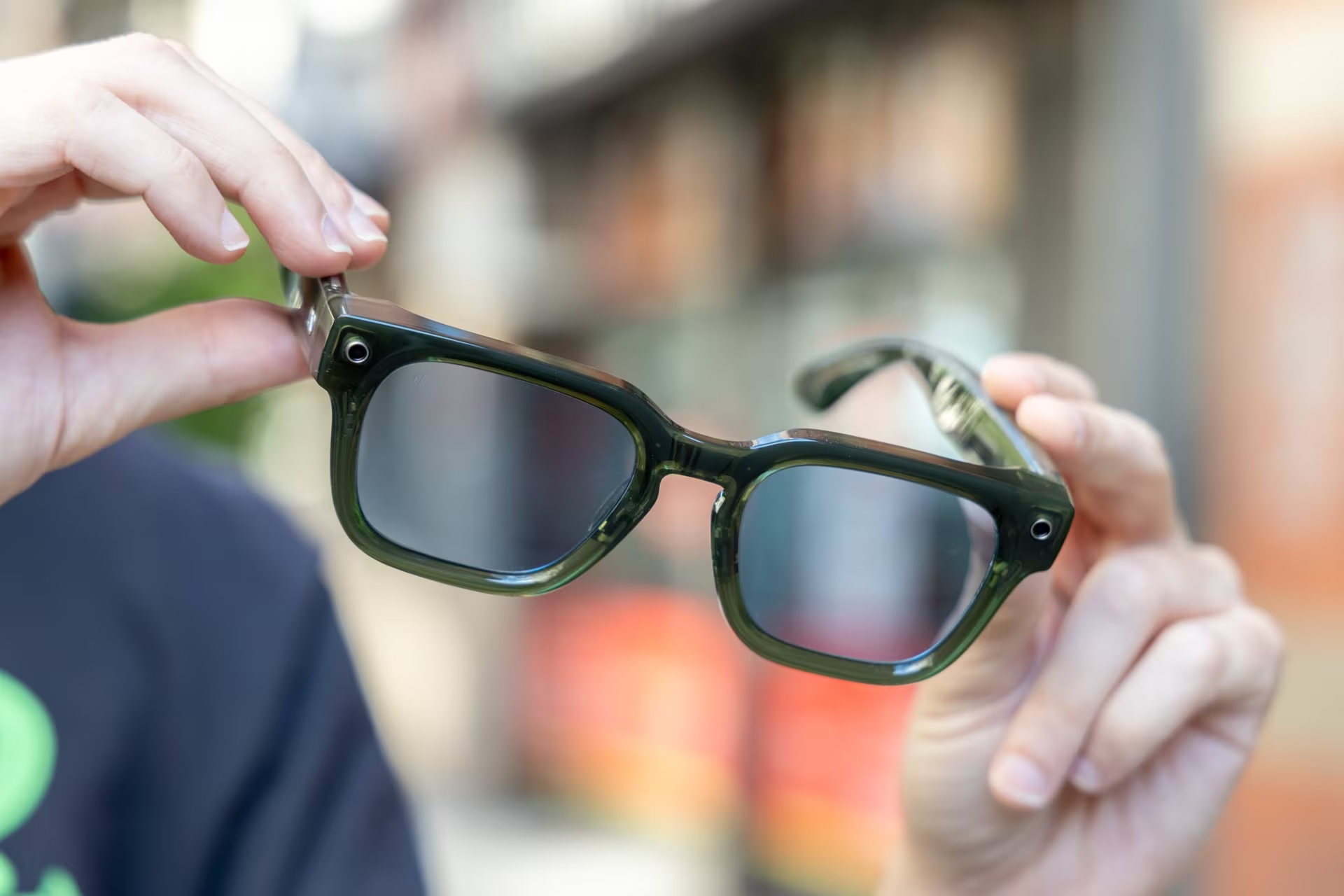
Some manufacturers have taken a different direction. Amazon’s Echo Frames omit cameras entirely, focusing on voice assistants, audio, and notifications. Many augmented reality (AR) devices prioritize displays and microphones over continuous video capture. Even when cameras are included, companies typically emphasize recording indicators and restrict usage in sensitive locations.
Meta, however, seems to be pushing boundaries. The company has explored facial recognition in wearables-a topic fraught with controversy, especially after Meta disabled face recognition on Facebook in 2021 following regulatory pressure and public backlash. Meta also paid $650 million to settle a class-action lawsuit related to biometric data violations in Illinois. Against this backdrop, glasses that record constantly without alerting people seem less like a product upgrade and more like a flashpoint in the ongoing debate over corporate data collection limits.
Meta’s Ray-Ban smart glasses are among the rare wearables to achieve mass market traction: in 2024, its parent company EssilorLuxottica reported the product line’s sales tripled year-over-year. This success creates temptation for Meta to accelerate new features faster than any industry-wide privacy frameworks can keep up with. But the device’s wide adoption turns experiments into public risks-unlike developer kits aimed at enthusiasts, these glasses could land on millions of faces.
If Meta moves forward with its ”super-sensing” glasses, it faces three major hurdles:
- How will users and those around them know when recording is active?
- How long will recordings be stored, and will they feed into AI training datasets?
- What safeguards exist for sensitive locations like offices, schools, clinics, or banks?
Without clear answers, this product risks repeating the pattern of early camera-enabled wearables-technically intriguing but socially problematic.
This development could become a defining test of the smart glasses category’s maturity. Competitors from Apple to Google are exploring always-on AI assistants but have generally shied away from hidden continuous recording that sparks privacy alarms. Whether Meta’s new approach sparks industry-wide regulation or backfires as a public relations issue will hinge on how transparently the company handles these questions-and how regulators respond after launch.
* Meta is designated as an extremist organization in Russia and is banned there.