

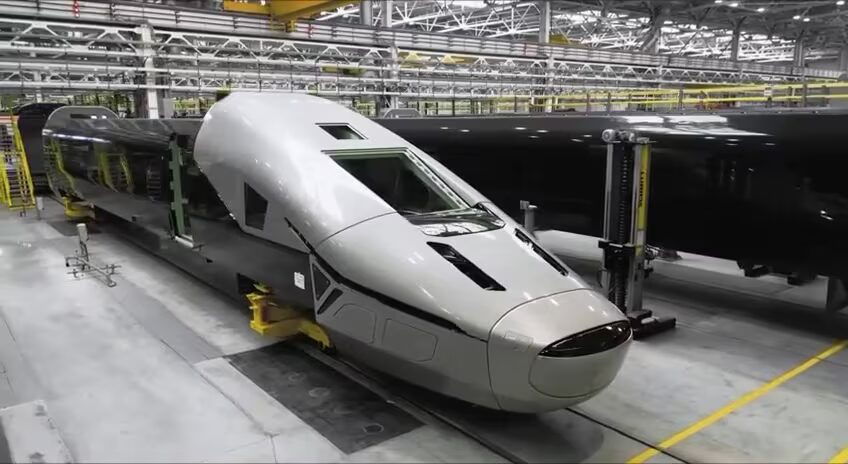
Russia’s first high-speed train designed to hit 400 km/h on the Moscow-Saint Petersburg route just took a major step forward. At the Ural Locomotives factory, engineers completed the fitting of the train’s nose and front fairings-key aerodynamic components critical to achieving top speeds. This milestone solidifies progress toward serial production, expected before 2030, marking a significant push in Russian rail technology beyond reliance on German platforms.
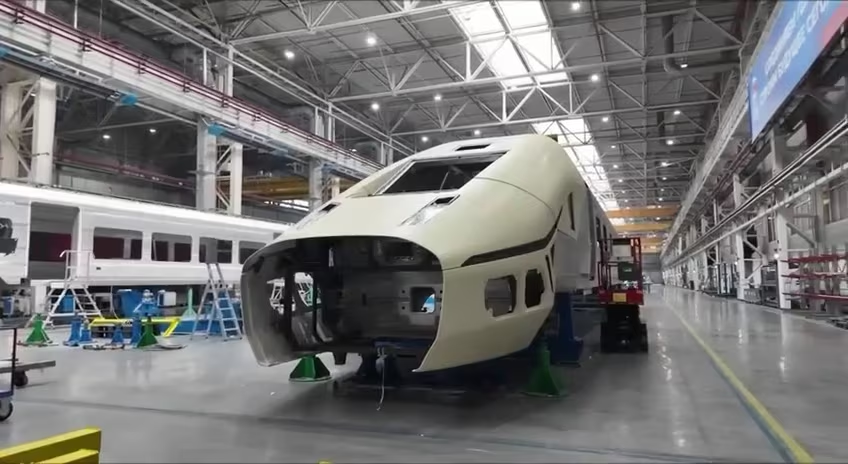
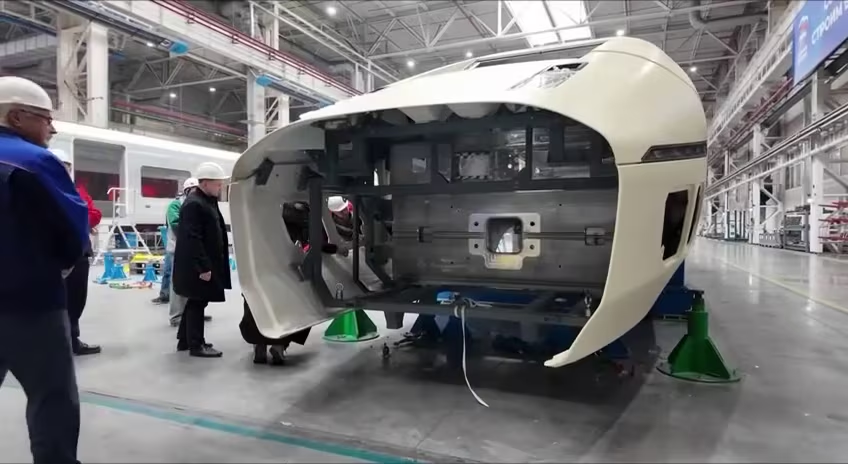
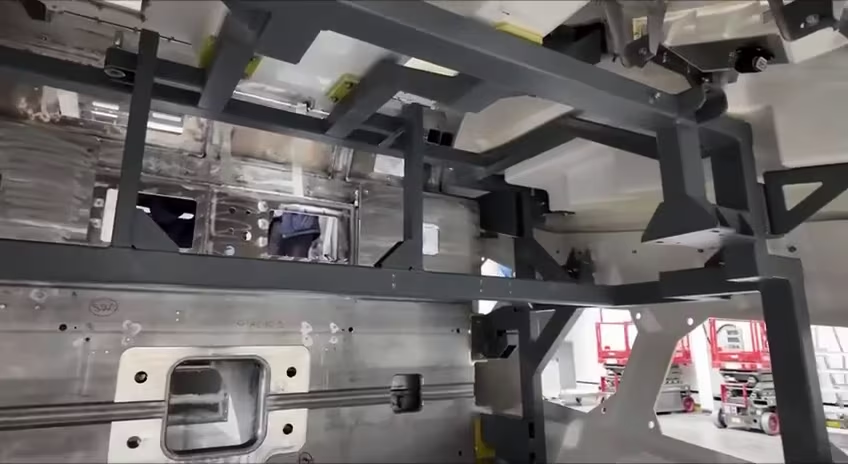
The components were manufactured in Chelyabinsk at a facility previously producing parts for Russia’s ”Lastochka” and ”Finist” trains-models originally based on German Siemens technology. The nose module combines metal and polymer materials, while the front fairing uses fiberglass-reinforced plastic with metallic inserts. These parts do more than provide sleek aesthetics; their design directly influences aerodynamics, noise levels, energy efficiency, and the cockpit’s airtightness.
During assembly, engineers meticulously checked the geometry and fit against the train body, as well as the operation of moving mechanisms. Special attention was given to whether the nose fairing sufficiently shields the automatic coupler from snow, ice, and debris. After validation, these components will undergo further rigorous tests ahead of certification trials slated for 2027.
The plan calls for certification of the first two trainsets by 2027, with 43 total trains for the new high-speed line expected by 2030. The target journey time is about 2 hours and 15 minutes-significantly faster than the current flagship ”Sapsan” trains that reach a top speed of 250 km/h on existing tracks.
Moscow-St. Petersburg high-speed train project overview
This reveal goes beyond a fresh cosmetic detail-it’s a rare public glimpse at Russia’s homegrown attempt to build a genuine high-speed train independent of Siemens platforms that have long dominated Russian rail technology. Russia’s current high-speed trains, including ”Sapsan” and ”Lastochka,” stem from German technology: the former is based on Siemens Velaro, the latter on Siemens Desiro.
Siemens’ exit from Russia forced rapid restructuring of supply chains and production localization. ”Finist” trains represent a first step, adapting suburban train designs without Siemens branding. The new high-speed project pushes boundaries further: it’s not just replacing imported parts but creating an entirely new train set engineered for dedicated high-speed infrastructure, with stringent demands on aerodynamics, vibrations, sealing, and safety.
Globally, few players dominate this niche: Siemens with Velaro, France’s Alstom with TGV, and China’s CRRC with their Fuxing series. A design speed of 400 km/h is ambitious-though commercial services often run closer to 300-350 km/h, balancing track wear, power supply, noise regulations, and operational costs.
That’s why these preliminary fits of the nose parts are more than an engineering formality. The nose shape significantly affects aerodynamic drag, noise when entering tunnels, and stability of on-board systems at high speed. If development timelines hold, 2027 will reveal how close Russia’s project is to real-world testing rather than just glossy renders and showroom models.
For the Moscow-St. Petersburg high-speed line, this is a critical milestone. The route has been discussed for years, and without a domestic fleet, it risked relying solely on imports or complicated partial localizations. The plan to produce 43 trainsets by 2030 signals a serious commitment to building a full-fledged series for Russia’s first high-speed corridor.
Russia is positioning itself to join the ranks of nations developing their own high-speed trains tailored to new, purpose-built tracks. Watching how the certification and subsequent real-world tests unfold over the next few years will reveal whether this ambitious effort can truly shake up a segment long dominated by established global giants.