

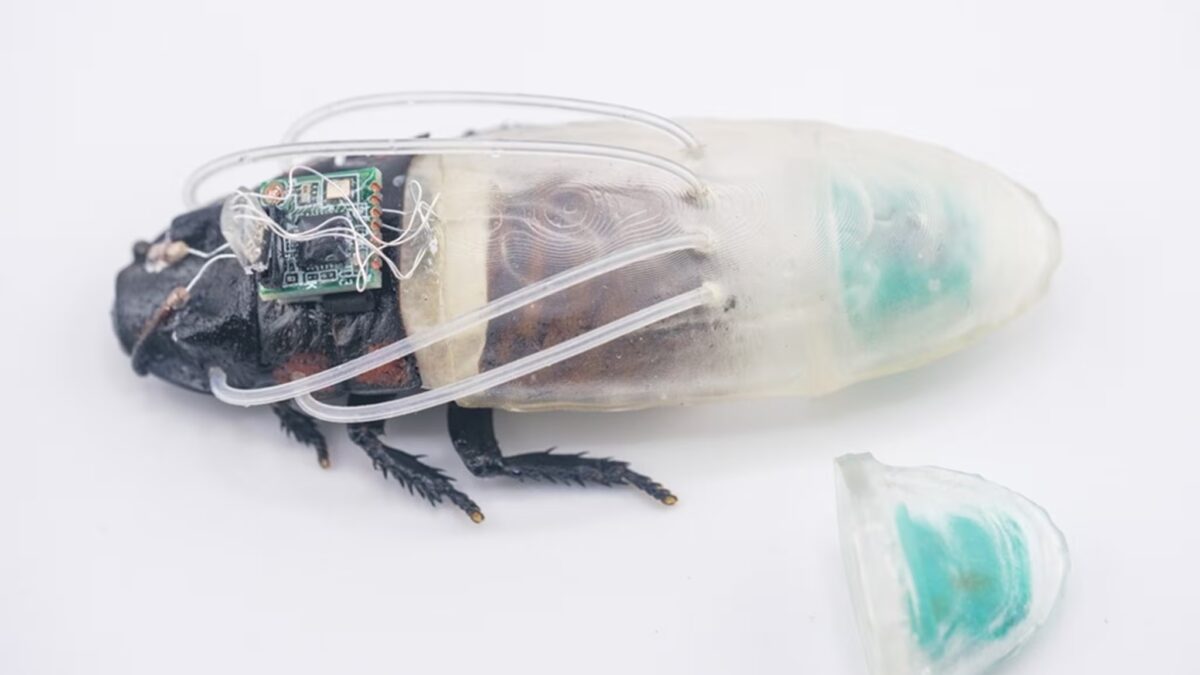
Researchers at Singapore’s Nanyang Technological University have transformed Madagascar cockroaches into remote-controlled biobots capable of operating underwater for up to three hours. By outfitting these insects with miniature chemical-powered oxygen modules, the team envisions applications in search-and-rescue missions and hazardous environment reconnaissance where traditional robots struggle.
The study published in Nature Communications showcases a unique hybrid approach: using a resilient living organism as a robotic platform. Led by Hirotaka Sato, the group selected Madagascar cockroaches not for shock value but for engineering advantages-they are large, durable, and adapted to harsh conditions, making them ideal for tasks where small robots usually fail due to limited battery life, fragility, or getting stuck.
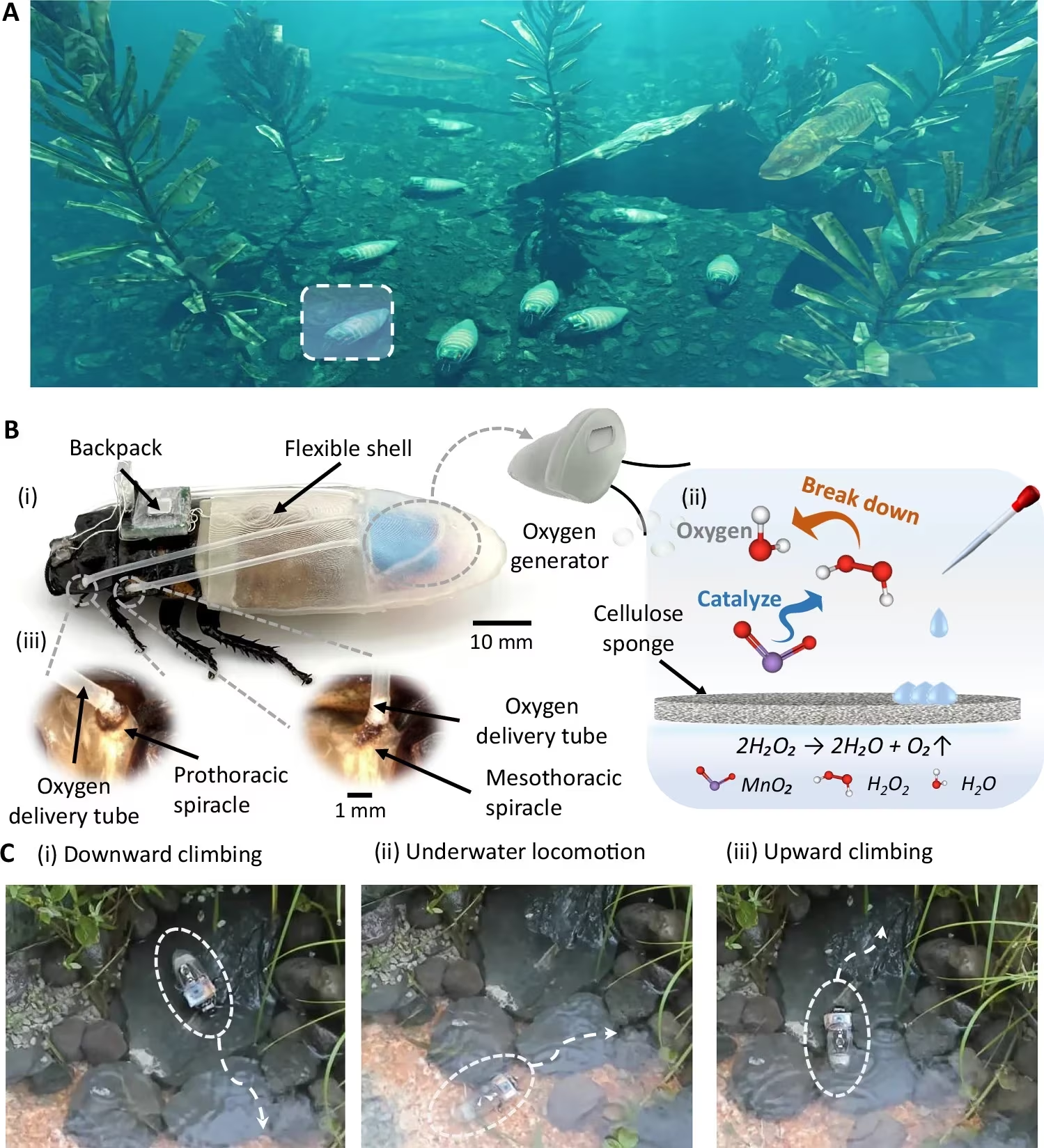
The biggest hurdle was that while cockroaches can move quickly, they can’t breathe underwater. To solve this, the team 3D-printed tiny breathing apparatuses that seal the insect’s spiracles and supply oxygen through thin tubes. Instead of bulky tanks, oxygen is generated chemically onboard via a reaction between hydrogen peroxide and manganese dioxide-essentially a built-in gas generator integrated into the insect’s gear.
To avoid impeding movement, external ”backpacks” were discarded after early designs proved cumbersome. Instead, control microchips and power sources were implanted into the cockroach’s body, with tubing arranged to leave its legs free. During tests, these ”cyber-cockroaches” descended vertical surfaces, moved underwater, and climbed back out without visible harm.
Using cockroaches as robotic platforms in hazardous environments
Using live insects as robotic carriers isn’t new, and Hirotaka Sato’s team has been pioneering this line of work for years. Earlier projects focused on cockroaches equipped with electronic modules for navigating rubble on land. This latest update adds the critical ability to operate submerged or partially flooded environments-something most conventional microrobots can’t handle.
Small robots face major challenges: limited power, low thrust, fragile electronics, and inadequate environmental sealing. Projects like RoboBee struggle with brief operation times and dependence on external power. In contrast, cockroaches bring their own endurance, mechanical strength, and adaptability, which is especially valuable for rescuers tackling disaster zones with unstable, cluttered terrain.
After earthquakes, mine collapses, or industrial accidents, rescuers need systems that can squeeze into tight cracks and endure dirt, moisture, and rough surfaces. Full-sized robots exist but are costly and often too bulky. Biobots are cheaper, and losing a single insect to mission hazards is less expensive than losing a $50,000 robot.
The research team plans to upgrade the biobots with additional sensors-cameras, gas detectors, temperature monitors, and communication modules. This would transform the cockroach from a mere remote-controlled creature into a mobile data node, combining natural resilience with electronic control.
While operational deployment is still some way off, challenges remain in autonomy, coordinated control of multiple units, and ethical debates over live insect use. If the team succeeds in adding payloads without compromising mobility, rescue workers could gain a practical tool to explore environments where both small robots and larger machines currently fall short.