


Huawei has unveiled the Pura X Max, a foldable smartphone that refuses to be just another ”folding phone” with half measures. The device boasts a large 7.7-inch internal OLED display and a 5.4-inch external screen, both running at a smooth 120Hz refresh rate. Priced from roughly 11,000 yuan (about $1,600), it’s an early glimpse of how foldables could evolve – offering serious specs and usability rather than gimmicks. With rumors swirling about Apple’s iPhone Fold and Samsung’s Galaxy Fold refresh, Huawei is already selling what feels more like a blueprint for foldables’ future than a simple phone.
Available for pre-order now in China, the Pura X Max embodies Huawei’s usual home-first strategy before making global waves. Far from just being flexible, this foldable targets the bigger challenges: brightness, battery endurance, and a price tag that doesn’t leave buyers feeling like guinea pigs. As foldables mature, these elements are becoming nonnegotiable.
Huawei Pura X Max display and foldable form factor
The Pura X Max’s standout feature is its expansive screen real estate. The main OLED panel measures a spacious 7.7 inches with a peak brightness of 3,000 nits, easily outperforming many laptop displays. Meanwhile, the external 5.4-inch screen shines even brighter at 3,500 nits – well above the typical auxiliary display brightness on foldables. Both screens operate at 120Hz, showing Huawei’s commitment to smooth visuals where users glance the most.
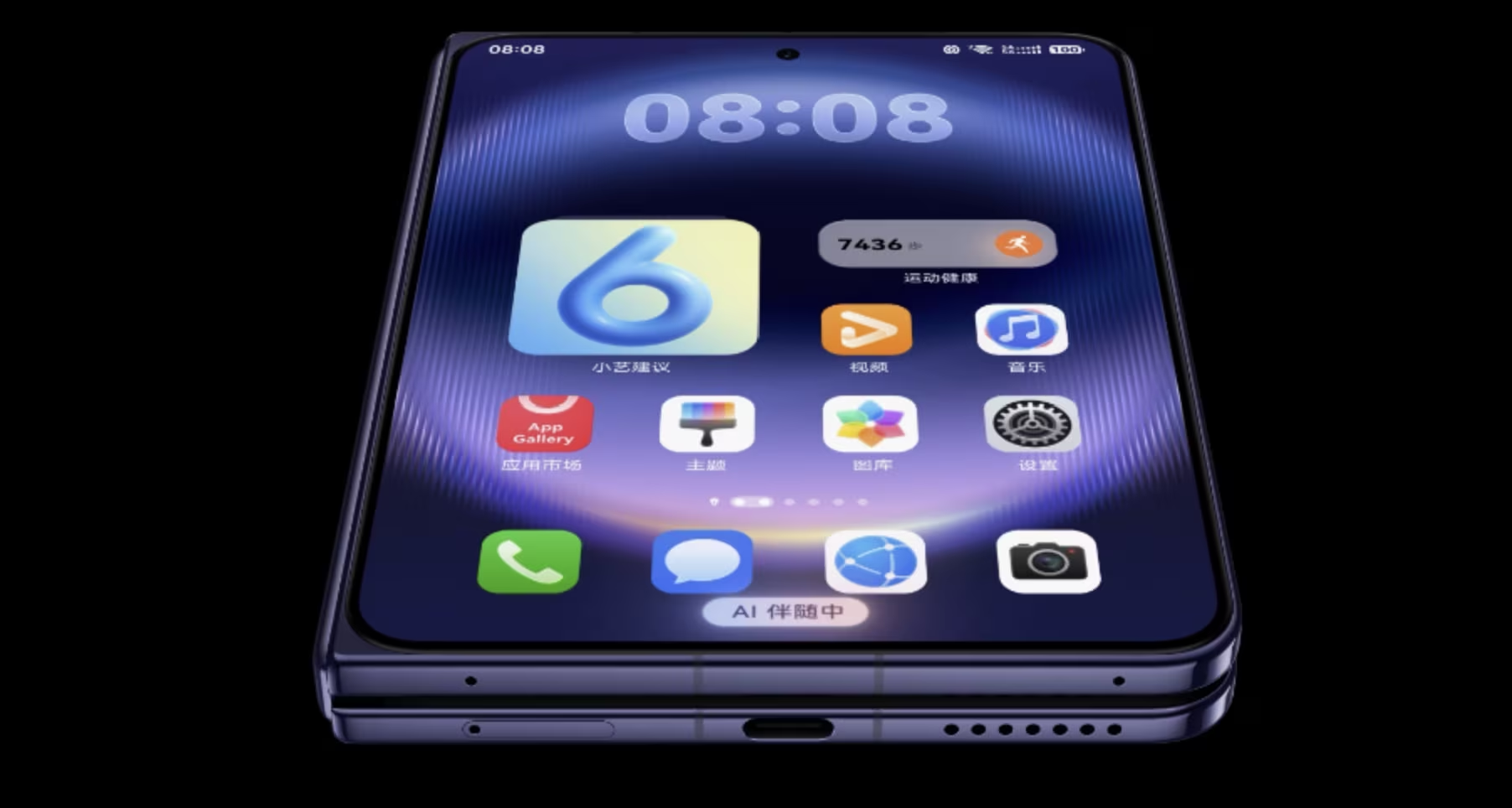
This wide foldable format stands out in a category often dominated by narrow ”clamshell” designs. Its tablet-like aspect ratio edges closer to productivity use cases than the typical compact foldables from Samsung or the rumored Apple iPhone Fold. The real battle in the foldable space has long shifted from ”foldable for the sake of folding” to devices that actually integrate well into everyday life without compromises.
Performance, battery, and camera specifications of Huawei Pura X Max
Under the hood, the Pura X Max runs on Huawei’s in-house Kirin 9030 Pro chipset, paired with either 12 or 16GB of RAM. It houses a 5,300mAh battery, supporting fast wired charging at 66W alongside wireless charging rated at an impressive 50W. Powered by HarmonyOS 6.1, the phone addresses two major foldable pain points: battery life and system fluidity – issues that have plagued earlier foldables, which either drained too fast or felt clunky in daily use.
The triple camera setup is no afterthought. Huawei equips the phone with three 50MP sensors: a variable-aperture main shooter, a telephoto lens, and an ultrawide sensor. While it may not turn the Pura X Max into a dedicated camera flagship, this hardware signals Huawei’s intent to offer a true premium smartphone experience beyond just the fold.
Huawei Pura X Max pricing and availability in China
- 12GB RAM / 256GB storage: 10,999 yuan (~$1,600)
- 12GB RAM / 512GB storage: 11,999 yuan (~$1,730)
- 16GB RAM / 512GB storage: 12,999 yuan (~$1,875)
- 16GB RAM / 1TB storage: 13,999 yuan (~$2,015)
Orders are open now in China. Huawei is positioning the Pura X Max firmly in the premium tier, skipping any lowballing or cheap experiments with the foldable format. At these prices, buyers are paying for confidence that their foldable won’t be a fragile novelty – but a durable, high-performance device meant for long-term use.
Compared to Apple’s rumored iPhone Fold and Samsung’s next Galaxy Fold, Huawei’s Pura X Max is already delivering on many priorities: a bigger, brighter main screen, fast charging, and a strong hardware foundation. While these features aren’t unique globally, Huawei’s approach underscores the increasing maturity of foldable phones, pushing the category beyond niche curiosities into devices ready for daily life.
What remains to be seen is how Huawei will support this device globally, especially given ongoing geopolitical tensions and the absence of Google services. The Pura X Max challenges competitors, but its success will hinge on software ecosystem and wider availability. Meanwhile, consumers can expect future foldables to adopt wider, brighter screens and sensible pricing – raising the bar for what a ”foldable flagship” should deliver in 2026 and beyond.