

YouTube is giving creators a way to clone themselves for Shorts, letting them generate videos that look and sound like them through an AI avatar. The feature is being pitched as a safe, secure shortcut for creators who want more output without filming every clip, but it also pushes the platform deeper into the awkward zone where polished content and synthetic content start to blur together.
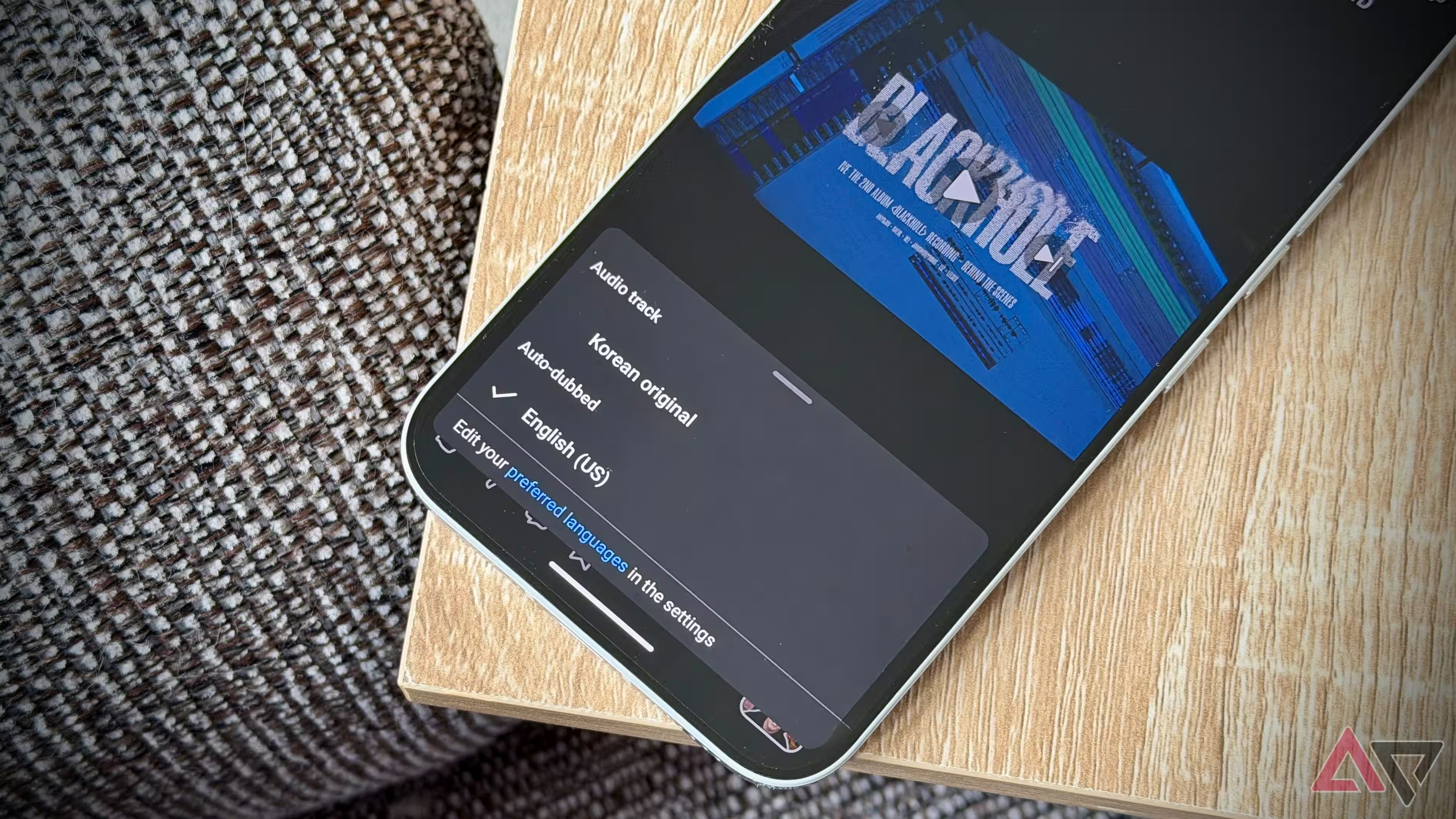

How YouTube AI avatars work
Creators must be 18 or older and have a YouTube channel before they can use the feature. The setup happens in the YouTube or YouTube Create app, where a secure ”live selfie” capture process records the creator’s face and voice to build the avatar. Once that’s done, the avatar can be used from a prompt to generate a scene or dropped into an existing Shorts clip.
That last bit is the clever part. By making the avatar usable inside existing Shorts, YouTube is not just offering a gimmick; it is trying to make synthetic talent feel like a production tool rather than a novelty filter. Competitors have been flirting with this territory for a while through third-party apps, but pulling it into YouTube’s own workflow lowers the barrier and raises the stakes at the same time.
Deletion, remixes and creator control
YouTube says creators can delete both the avatar videos and the avatar data if they change their minds. There is also a setting that limits who can use the avatar in YouTube remixes, which sounds like a sensible guardrail in a product category that could otherwise turn into a permission nightmare.
For now, the feature is limited to Shorts, but that ceiling will not hold forever if YouTube decides the tech is good enough. Long-form video is the obvious next battleground, especially if the company wants to help creators crank out more content without making the whole platform feel like a warehouse full of AI doubles.
Why YouTube is pushing into synthetic creators
Google has spent years stuffing AI into its products, and YouTube has been one of the more interesting places to watch that strategy play out. Some AI features help users find better videos; others, like avatar-based Shorts, are aimed squarely at creators and the economics of making more content faster. The appeal is obvious: if a creator can generate a believable stand-in, the bottleneck shifts from filming to prompting.
- Age requirement: 18 or older
- Availability: YouTube Shorts only, for now
- Setup: YouTube or YouTube Create app
- Capture method: live selfie for face and voice
- Controls: delete avatar data and restrict remix use
The real question is how viewers respond once the novelty fades. YouTube is betting that a familiar face, even a synthetic one, will still perform better than a faceless prompt-factory feed. That may be true at first. But if every creator can spin up an AI twin, the scarce thing will not be production speed anymore; it will be trust.