

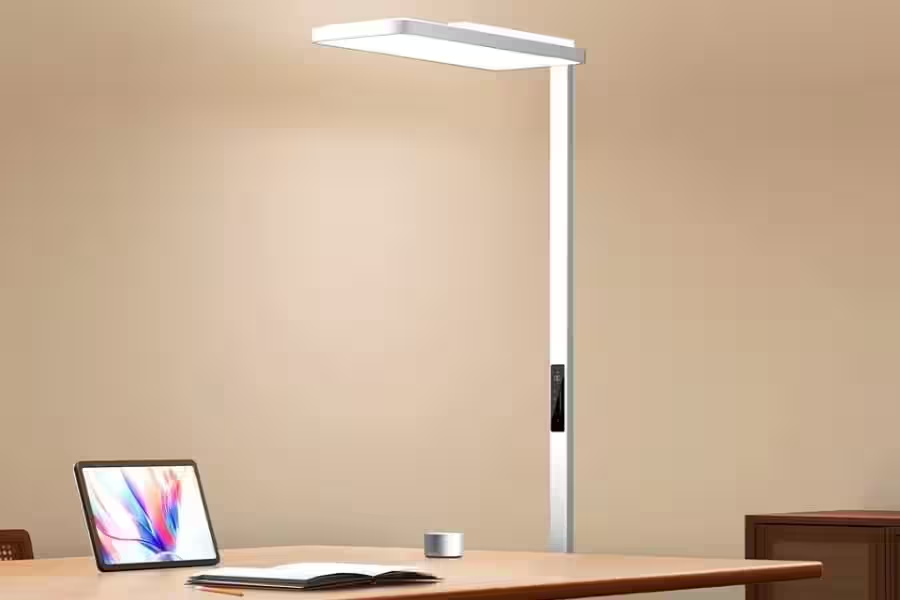
Xiaomi has unveiled the Mijia Vertical Study Lamp 2 in China, touting it as a high-performance smart desk lamp engineered for small rooms up to 15 square meters. Beyond the usual functionality, this lamp pushes the envelope with a claimed 17-year lifespan and an exceptionally bright output of 12,700 lumens, aiming to elevate how we light up study and workspaces.
High brightness with eye comfort in mind
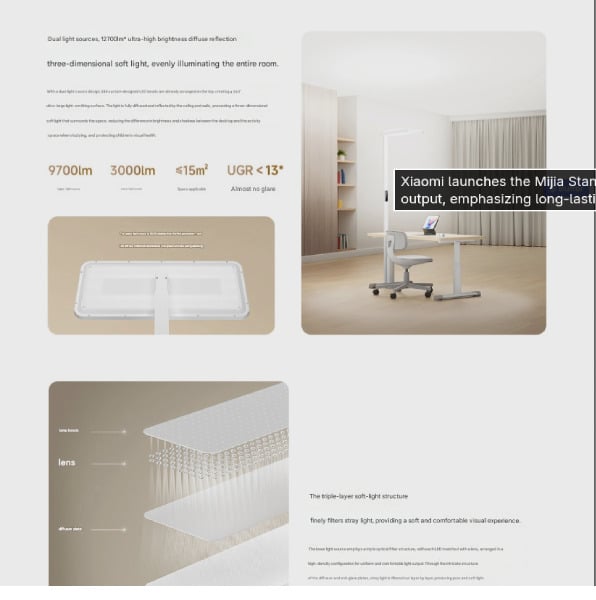
The new study lamp hits a luminous flux of 12,700 lumens-roughly 27 percent brighter than the original model. At its center, the illuminance surpasses 1,800 lux with a uniformity rating of 1.04, which translates to consistent and powerful light coverage without significant dark spots. Xiaomi emphasizes minimal hand shadows, a key feature for anyone doing detailed desk work like writing or drawing for hours.
Eyewear-friendly features are a core part of the design, with the lamp achieving a UGR (Unified Glare Rating) below 13, which means low glare. The color rendering index stands at a high Ra98, indicating colors appear vivid under its light. Xiaomi also incorporates a solar spectrum fitting coefficient above 0.985, signaling the lamp closely mimics natural sunlight-a quality often missing in artificial lighting but linked to better visual comfort and alertness.
Smart features and pricing
Beyond lighting, the lamp integrates AI technology to automatically adjust brightness according to presence detection, enhancing energy efficiency and user convenience. It links seamlessly with Xiaomi’s Mi Home app and supports touch controls directly on the lamp pole. These smart features place it within Xiaomi’s larger ecosystem, allowing remote management and voice command compatibility via Xiaomi’s Super AI.
The lamp is priced at 2,499 yuan (~$363), with a launch discount bringing it to 2,349 yuan (~$350). Further subsidies reduce the cost to under 2,000 yuan (~$290), positioning it competitively for its feature set in China’s market.
As Xiaomi dives deeper into smart lighting hardware, this product reflects a trend where functional household items are becoming layered with AI-powered convenience and health-conscious design. Brands like Philips Hue and Xiaomi’s own predecessors have paved the way, but Xiaomi’s strong push for eye-friendly and longevity-focused features hints at growing consumer demand for lights that preserve eye health over long study or work sessions.
Still, with such bright lighting tailored for small spaces, the lamp might be too intense for some users without dimming preferences fine-tuned, despite the AI adjustments. The lamp’s expansive ecosystem compatibility also means its best features will appeal to those already invested in Xiaomi’s smart home environment.
Will this blend of brightness, long life, and AI convenience spark wider adoption outside China? Xiaomi’s ambitions signal that simple lighting is no longer just about illumination-it might now be about health, intelligence, and integration. The question remains: how quickly will other manufacturers respond?