

For the first time in years, the old ”Snapdragon vs Exynos” argument looks less like an obsession and more like a narrowing technical contest. Early post-launch benchmarks for Samsung’s Galaxy S26 family show the new Exynos 2600 – built on Samsung’s 2nm GAA process – sitting much closer to Qualcomm’s Snapdragon 8 Elite Gen 5 than past rival chips ever did.
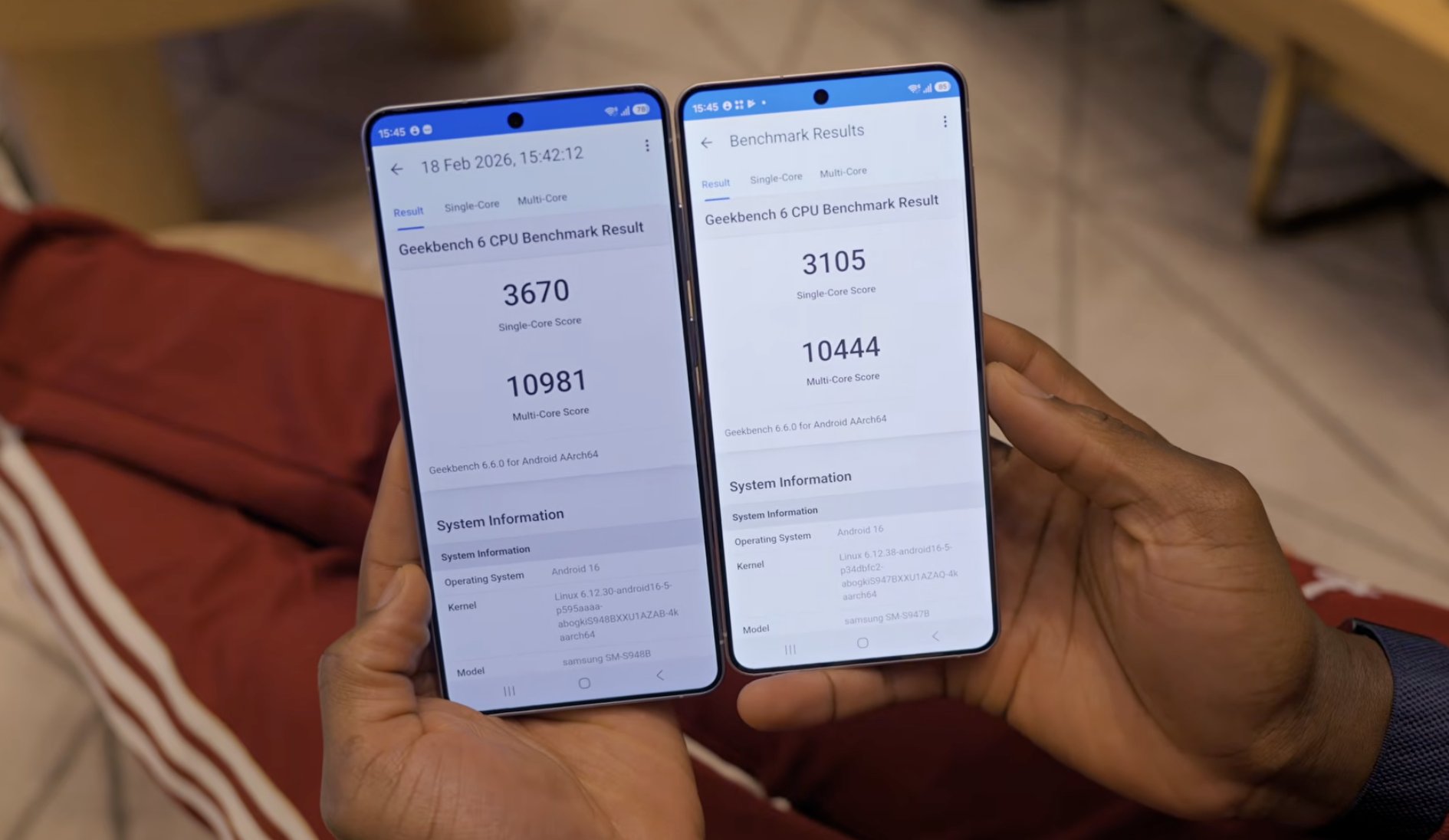
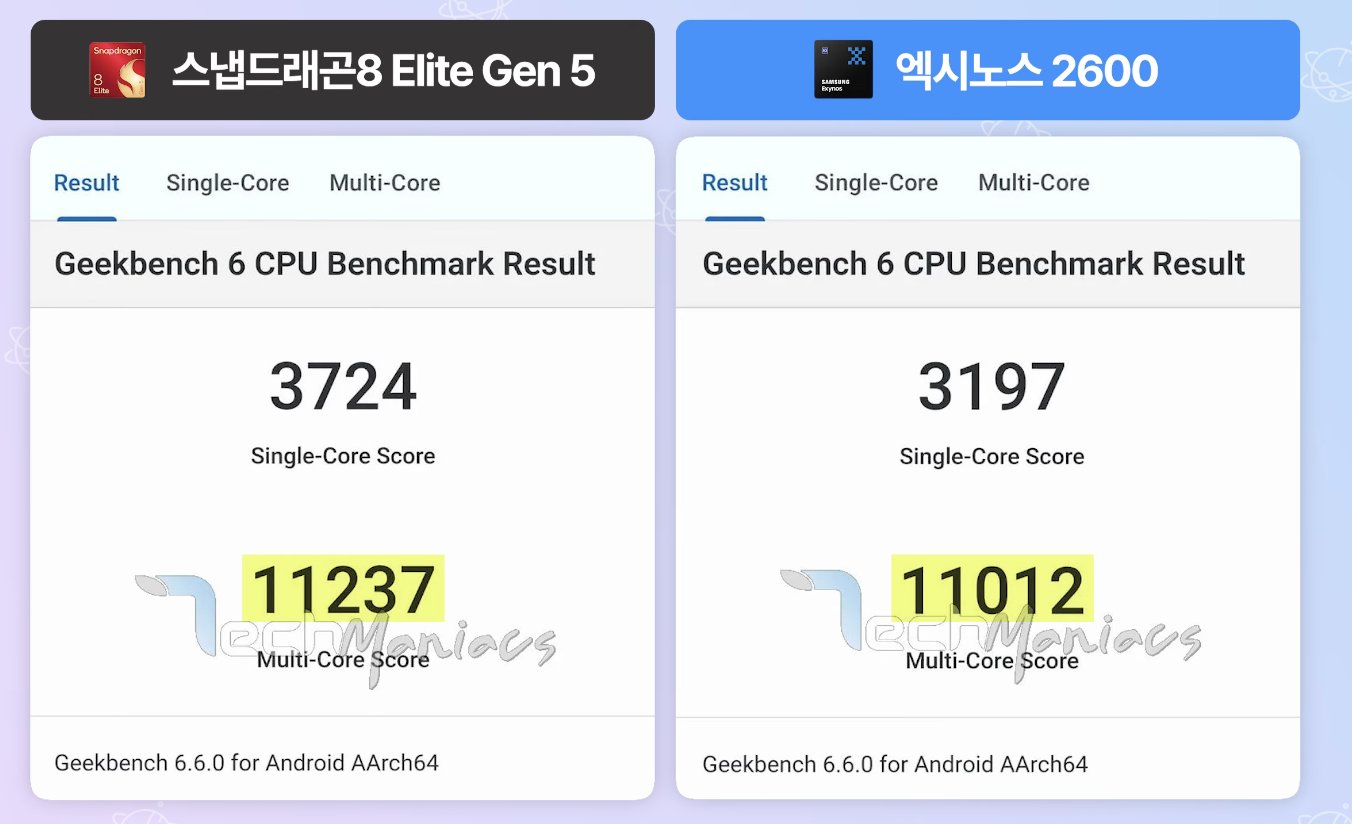
The raw numbers are straightforward and worth preserving. The Galaxy S26 Ultra (Snapdragon) posted Geekbench 6 single-core runs of 3,670 and 3,724, with multi-core results of 10,981 and 11,237. The Galaxy S26+ with Exynos 2600 scored between 3,105 and 3,197 on single-core and 10,444 to 11,012 on multi-core. On paper, that’s roughly a 10 to 18 percent single-thread gap favoring Qualcomm – enough to matter for snappier app launches, but not an order-of-magnitude difference.
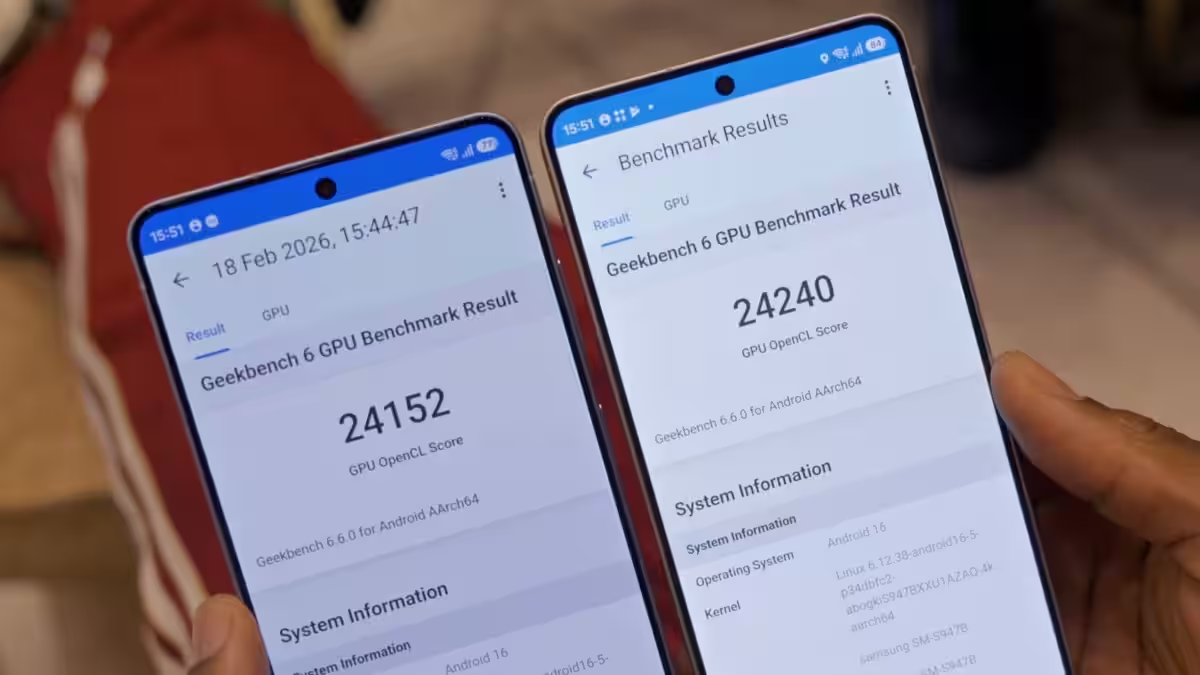
The GPU picture, however, complicates the narrative. In OpenCL testing, the Exynos 2600 posted 24,240 versus the Snapdragon’s 24,152. It’s a tiny margin, but symbolically important: Exynos chips historically lagged on both raw GPU throughput and sustained gaming performance.
Why this is different – and why it isn’t finished
Two things make the Exynos 2600 worth paying attention to. First, it’s Samsung’s first step onto a 2nm GAA manufacturing node, which promises better transistor density and efficiency versus older nodes. Second, the margin between the chips is much narrower than critics would have predicted based on past launches.
That said, benchmarks are single-point snapshots. The bigger tests are sustained workload performance, thermal throttling, and real-world battery drain over hours of gaming or heavy multitasking. Those are the areas where earlier Exynos generations – most notably chips paired with the Galaxy S22-era hardware – fell short because of driver maturity, thermal tuning, and power efficiency under long runs.
Context: what history teaches us
Exynos has a track record of flashes of promise followed by uncomfortable reality. Architectures and raw specs sometimes looked competitive, but driver issues, thermals, and the efficiency of rival chips from Qualcomm or MediaTek repeatedly pulled perceived performance down in everyday use. Samsung’s foundry has been chasing TSMC for years; a successful 2nm roll would close that manufacturing gap and change how Samsung thinks about its silicon roadmap.
Meanwhile, Qualcomm’s ”for Galaxy” variants – tuned and binned specifically for Samsung devices – have historically given Snapdragon-equipped Galaxies an extra practical edge. Even if the Exynos catches up in peak numbers, software tuning and power curves matter just as much.
Who wins, who loses
Short-term winners: Samsung’s foundry and Samsung’s PR narrative. Narrower performance gaps quiet a long-standing complaint among global Galaxy buyers, and give Samsung negotiating leverage with partners and carriers. Consumers win if parity means fewer region-based performance differences.
Potential losers: Qualcomm loses some of the automatic superiority narrative, though it still leads in single-core CPU performance in these early runs. The real loser could be consumers if Samsung uses parity as cover to keep shipping region-locked silicon without committing to identical software tuning and long-term driver support.
What to watch next
Benchmarks like these are a useful first read, but the follow-ups will decide whether the Exynos 2600 is merely competitive or actually preferable. Look for:
– Long gaming sessions and thermal throttling tests. Does the Exynos sustain performance, or does it fall back after 10-20 minutes?
– Battery life comparisons under identical workloads, since efficiency gains from a new node won’t matter if software tuning negates them.
– Driver updates and GPU stability. Matching peak OpenCL numbers is one thing; keeping frame-time consistency and avoiding driver bugs is another.
If the Exynos 2600 ticks those boxes, Samsung’s foundry is no longer just promising parity – it’s delivering a new negotiating chip in the smartphone silicon market. If it doesn’t, we’ll have another year of incremental wins on paper that don’t translate to better daily experiences.
For now, the story is simple: the gap has closed, but the finish line is still out of sight.