

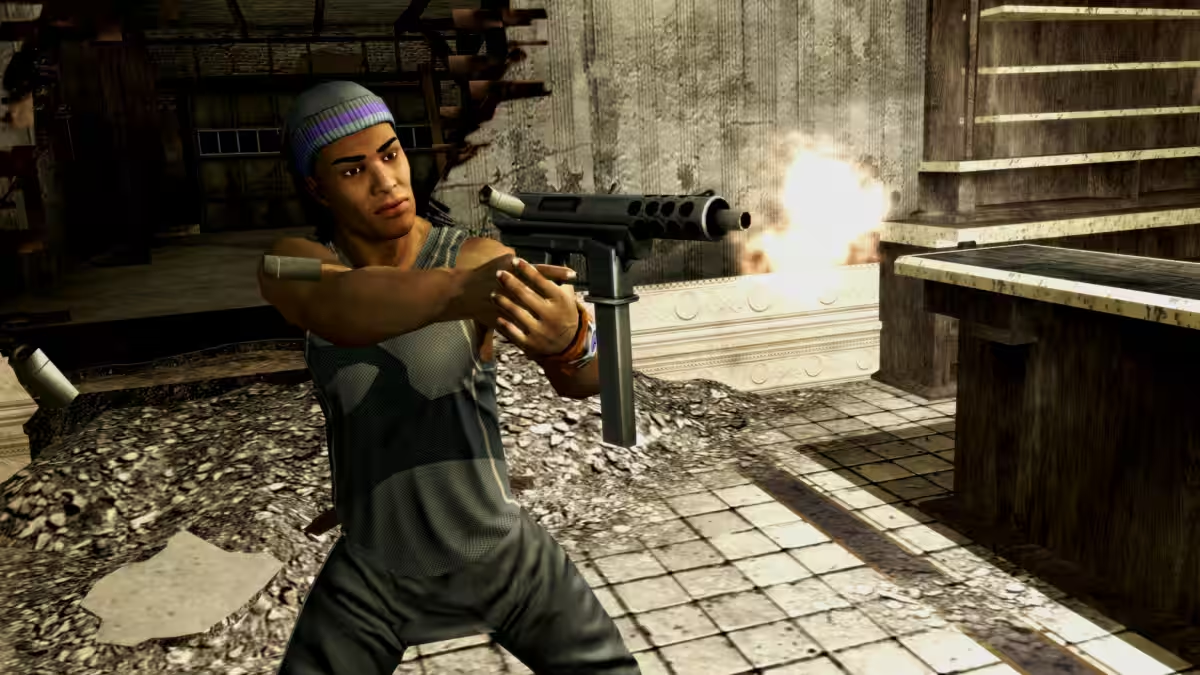
Big-budget open worlds are heavy beasts. They cost hundreds of millions to make, take years, and need massive sales to justify the expense. When a franchise stumbles once, owners often park the IP rather than gamble on another expensive, uncertain reboot. That’s the practical problem behind a former Saints Row designer bluntly declaring the series ”dead.”
Chris Stockman, design director on the original Saints Row, told members of his studio’s Discord that ”I think the franchise is dead,” and later added that Embracer – the group that owns the Saints Row IP – had ”ghosted” him after he tried to offer a comeback plan. On Feb. 17 he reiterated that ”as long as they are in business they own it … they could license it to me or contract us to manage it, but I’ve done all I can do to try and make that happen.”
This isn’t just about one franchise
Saints Row’s current limbo is a symptom, not an exception. The novelty of sandbox playgrounds has faded for many players, and the market has narrowed around a few massive, dependable winners – Rockstar’s GTA/Red Dead axis chief among them. Meanwhile publishers who snapped up dozens of studios and IP during the acquisition boom have spent the last few years reassessing which brands are worth another huge investment.
That’s why you see whole series sitting idle: Prototype, Crackdown, Sleeping Dogs, Sunset Overdrive and others have all been feted in their time but haven’t turned into long-running annual franchises. The math for another full-priced open-world reboot is brutal if the previous installment underperformed or damaged reputation.
How we got here
Saints Row’s most recent attempt at a comeback – the 2022 reboot – failed to win over critics and many players, and big, visible flops make owners cautious. Embracer acquired Deep Silver and the Saints Row catalog through earlier deals; as the parent company weathered a period of excess in acquisitions, it also had to cut costs and prioritize projects. When cash is tight, expensive reboots get deprioritized or shelved.
That leaves three basic outcomes for a dormant franchise: (1) the owner quietly leaves it alone; (2) the owner licenses the IP to a smaller studio that can revive it at lower cost; or (3) a new buyer pays for a reboot. Stockman’s comment suggests he tried to pursue option (2) and got no reply.
Who wins and who loses
Fans lose when a beloved series is mothballed; they get nostalgia and remasters at best. Developers who want to revive an IP lose too, unless they can secure licensing or a publishing partner. Publishers sometimes win by trimming risk and avoiding another expensive failure – but they also lose long-term goodwill and potential franchise value if an IP sits unused for a decade.
There are recent counterexamples where careful, lower-cost revivals paid off. Remakes and reboots that reworked scope and audience expectations – think the Dead Space remake and other studio-led revivals – show a path that doesn’t require repeating the old AAA checklist. Licensing to smaller teams that focus on the core of what made a franchise fun has become an increasingly attractive option.
What’s likely to happen next
Expect Saints Row to remain dormant unless Embracer either decides to invest in a risky full reboot or cuts a licensing deal. Both are plausible: licensing gets the IP working again for less money, while a reboot requires confidence and capital. Given public signs of caution among big publishers and the cost of modern open worlds, licensing or small-scale revivals are the likeliest near-term outcomes.
For now, the old Saints Row games still exist and still deliver the looser, zanier sandbox play some players prefer. But Stockman’s blunt appraisal – that the franchise is ”dead” until its owner moves – is an uncomfortable reminder that in today’s market, ownership and balance sheets often decide whether a series lives or dies, not creator passion.
If you care about keeping niche or mid-tier series alive, the industry trend to watch is whether big owners prefer licensing and targeted revivals over another round of full-price open-world bets. That’s where a lot of fan hopes, and the next Saints Row, are most likely to come from.