

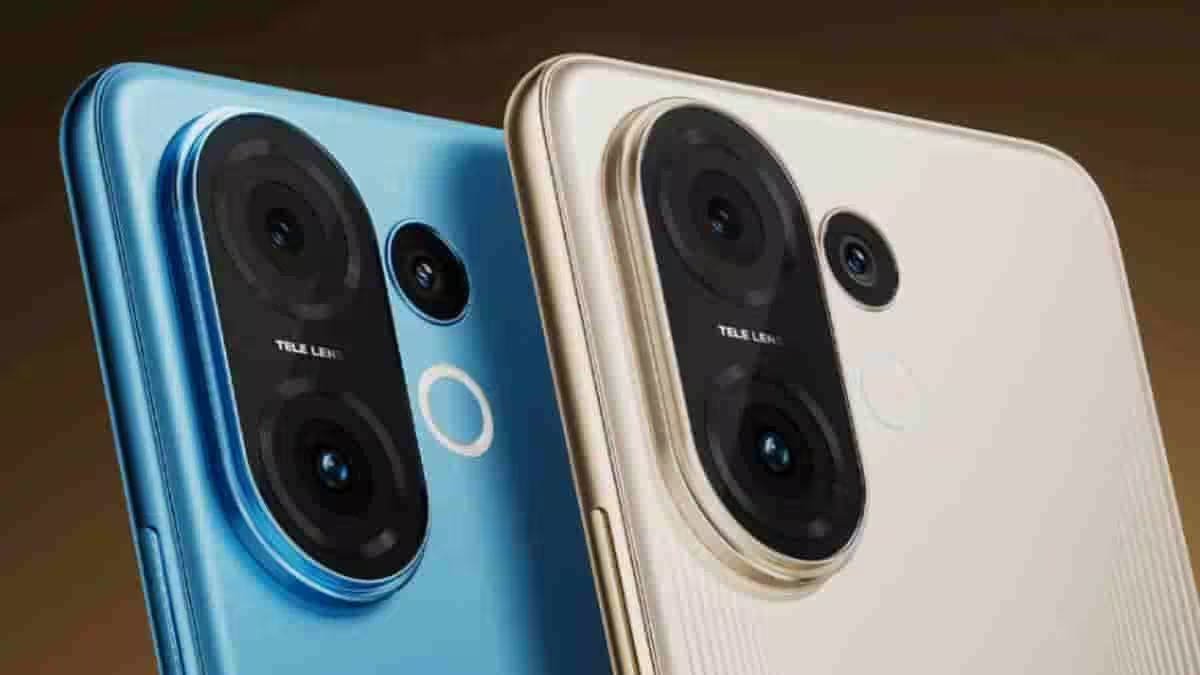
The mid-range phone treadmill just picked up speed. A new IMEI listing for a vivo model numbered V2568 makes plain that a successor to the T4 Pro is in development – and that vivo isn’t waiting long before refreshing a segment that’s already overflowing with high-spec alternatives.
The listing itself is light on detail: global IMEI databases typically only confirm existence and a model identifier. Still, an IMEI hit is often the first public sign a launch cycle has begun, and it tells manufacturers and rivals that vivo plans to keep the T-series in market rotation.
Why the T-series matters
The current T4 Pro, which debuted in India in August 2025, set a high bar for mid-range value. It packs a 6.77-inch quad-curved AMOLED display with a 120Hz refresh rate and a claimed 5,000-nit local peak brightness, runs on Qualcomm’s Snapdragon 7 Gen 4 chipset, and offers up to 12GB of RAM and 256GB of storage. Camera hardware includes a 50MP main sensor with OIS, a 50MP periscope telephoto with 3x optical zoom and OIS, plus a 2MP auxiliary sensor and a 32MP front shooter. On battery and durability it delivers a 6,500mAh cell, 90W fast charging, and IP68/IP69 ratings – a spec sheet that reads closer to flagship-lite than to a typical budget device.
Given that starting point, the obvious question for the T5 Pro is not whether vivo will launch it, but what meaningful upgrades it can deliver without blowing past the T-series’ price bracket (the T4 Pro landed in the sub-₹30,000 segment).
What vivo can reasonably change
There are a few realistic levers: a newer mid-range system-on-chip, better camera sensors or processing, and incremental gains in battery charging or screen tech. A chipset swap – either a newer Snapdragon 7-series or a MediaTek Dimensity alternative – would be the simplest headline upgrade. Better software tuning and sensor boosts would be more meaningful for real-world camera performance, especially for that periscope telephoto which has become a key mid-range differentiator.
Context: why every brand is piling on specs
The last few years have seen flagship features migrate downprice fast: high-refresh AMOLEDs, multiple stabilized lenses including periscopes, massive batteries with fast charging, and IP ratings. Brands such as Realme and Redmi have made aggressive moves in this space, and newer challengers have used distinctive design or software to grab share. That competition pushes incumbents like vivo to refresh models more often, because standing still means ceding marketing narratives and showroom shelf space.
There are clear winners and losers in this arms race. Consumers benefit in the short term: more capable phones at lower price points. Chipmakers and component suppliers win too, with steady demand for updated modules. Retailers can capitalize on frequent launches. The losers are the companies that can’t match the cadence without sacrificing margins, and the environment – faster refresh cycles mean more devices produced and retired.
What’s missing from the specs sprint
Specs alone won’t settle the T5 Pro’s fate. Software support and camera tuning matter more than raw megapixel counts. After-sales software promises – how many OS upgrades and security patches vivo will commit to – are a major value lever that often gets overshadowed by CPU cores and charging speeds. Battery longevity under real-world use and thermal behavior with a faster SoC are other practical concerns that won’t appear in an IMEI listing.
Finally, price positioning will be decisive. The T4 Pro carved a slice of the sub-₹30,000 market by offering near-flagship hardware; if vivo hikes price to cover new components, it risks entering head-to-head battles with more premium models where margins and expectations differ.
Outlook: what to watch next
IMEI entries normally precede further certification sightings and leaked spec sheets. Expect additional database appearances (Bluetooth SIG, TENAA or regional certification agencies) if vivo plans a mid-2026 launch – August 2026 is a plausible target given vivo’s past cadence, though that’s an informed guess rather than a confirmed date.
Ultimately, the T5 Pro’s importance won’t be decided by an IMEI line but by whether vivo upgrades the software experience and keeps the price in reach. If the company merely tacks on a refreshed chipset without improving camera processing, battery management, or software longevity, it will be just another refresh in an already crowded cycle. If it improves the whole package while holding price steady, rivals will have to respond – and the arms race will continue.
For now, the V2568 is a reminder: in the mid-range market, momentum often matters as much as the specs sheet.