

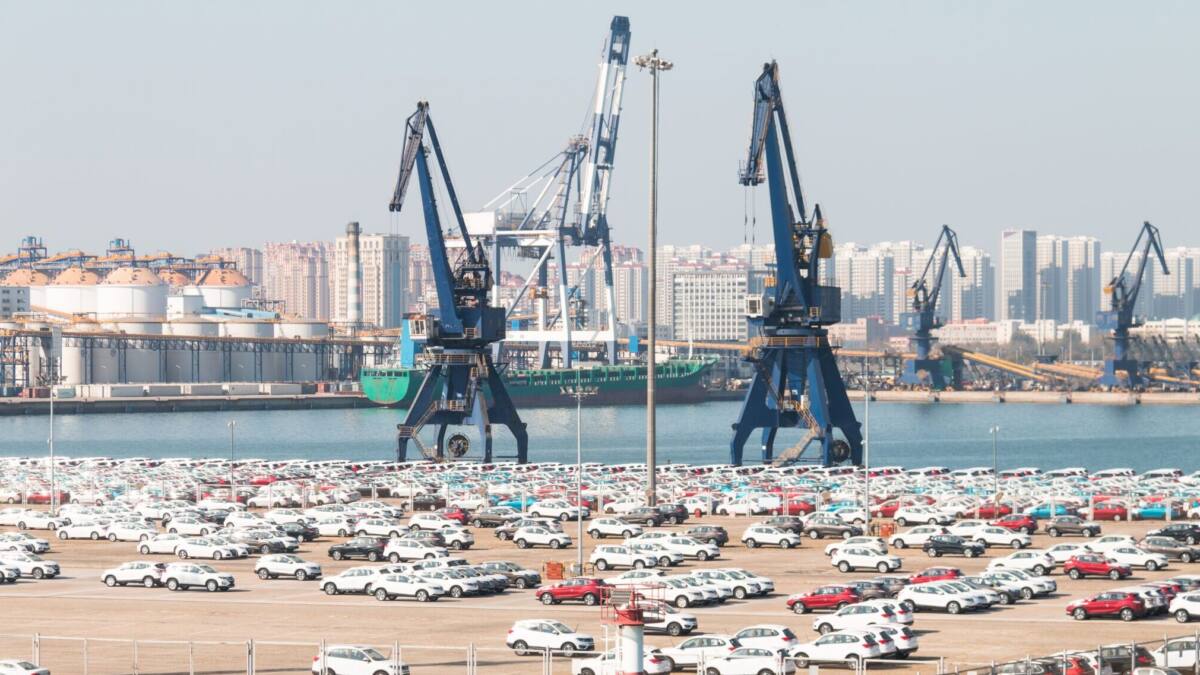
Five major US automotive trade organizations, representing giants like General Motors, Ford, Toyota, and Volkswagen, have called on the Trump administration to uphold existing trade barriers on Chinese electric vehicles (EVs). This plea comes amid shifting signals from the former president, who recently suggested that Chinese automakers could enter the US market if they commit to local production. The US remains the only significant global market largely closed to Chinese EVs, making this an important battleground for the future of the automotive industry.
Chinese EV makers have aggressively expanded overseas to compensate for flattening domestic demand, but American automakers warn that allowing them unfettered access to the US market would threaten the nation’s competitive edge and industrial base. The letter stresses concerns over Beijing’s heavy subsidies of its car companies, which skew competition and undermine market fairness. Ford’s CEO Jim Farley has frequently described the Chinese threat as existential, even suggesting their capacity could put global competitors out of business.
Earlier this year, Trump indicated he might soften his stance on Chinese automakers provided they build factories within the US, promoting domestic jobs rather than importing vehicles directly. However, this approach worries legacy automakers, who remain wary of China’s systemic advantages and have pushed to preserve Biden-era cybersecurity restrictions on Chinese connected vehicle technology, effective since March 2026. These protections block Chinese software suspected of data harvesting and add another layer of market defense beyond hefty import tariffs.
Currently, Chinese EVs face a 100% tariff under Section 301, making direct sales in the US prohibitively expensive. Meanwhile, China has criticized US trade barriers as unfair, asserting that their advancements come from competition and innovation. Internationally, this protectionist barrier is eroding: Canada has eased tariffs on Chinese EVs, permitting nearly 49,000 units annually at reduced rates, and Europe is experimenting with minimum price agreements instead of outright duties. If the US relaxes its trade barriers, it will lose its last bulwark against Chinese EV entrants in major global markets.
The industry also opposes Washington state’s new law allowing EV manufacturers to sell directly to consumers without franchised dealers. This policy could open a backdoor to market entry for Chinese automakers, who currently lack US dealer networks. Historical echoes abound: US makers once resisted Japanese car imports in the 1970s, protecting their turf only to see the domestic market transformed dramatically.
Beyond trade tensions, the challenge is compounded by declining foreign automaker shares in China. Once the key growth area for GM and Volkswagen, foreign market share has halved from 64% in 2020 to about 31% in 2025, as Chinese brands outpace rivals on price, software, and electric offerings. The US may become the final holdout, but the pressure to rethink market access and competition rules is mounting.