

The U.S. legal system just erased the neat scaffolding that kept many Apple products temporarily off the tariff list. That leaves multinational supply chains – and anyone who buys an iPhone or Mac in the United States – facing fresh uncertainty about how much those devices really cost.
The headline: a legal reset, then a policy retread
On February 1 last year, the administration imposed a blanket 10% supplementary tariff on imports from China. That levy sat on top of existing, product-specific duties and – at its peak during a tit-for-tat escalation – contributed to combined rates that reached 145%. After intense lobbying, Apple won category exclusions for most of its products, and later negotiations reduced the added rate back to 10%.
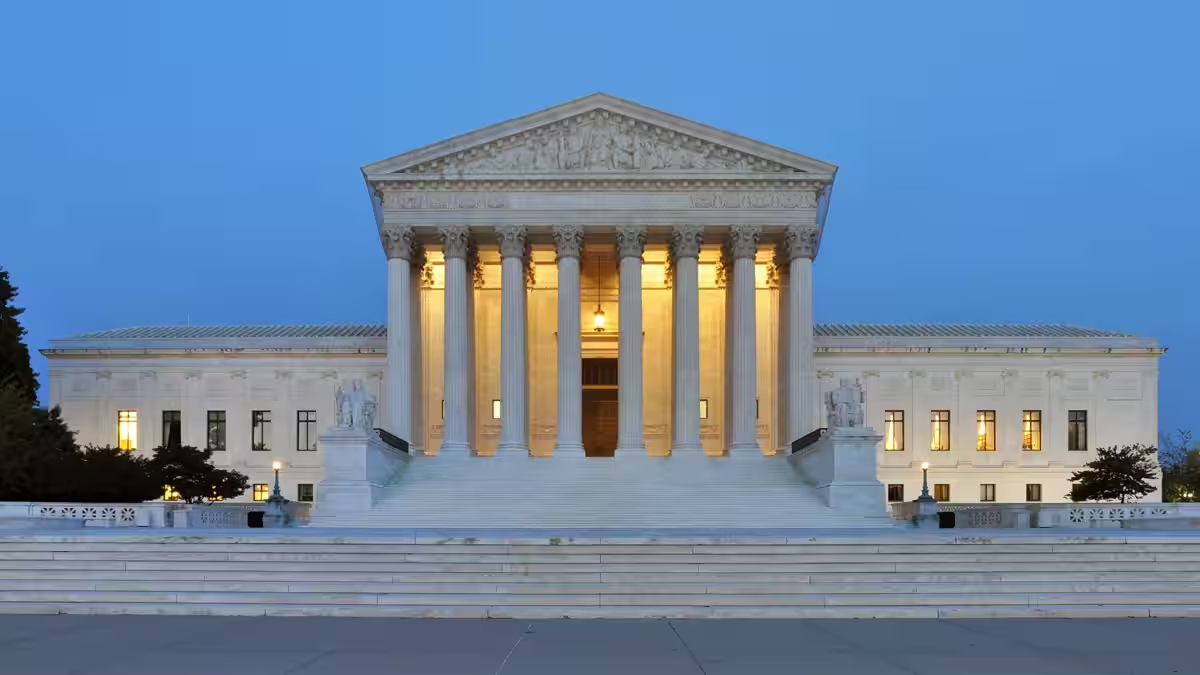
This week the U.S. Supreme Court ruled that the International Emergency Economic Powers Act did not authorize the president to impose those tariffs, effectively declaring the earlier levies illegal. Within a day, the White House invoked a different statutory route and announced a new, blanket 10% tariff on almost all imports – and then said it would raise that to 15%.
Why Apple matters in this story
Apple is a useful bellwether because its devices are high-value, widely sold, and almost entirely built with significant components and assembly in Asia. The company previously campaigned successfully for product exclusions that spared iPhones, iPads and Macs from the supplemental duties; those exclusions are now at risk. If the latest proclamation applies broadly, those exclusions will be irrelevant and Apple – or its customers – will be liable for the extra percentage on each import.
What this actually does to prices and production
There are three ways tariffs like these play out: manufacturers absorb the hit, suppliers take a smaller margin, or prices rise for consumers. With Apple’s margins and brand pricing power, the company can sometimes shield customers. But the uncertainty is the real cost: firms can’t set budgets, suppliers hesitate to invest in tooling, and forecasts for component orders become shaky. That sort of wobble affects contract manufacturers and parts suppliers far more than it does an iPhone buyer who simply upgrades once a couple of years.
This isn’t the first time – and companies have options
Corporate pushback and legal challenge are now familiar parts of the toolkit. Businesses previously challenged the legal basis for the tariffs, which is what reached the Supreme Court. Expect more litigation and renewed lobbying for category exemptions. At the same time, many electronics companies have been diversifying production for years: assembling more units in India, Vietnam and Mexico, and moving select component production out of China. Those shifts blunt but do not remove exposure – they take time and investment to scale.
Apple, for example, has expanded some iPhone assembly in India and increased component sourcing from Southeast Asia. Those moves reduce marginal exposure to any single tariff policy, but they don’t eliminate the immediate impact of a retroactive or abrupt duty reinstatement on products already built for shipment.
Who wins, who loses
Domestic producers selling competing goods could gain modest price protection. U.S.-based suppliers that don’t rely on imported parts might see a temporary advantage. The losers are obvious: exporters dependent on cross-border supply chains, their workers, and ultimately consumers if companies pass costs along. Smaller suppliers and contract manufacturers with thin margins are the most exposed.
My take: instability is the bigger story than any single percentage point
A one-off tariff spike is painful; recurring legal whipsaw is worse. The Supreme Court decision removed one legal cover but the administration’s quick substitution shows that the policy could be back in force even while courts sort it out. That creates an uncomfortable environment for supply-chain planning and capital expenditure – decisions that factories and suppliers must make months or years ahead of consumer sales.
Apple will lobby for exclusions again. Rivals and suppliers will measure how far to accelerate diversification. Lawyers will test the new proclamation. And in the meantime, managers will delay upgrades and investments they would otherwise make. That lag – not the difference between 10% and 15% on a shipping invoice – is the economic damage most likely to ripple outward.
What to watch next
Watch for three moves: renewed exclusion petitions from major tech firms; a fresh wave of lawsuits challenging the alternative legal authority the White House invoked; and any public statements from Apple about price changes or supply-chain adjustments. If exclusions are granted again, the disruption will be short-lived. If courts strike down the new authority, the policy will revert to a legal limbo. If neither happens quickly, companies will accelerate diversification – a longer-term shift with real geopolitical and industrial consequences.
Whatever follows, this episode is a reminder that trade decisions made at the political level can erase months of commercial planning in a weekend. For companies that make things across borders, that unpredictability is its own tax.
Photo: Joe Ravi/CC-BY-SA 3.0