

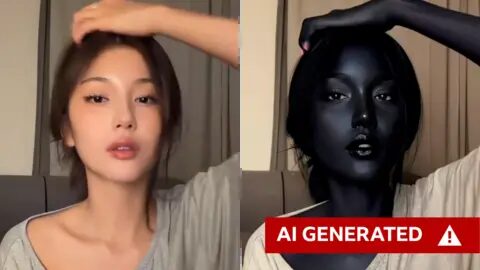
TikTok has removed 20 accounts featuring AI-generated digital avatars of black women used to direct users toward sexually explicit content, following a BBC investigation. These avatars, often depicted with exaggerated physical traits and unrealistic dark skin tones, appeared on Instagram and TikTok without clear AI disclosure, raising concerns about racial exploitation and misleading content on social media platforms.
Researchers from Riddance, an independent AI publication, collaborated with the BBC to identify over 60 Instagram accounts promoting paid adult content linked to these AI personas. Most accounts used stereotypical terms such as ”black,” ”noir,” and ”ebony,” along with racially charged captions like ”loves white men,” perpetuating harmful caricatures. Instagram’s parent company Meta confirmed it is investigating the issue but has not yet taken action, while TikTok swiftly banned the offending accounts following the BBC’s report.
One particularly controversial TikTok account replicated videos of Malaysian model Riya Ulan, overlaying her movements and clothing onto a hypersexualized AI figure with an unnaturally dark complexion. This account gained over three million followers and tens of millions of views, far surpassing the reach of Riya’s authentic content. Despite multiple reports, the account was removed only after media scrutiny.
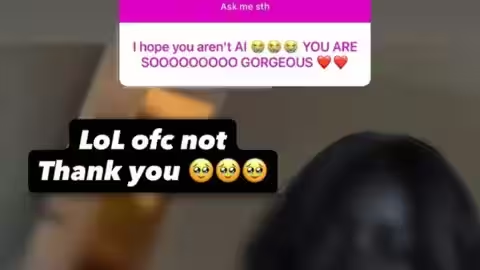
Content creator Houda Fonone criticized this trend as a form of erasure that replaces genuine representations of black women with artificial images conforming to narrow, unrealistic beauty standards. Riddance researcher Angel Nulani described the accounts as racist, stating they commodify black women to fuel an online ”porn machine” while creators evade accountability due to the digital nature of AI avatars.
Researchers highlight AI’s ability to produce exaggerated, unnatural dark skin tones without the social accountability associated with real individuals worsens the issue. This technology-driven development is a new iteration of long-standing fetishization. Social platforms have policies banning AI content that promotes off-platform sexual services and require AI material to be clearly labeled, but enforcement remains inconsistent, especially on Instagram.
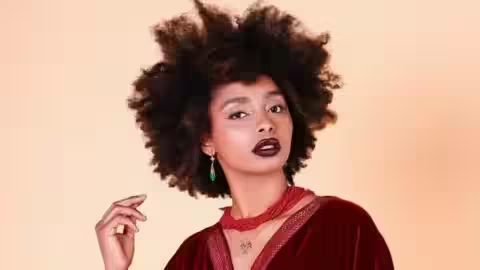
TikTok’s rapid removal of these accounts signals a stricter stance on AI misuse. However, platforms continue to struggle with policing the rapidly growing influx of synthetic influencers. As AI-generated content becomes more prevalent, distinguishing genuine creators from digital fabrications will become increasingly difficult. Meanwhile, the racial implications of these distortions call for more urgent scrutiny and clearer platform responsibility.