
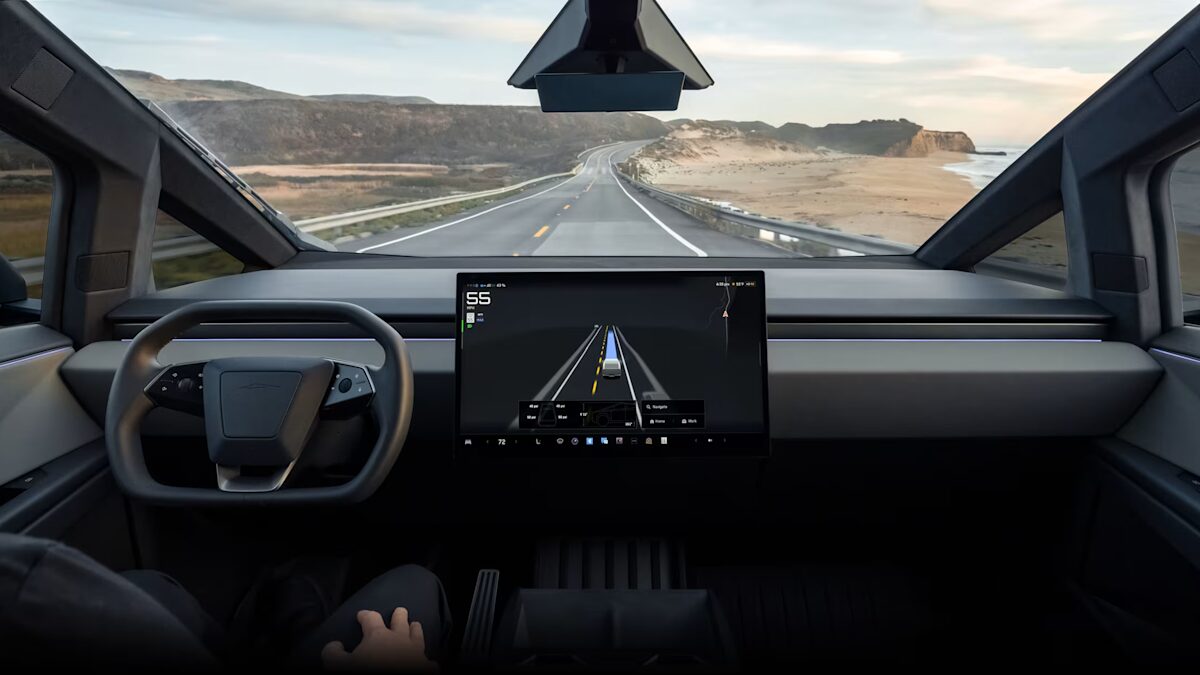
Tesla’s Full Self-Driving (Supervised) is about to begin its European life in the Netherlands, after the country’s vehicle regulator approved the system and said rollout should follow shortly. It’s Tesla’s first regulatory win for FSD in Europe, and a useful one: if the Netherlands can sign off, the rest of the EU suddenly looks a lot less theoretical.
The Dutch regulator, RDW, said the system had been examined and tested for more than one and a half years on its test track and public roads. It also described the tech as a positive contribution to road safety. That is the sort of language automakers love to quote and regulators carefully hedge, because the same approval came with an important asterisk: this is not ”self-driving,” and the driver is still responsible at all times.
What Tesla got approved
Tesla Europe said the software was approved in the Netherlands and will start rolling out shortly. RDW’s decision is being treated as a type approval for Tesla’s Full Self-Driving (Supervised) system, which is a bigger deal than a single-country checkbox sounds. European regulators tend to move cautiously on driver-assistance software, so one approval can become a template for others if the paperwork and testing hold up.
- First European country to approve Tesla’s Full Self-Driving (Supervised): the Netherlands
- Testing period cited by RDW: more than one and a half years
- Regulatory condition: the driver remains responsible and must always remain in control
Tesla’s Full Self-Driving (Supervised) in the EU
RDW also said the approval could help pave the way for ”possible later admittance in all member states of the European Union.” That wording matters. Tesla has been trying to expand its automated driving features beyond the U.S. for years, and Europe has been one of the harder markets to crack because safety rules are stricter and national regulators still have plenty of say.
This is happening while Tesla’s software remains under scrutiny in the U.S., where the National Highway Traffic Safety Administration has several ongoing investigations into FSD-related crashes, including cases in reduced visibility. So while the Netherlands approval is a win, it is not a clean victory lap. It is more like a carefully supervised entry onto a stage where every move will be watched.
What happens next for Tesla drivers
The immediate question is whether the Dutch approval becomes a domino or a one-off. Tesla has already laid out a roadmap for bringing automated driving features to Europe and China, so the company clearly wants this to be the start of something larger. The regulators, unsurprisingly, are in no rush to call it self-driving, because that would be the kind of optimism they prefer to leave to Silicon Valley.
If other EU authorities follow the Netherlands’ lead, Tesla could finally begin turning a long-promised feature into a regional product. If not, Dutch drivers get the head start, and everyone else gets another reminder that in Europe, autonomy still travels at the speed of approval.