

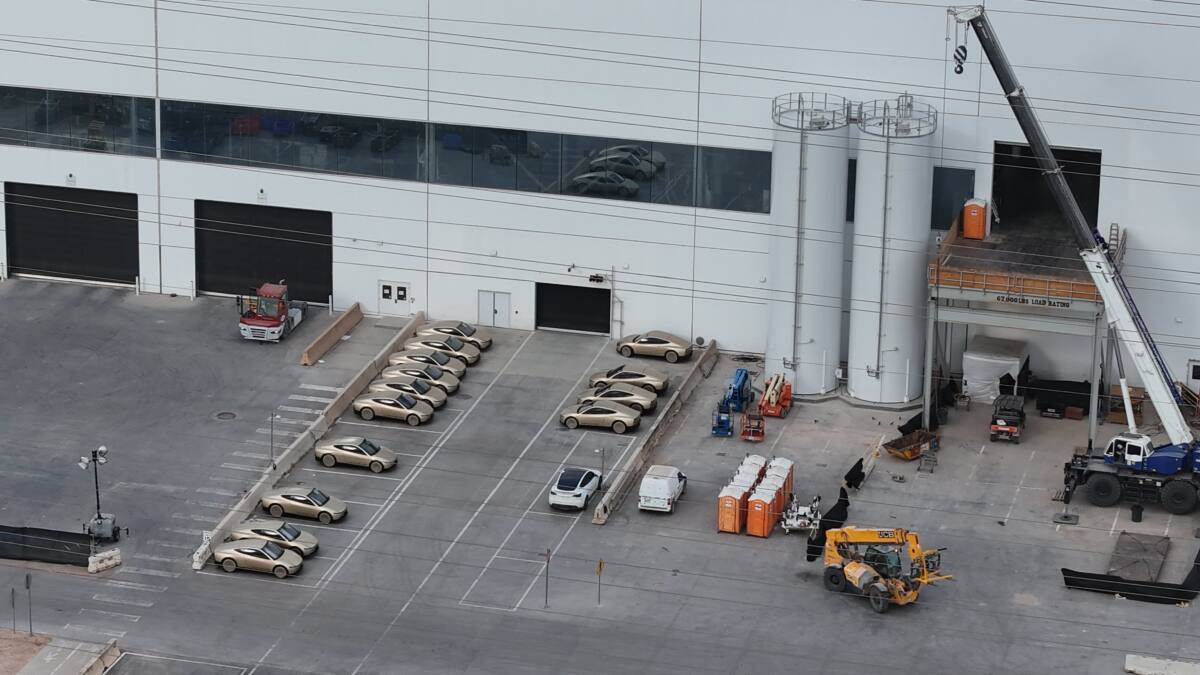
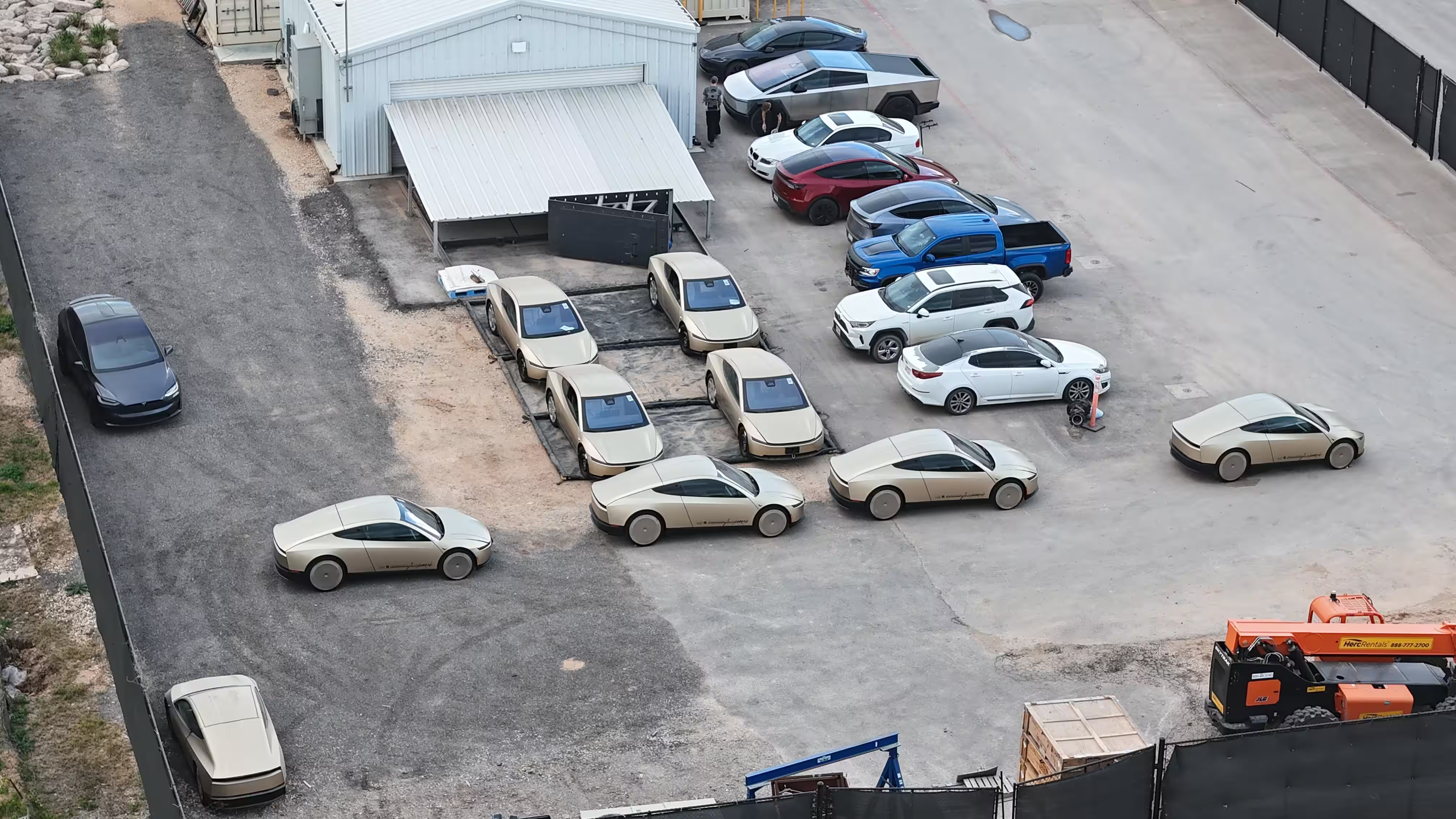
A surge of Tesla Cybercab vehicles spotted at the Giga Texas factory hints that Tesla’s fully autonomous ride-hailing ambitions are moving from concept to reality, with production reportedly hitting full capacity. Observers tracked over two dozen of these specialized driverless cabs on site, marking the largest public display of Tesla’s Cybercab fleet to date and suggesting a fast-approaching market launch.
Joe Tegtmeyer, a drone operator known for chronicling Tesla’s Austin operations, noted seeing at least 25 Cybercabs simultaneously at the factory grounds-14 lined up by the exit, nine undergoing crash tests, and a couple in the finishing bays. The presence of these vehicles out of the prototype stage and into steady production is a key milestone for Tesla’s autonomous vehicle vision, especially since the Cybercab lacks traditional controls like a steering wheel and pedals and is designed solely to transport two passengers.
Introduced in late 2024, the Cybercab represents Tesla’s attempt to compete in the emerging robo-taxi market by providing a dedicated autonomous vehicle that aims to lower the cost of passenger trips through full driver elimination. Unlike Tesla’s other electric vehicles, the Cybercab is built without manual controls, highlighting Tesla’s confidence in its self-driving system to handle city rides without human intervention.
With production reportedly now at maximum output, Tesla plans to start selling these autonomous pods within the year. This strategy directly targets the growing market for ride-hailing services, where competition includes established players like Waymo, Cruise, and even legacy taxi companies exploring their own autonomous fleets. Tesla’s approach-deploying a purpose-built robotaxi rather than retrofitting existing models-could allow it to scale rapidly if the technology and regulatory approvals align.
The visible increase in Cybercabs at Giga Texas also signals a shift in Tesla’s manufacturing focus, with the company investing heavily in software-driven vehicles designed for shared mobility rather than individual ownership. This marks a significant evolution from Tesla’s original mission of selling electric cars to individual consumers toward potentially dominating urban transportation networks through its networked fleet.
However, Tesla still faces hurdles common to the autonomous vehicle industry-such as regulatory scrutiny, public acceptance of driverless cars without human overrides, and ensuring safety at scale. The absence of steering wheels and pedals eliminates any fallback manual control, which could complicate regulatory approvals and raise public concerns. How Tesla navigates these challenges will determine whether the Cybercab can live up to its promise as an affordable, fully driverless taxi.
As the year unfolds, industry watchers will be keenly observing the Cybercab’s transition from factory floor to public road and how Tesla’s latest bet on autonomy impacts the wider ride-hailing ecosystem.