

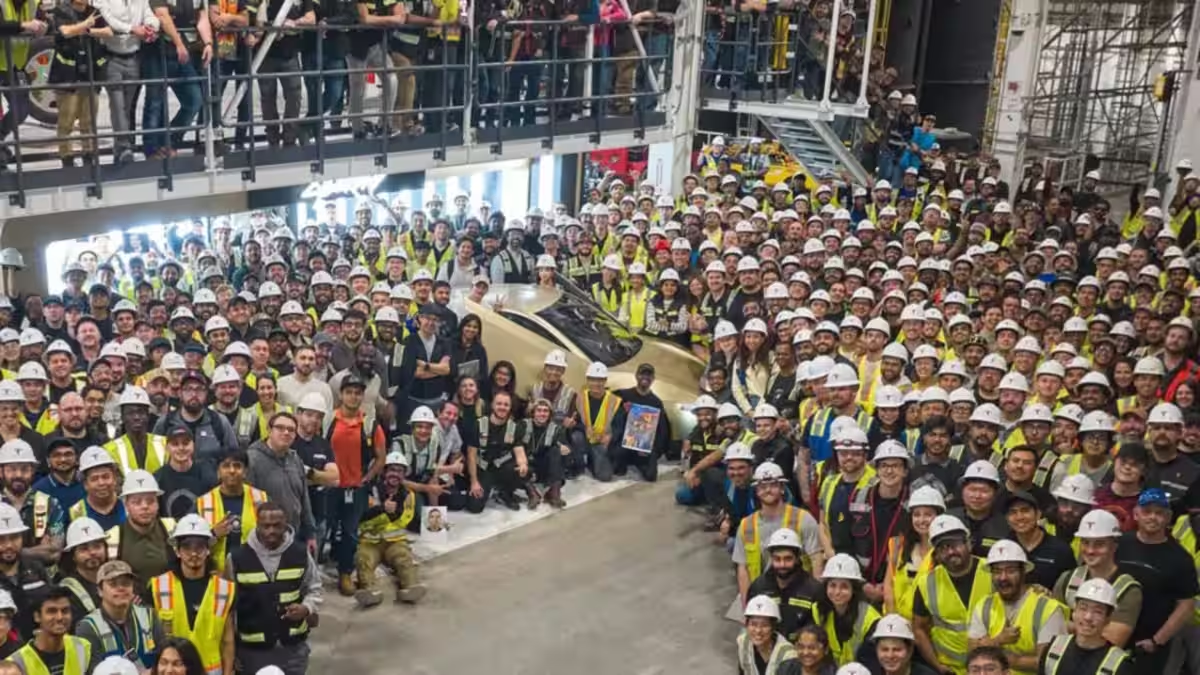
Tesla says its first Cybercab prototype rolled off the assembly line on 17 February, and that a consumer version must arrive before 2027 priced at no more than $30,000. The headline: an EV designed to operate without a steering wheel or pedals.

A prototype isn’t a product – it’s a legal and validation problem
There are two separate realities here. The engineering feat is real: Tesla has assembled a vehicle intended from the start to be driven entirely by software. The regulatory and safety reality is messier. U.S. safety rules and equipment standards still assume a human driver; getting a truly driverless car onto public roads will require special approvals, state-by-state permissions, and a long trail of validation that goes well beyond a factory photo op.
That tension – build the machine first, persuade the regulators later – is Tesla’s repeated play. It worked to push electric cars into the mainstream. With a car that lacks conventional controls, it becomes a bet that regulators, insurers, and courts will bend to the technical narrative before the long, mundane work of proving safety in the real world is finished.

Where others started – and where Tesla is different
Competitors such as Waymo and Cruise have been explicit that their early driverless services run under narrow permits and local agreements. Those projects kept a strict operational envelope: geofenced areas, lower speeds, and extensive fallbacks. When Cruise hit a high-profile incident in 2023 its operations were suspended, underscoring how fragile public permission can be.
Tesla’s approach has been the inverse. It has pushed a camera-first stack and relied on years of data from millions of consumer vehicles equipped with driver-assist systems. The Cybercab extends that philosophy: no steering wheel, no pedals, no human fallback built into the vehicle itself. If it succeeds, suppliers of lidar and other redundant sensors lose leverage. If it fails, Tesla will face the full force of regulators and skeptical courts.
Why the $30,000 target is optimistic
$30,000 is a headline-grabbing number. It’s also aggressive. Building a safe, certifiable driverless system requires sensors, compute, mapping, validation tooling, insurance buffering, and a regulatory compliance apparatus. Robotaxi pilots and limited-volume deployments to date have been expensive; the unit economics only improve once scale and regulatory certainty arrive. Betting that all of that lines up before 2027 is a high-stakes stretch.
Who stands to gain – and who will push back
Tesla gains narrative momentum and a potential lead in public perception if it can demonstrate a working, wheel-free prototype. Tesla owners and investors like bold timelines. Cities and fleet operators could gain cheaper access to electric robotaxis if safety and liability are resolved.
Regulators, insurers, and public-safety advocates will push back until they see rigorous evidence. Competitors who relied on redundant sensors or conservative rollouts can use conservative safety records to argue against rapid permissioning. States retain the ability to carve out or deny approvals, meaning national rollout is unlikely without federal clarity or a patchwork of local pilot programs.
What to watch next
Watch the approvals, not the press photos. Expect Tesla to seek state pilot permissions and targeted waivers, and expect debates about how to validate ”no driver” systems to move into regulatory dockets and court filings. Pay attention to independent safety metrics – incident rates, disengagement reports, and third-party audits – because those will ultimately determine whether a wheel-free car is novel or merely premature.
Short verdict: Tesla’s Cybercab prototype is a bold technical statement. Turning that statement into a safe, legal, and affordable product is a different project – and a much harder one – that will determine whether this is a milestone or a headline.