

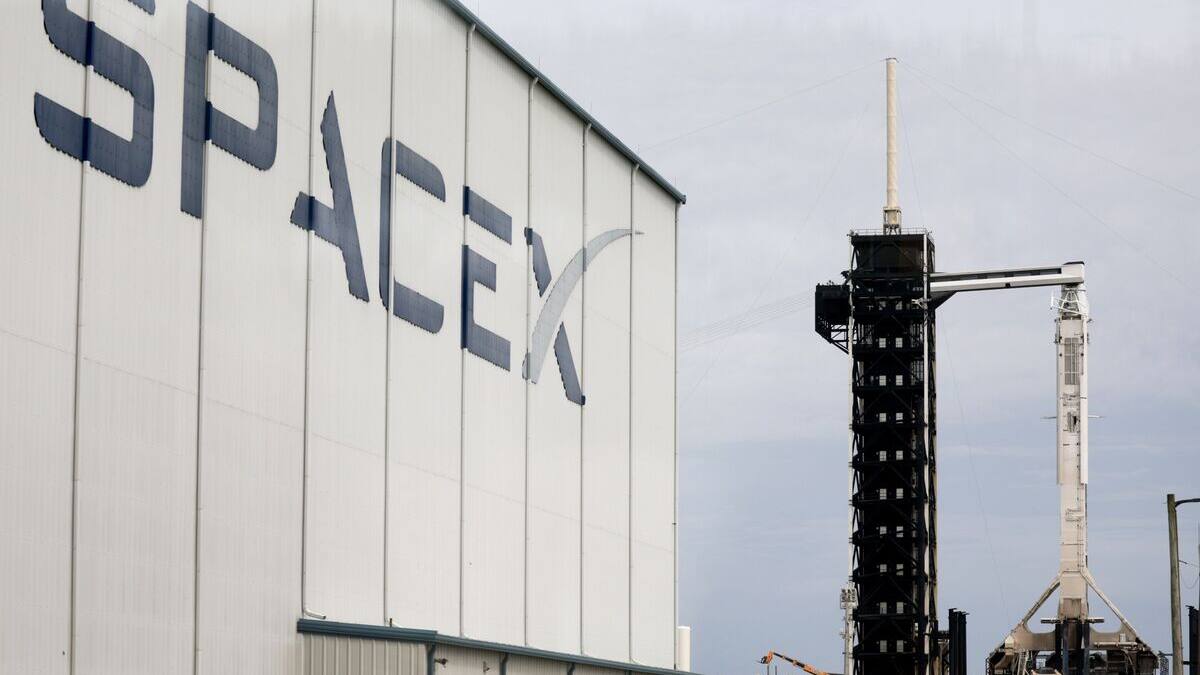
SpaceX has confidentially filed for an initial public offering, putting Elon Musk’s rocket, satellite, and AI empire on a path to what could be the biggest listing ever. The SpaceX IPO could seek a valuation above $1.75 trillion and raise as much as $75 billion, a size that would make even Saudi Aramco’s $29 billion debut look modest by comparison.
The filing arrives as the public markets are warming up for a rare burst of giant tech offerings. SpaceX could be first out of the gate, ahead of OpenAI and Anthropic PBC, giving it a shot at setting the tone for how investors price AI-linked growth with actual revenue attached. That is the key distinction here: unlike many AI hopefuls, SpaceX has a launch business, a satellite broadband business, and a very loud founder to point to.
SpaceX IPO plans and valuation
In a confidential filing, companies can get feedback from the US Securities and Exchange Commission before making the paperwork public, so the usual details are still hidden. The share count and price range will come later, but SpaceX is already preparing investor briefings this month in so-called testing-the-waters meetings, which is usually code for ”please admire the valuation pitch before we print the deck.”
- Potential valuation: more than $1.75 trillion
- Potential proceeds: as much as $75 billion
- Expected timing: a June listing
- Possible structure: dual-class shares with extra insider voting power
Banks, voting power and retail buyers
SpaceX has lined up a heavyweight bank roster, including Bank of America, Citigroup, Goldman Sachs, JPMorgan Chase, and Morgan Stanley, and it is also working with international banks to handle regional orders. That kind of syndicate is what you build when you want global demand, not a polite little tech float.
The company is also considering a dual-class share structure, which would let insiders such as Musk keep extra voting control. That is hardly a surprise, but it does mean public investors may get the usual privilege of funding the rocket ship without getting much say in where it goes.
SpaceX may also reserve as much as 30% of the offering for retail investors, a rare move for a deal of this scale. If that happens, the company could attract a broader fan base than most megadeals, though small investors usually discover that ”access” is not the same thing as influence.
Why this SpaceX IPO is bigger than SpaceX alone
SpaceX is not just a rocket company anymore. Falcon 9 dominates launch services, Starlink brings in internet revenue from low-Earth orbit, and the business is now tied to xAI after Musk folded his artificial intelligence startup into the wider empire in a deal that valued the combined entity at $1.25 trillion.
Bloomberg Intelligence says SpaceX’s rocket launches and Starlink should generate most of the revenue, approaching $20 billion in 2026, while xAI is likely to contribute less than $1 billion. That mix matters: investors get the narrative sheen of AI, but the cash flow story still runs on rockets and satellites, which is usually what separates a hype cycle from a functioning business.
Beyond the numbers, the IPO would also test how much public-market appetite remains for founder-controlled companies with sprawling ambitions. If SpaceX prices where it wants, expect the rest of the mega-cap private club to take notes very quickly.
The more interesting question now is whether SpaceX can turn the biggest-ever listing into a clean debut, or whether the market pushes back on a valuation that is already doing a lot of heavy lifting before the prospectus even goes public.