

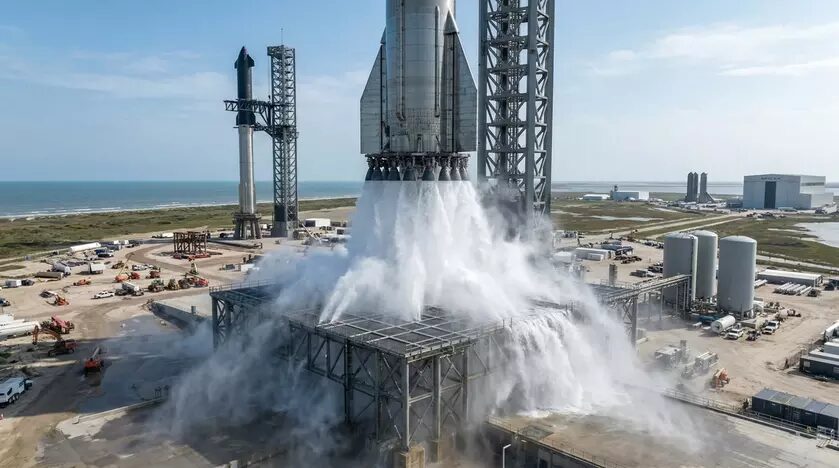
SpaceX is pushing its Starbase site in Texas toward something closer to an industrial launch line than a one-off test range. Fresh checks of the Pad 2 water-deluge system suggest the company is preparing for heavier Starship traffic, with the next major milestone likely tied to Booster 19 and a possible April test launch.
The spectacle is easy to mock: a giant blast plate, torrents of water, and enough steam to make the pad look half-flooded. But the plumbing is the point. Thirty-three Raptor engines produce so much heat and acoustic force that without this kind of suppression, the launch mount would take a beating every time Starship lights up.
Pad 2 is built for heavier Starship traffic
The new tests show SpaceX is aiming to run Pad 1 and Pad 2 side by side, which is the only sensible path if it wants to keep pace with Starship’s orbital ambitions. Lunar missions will need repeated refueling in orbit, and that means launches need to happen with far less downtime between them. In other words, Starbase is being turned into a throughput problem, not just an engineering one.
That also fits the company’s broader rhythm. SpaceX has spent years normalizing rapid iteration in public, while rivals still tend to announce polished milestones after the fact. Here, the messy middle is the product.
Booster 19 and the March false start
Booster 19 is the vehicle most closely tied to the next round of ground testing. In March, it was meant to run a partial static fire with 10 engines, but the attempt was cut short because of a problem with ground equipment. The booster was sent back for work, and Pad 2 has since been getting extra attention to make sure the infrastructure can survive a full 33-engine event.
That detail matters because the bottleneck is not always the rocket. Sometimes it is the pad, the plumbing, or the software making sure nobody turns expensive hardware into scrap metal at the worst possible moment. If the next firing goes cleanly, it would be the last major hurdle before SpaceX asks for permission to move Booster 19 into flight prep.
- Pad 2 is being tested with a water-deluge system designed to absorb heat and soften the shock from 33 Raptor engines.
- Booster 19 already had a March static-fire attempt interrupted by ground-system trouble.
- SpaceX is currently aiming for April, but the Boca Chica schedule still depends on regulatory approvals and whatever else the site throws at it.
Starbase is moving from test site to factory floor
There is a bigger story behind the spray and noise. SpaceX logged 5 successful Starship test flights in 2025, a pace that hints at a maturing program rather than a science project. Starship is still the most powerful rocket ever built, with the ability to send more than 100 tons to orbit, but the real prize is repeatability. That is why the company is also building GigaBay in Florida: Starbase alone can no longer satisfy Musk’s appetite for speed.
If Pad 2 works as intended, the next phase is obvious enough. SpaceX will try to compress the gap between launches, stack more hardware on more pads, and make Starbase feel less like a single headline generator and more like a production system. The open question is how quickly regulators will let that happen, and how much hardware SpaceX can break before the cadence finally catches up.