

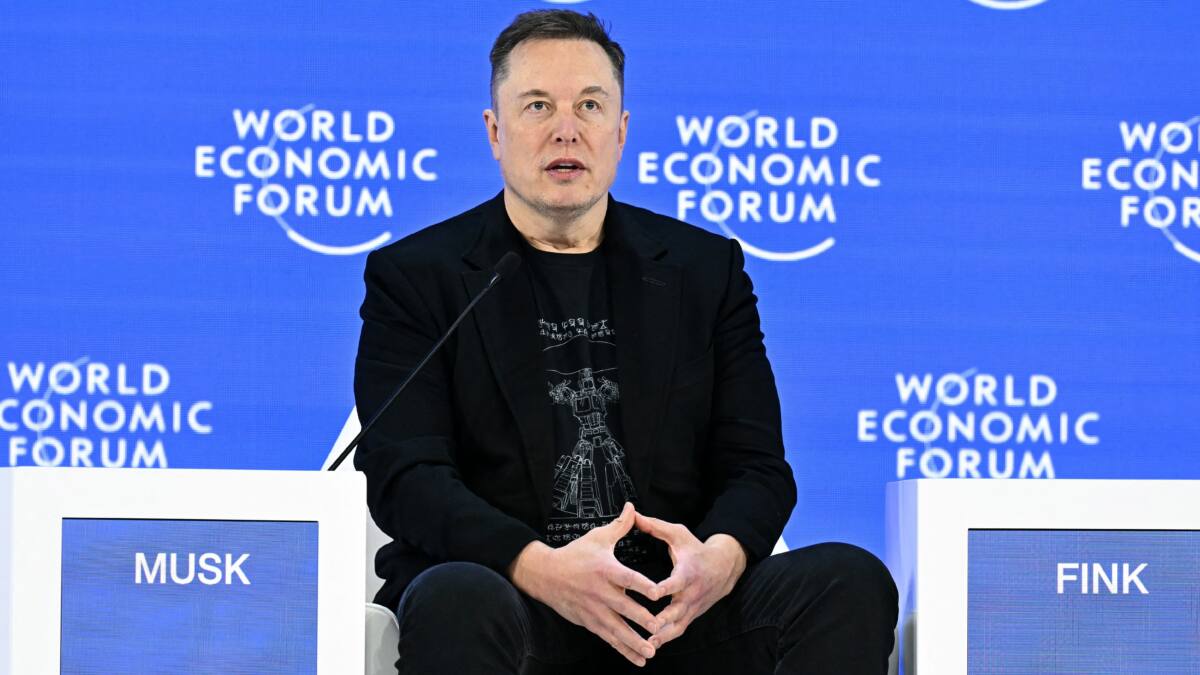
Space data centers are attracting attention from Elon Musk, Jeff Bezos, and a growing cast of tech execs who want to put AI infrastructure in orbit, soak up solar power, avoid land fights, and let the rest of us keep paying utility bills. Scientists and space researchers are responding with a less glamorous question: why, exactly, would anyone do this when the hardware is fragile, the launches are expensive, and maintenance turns into a cosmic headache?
The pitch is getting louder because the money around it is getting louder. McKinsey says the space economy could be a $1.8 trillion opportunity by 2035, while companies from SpaceX to Google are now treating orbital computing as something more than a cocktail-party provocation. That is usually the point where hype starts wearing a lab coat.
Why the space data center pitch is attracting money
Supporters say orbit solves two headaches that are only getting worse on Earth: power and land. Musk has argued that AI’s electricity demand cannot be met cleanly with terrestrial systems alone, and Blue Origin recently told regulators that moving compute off-planet could reduce pressure on communities and natural resources, especially water.
The business case is also getting a boost from competition. Google’s Project Suncatcher aims for an AI data center in low Earth orbit by 2027, Nvidia has already launched hardware for space data centers, and startups are drawing serious capital. Starcloud says it hit a $1.1 billion valuation after a $170 million Series A, while Baiju Bhatt’s Aetherflux is reportedly raising money at a $2 billion valuation.
The math gets ugly fast
For skeptics, the problem is not whether a data center can exist in space. It is whether the economics survive first contact with reality. Matthew Buckley, a theoretical physicist at Rutgers University, estimated that powering one orbital data center would require 450 football fields of solar panels, about $10 billion for the panels and another $10 billion to launch the system, before maintenance is even counted.
That is before you get to repairs. Kathleen Curlee, a research analyst at Georgetown’s Center for Security and Emerging Technology, pointed out that space debris can be as trivial as a fleck of paint and still knock systems offline. She also said these installations would probably have short lifespans, maybe five years at most, which is a rough return profile for infrastructure that starts with a rocket ride.
What happens to the space boom from here
This is the familiar pattern of frontier tech: first comes the grand plan, then the launch animation, then the spreadsheet that quietly ruins the party. Musk can call space ”space” for a reason and laugh-cry about it, but Sam Altman’s ”ridiculous” line may prove more durable than the buzz if orbital compute never gets cheaper than Earth-bound clusters.
The likely near-term result is not a wholesale migration of AI into orbit, but a split market: a few demonstration projects, a lot of investor enthusiasm, and a steady stream of companies trying to prove that the laws of physics are optional. For now, space data centers look less like a replacement for terrestrial infrastructure and more like a very expensive bet that rockets will get cheaper faster than skepticism does.