

Battery wear is the single most common reason a pricey pair of true wireless earbuds stops being worth owning – and until now, manufacturers have made replacing those batteries unnecessarily painful.
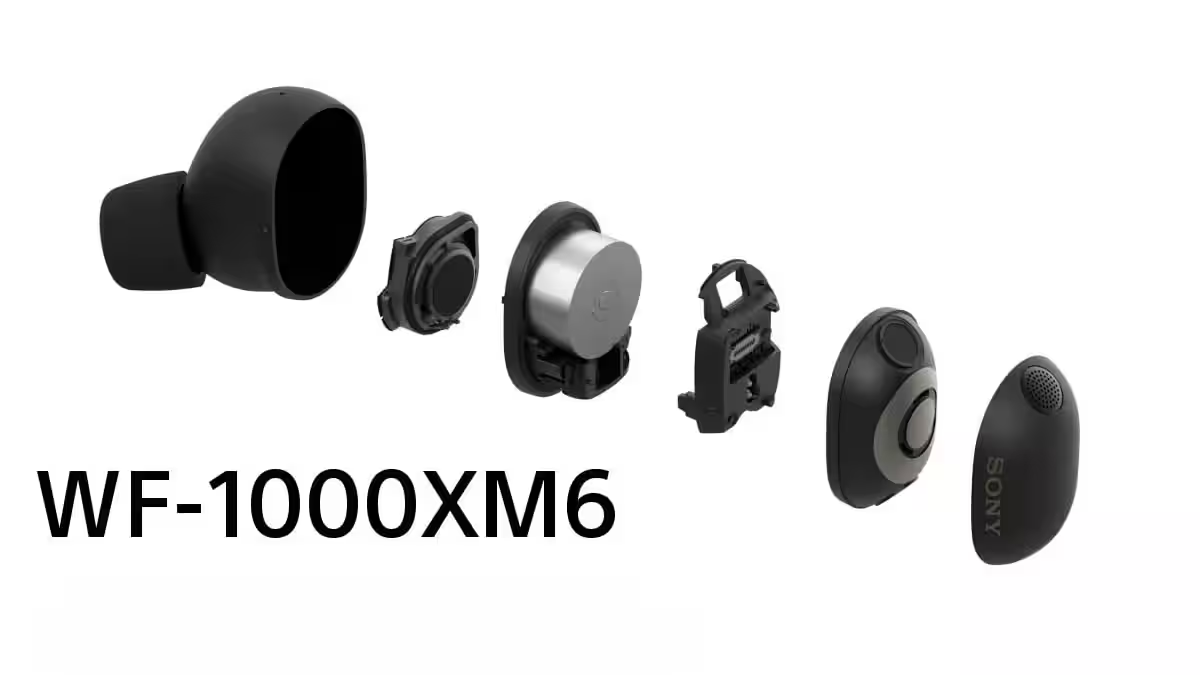
Sony’s new WF-1000XM6 doesn’t solve every longevity problem, but a teardown of the FCC filings shows a small design choice that actually matters: the company removed a fragile ribbon cable that previously connected the top cover to the main board, reducing a common point of failure during disassembly and battery replacement.
The teardown analysis, published by The Walkman Blog and based on US FCC photos and schematics, also reveals other internals: Bluetooth antenna contacts, touch-sensor connectors, microphone openings, a MEMS mic mounted directly to the board, and a transparent plastic layer over the circuitry. Sony lists the battery as model Z55FA, rated at 3.85V, with multiple suppliers named in the filings – Springpower, Highpower (TH), VDL, and Zhuhai ZeniPower Battery Co., Ltd. – and signs pointing to ZeniPower as a primary source. The paperwork does not disclose cell capacity.

Why one cable matters
It sounds trivial until you try to open a sealed earbud packed with glue, resin and tiny cables. Ribbon cables are thin, delicate and frequently damaged during repair attempts. Tear the cable and the whole unit becomes more expensive to fix – or impossible for an independent shop to resurrect without sourcing rare replacement parts.
By eliminating that ribbon connector, Sony reduces the risk of accidental damage during disassembly. For owners who want to keep their earbuds for more than a couple of years, that design tweak could extend usable life and make third-party repairs less risky.
What else the innards reveal
The filings confirm a GSBR-005 module (version 3-2) housing an MT2833 Bluetooth chip, and component sizing suggests Sony’s new QN3e noise-canceling chip is larger than the previous QN2e. Those are public, concrete details that align with Sony’s claims that the XM line continues to prioritize active noise cancellation. On pricing, Sony lists the WF-1000XM6 at $329.99 on its US website.

Context: small concessions, growing pressure
True wireless earbuds have long been the least repairable category of consumer electronics. Batteries are glued into tiny housings, microphones and chips are under resin, and many designs rely on delicate flex cables. Independent repair guides and teardown sites routinely report low repairability scores for flagship earbuds from major brands.
That’s changing slowly. Regulators, the right-to-repair movement and frustrated consumers are nudging manufacturers toward more serviceable designs – not wholesale modularity, but incremental changes that reduce repair risk. A stripped ribbon cable is exactly that: a pragmatic move that doesn’t add cost or bulk yet meaningfully lowers the barrier to battery replacement.
Who wins and who loses
Winners: owners who keep gear for years, independent repair shops, and secondary markets for refurbished units. Easier servicing delays replacement purchases and improves sustainability metrics.
Losers: manufacturers that depend on paid in-warranty or out-of-warranty servicing as a revenue stream, and any business model that assumes short product lifetimes. If more brands follow Sony’s lead, the economics of replacement cycles change.
What’s still missing
Small wins shouldn’t be oversold. The filings don’t disclose cell capacity for the Z55FA battery, so we don’t know whether Sony improved run time alongside serviceability. Multiple components remain resin-coated, and opening the case will still require steady hands and the right tools. Removing one ribbon cable is helpful, but it’s not a full embrace of repairability.
Performance will determine whether buyers care. If the QN3e and MT2833 deliver noticeably better ANC or battery life, the XM6 will justify its $329.99 price regardless of repair tweaks. If not, the easier repair path becomes a stronger selling point for consumers who value longevity.
Outlook
Sony’s change is a reminder that meaningful product improvements don’t always come as new features. Sometimes they’re design decisions that quietly make ownership less disposable. Expect competitors to take notes: once one premium brand softens the path to repair, others gain little by keeping batteries glued behind fragile connectors.
For now, buyers who plan to keep earbuds for years should consider serviceability alongside sound and ANC specs. When the inevitable battery decline arrives, the difference between a ribbon cable and no ribbon cable may be the difference between a cheap battery swap and a painful, irreversible failure.