

On April 3, millions of Russians faced a sudden cash-only reality as three of the country’s largest retail banks-Sberbank, VTB, and T-Bank-simultaneously went offline, along with the Fast Payment System (FPS) used nationwide. Card payments failed at stores, gas station terminals froze, and ATMs rejected PIN codes, leaving customers unable to complete basic transactions across Russia.
Sberbank outage on April 3: causes and impact
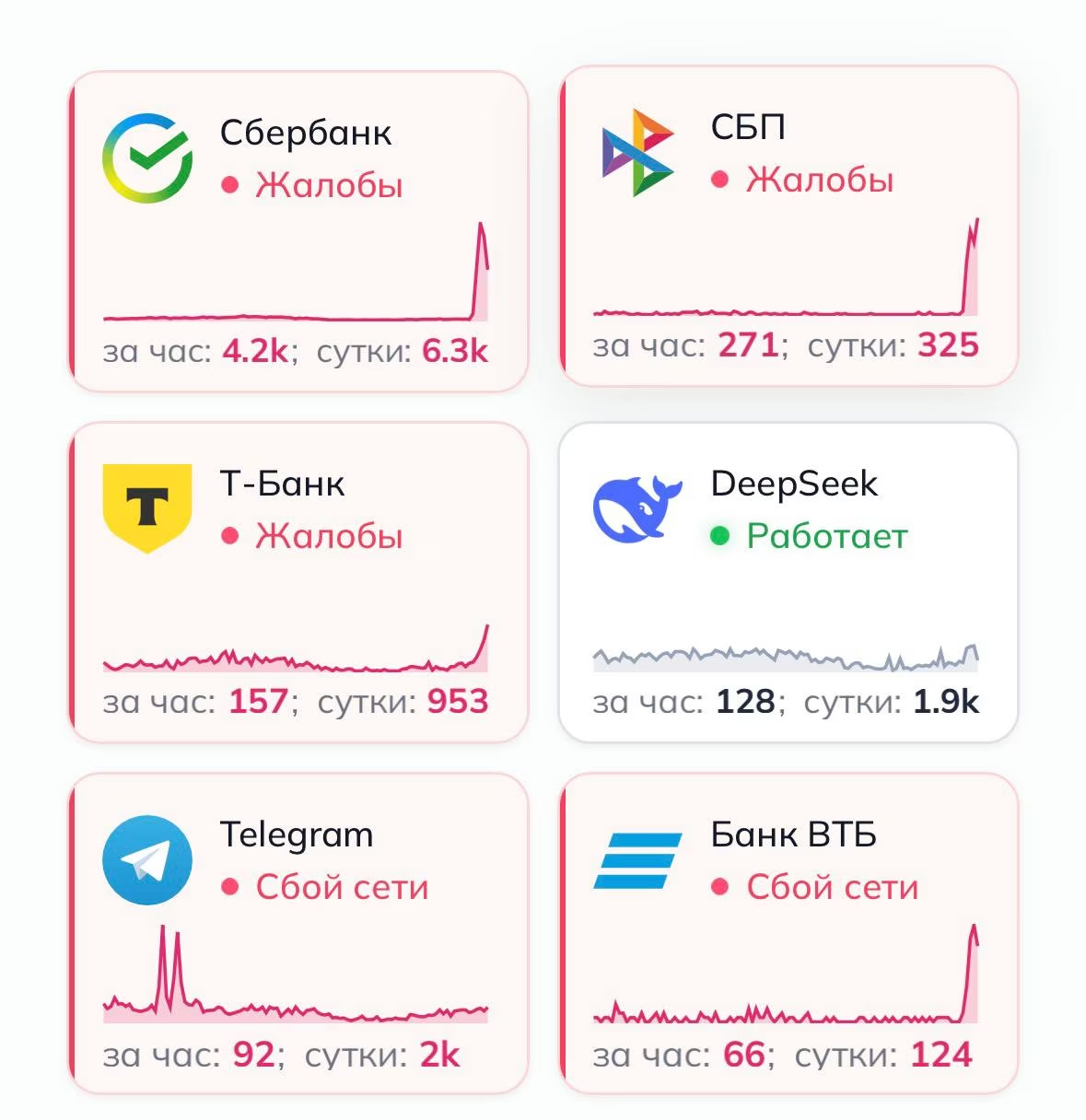
Complaints about Sberbank’s services started around 10 a.m. Moscow time. Customers reported that the Sber Online app refused to open, card payments failed at terminals, QR codes couldn’t be scanned, and Bluetooth payments didn’t work. ATMs displayed error messages after PIN input-no cash withdrawals or payments were processed.
Downdetector data showed 66% of issues were with Sber’s mobile app, 12% with the web version of the online bank, and another 8% reported total service outages. The disruptions affected cities including Moscow, Saint Petersburg, Samara, Omsk, Novosibirsk, Kuzbass, Primorsky Krai, and Irkutsk.
Sberbank’s official statement acknowledged ”some clients are currently experiencing difficulties using our services” and assured customers their team is working on a fix. However, the bank did not specify the cause and later told Vedomosti that no internal failures had been detected-a puzzling claim given thousands of complaints across social media.
VTB outage triggers record complaint spike
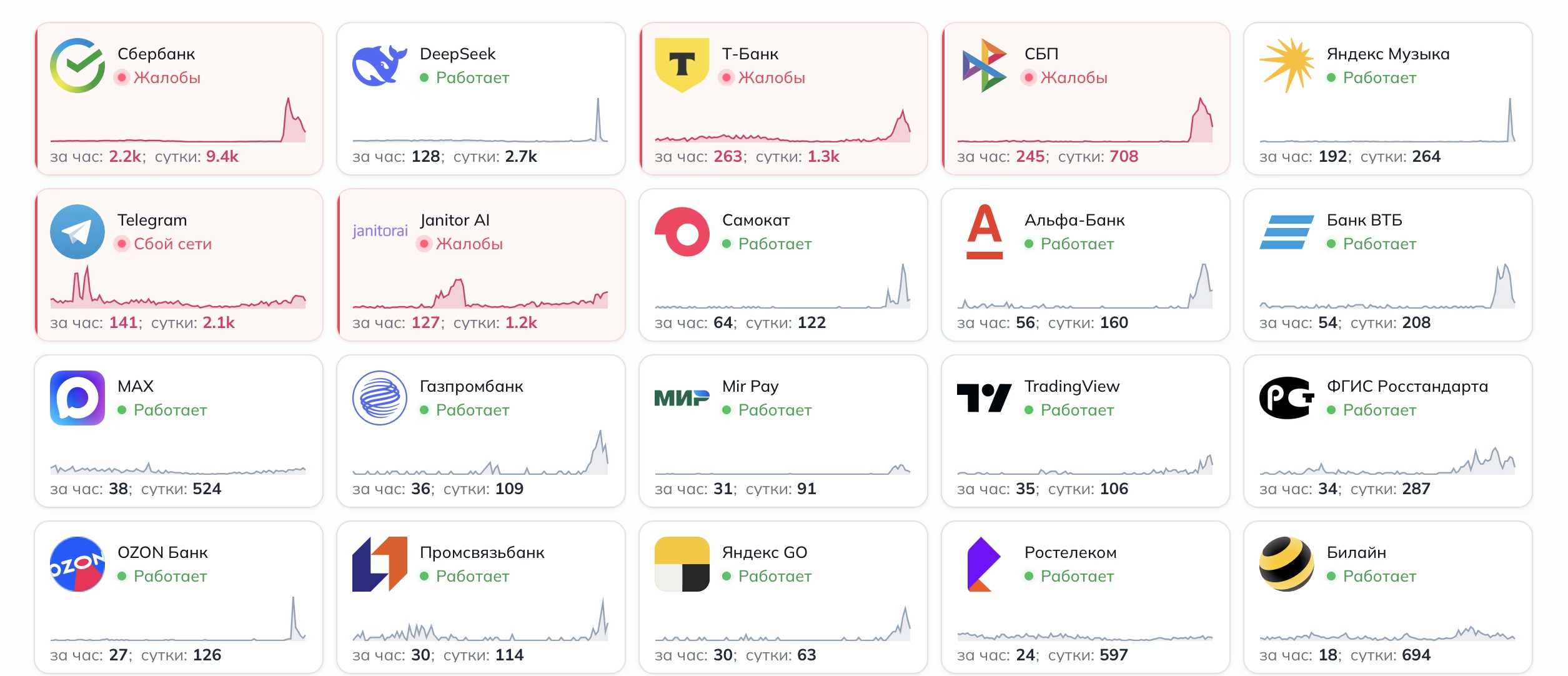
VTB’s problems began around 12:15 p.m. Moscow time, peaking at 1:30 p.m. with 2,792 simultaneous reports on Downdetector. By day’s end, total complaints exceeded 12,100-making this one of the largest outages in VTB’s history.
Clients faced similar issues: the VTB Online app was inaccessible, card payments failed in stores, and transfers didn’t go through. The hardest-hit areas included Moscow and the Moscow region, Saint Petersburg, the Yamalo-Nenets Autonomous Okrug, and Samara Oblast.
VTB openly admitted the issue: ”Today, some of our clients experienced restrictions when using VTB Online, ATMs, and cards.” The bank said the problems had been fixed and that any rejected transactions would be refunded automatically.
T-Bank outage reported amid denial of issues
T-Bank’s disruption coincided with VTB’s afternoon troubles. Users reported login failures and hung transfers. Yet, T-Bank’s press office claimed ”The T-Bank application is operating normally; no outages detected.” This official denial contrasts sharply with numerous user reports describing severe problems.
This isn’t the first simultaneous crash for these three banks. A similar multi-bank outage occurred on December 29, 2025. At that time, the National System of Payment Cards (NSPK)-which runs the Fast Payment System (FPS)-blamed one of the banks, with VTB again the only institution to admit fault.
Fast Payment System outage affects all Russian banks
The Fast Payment System (FPS) is a backbone payment network linking 206 banks across Russia, enabling instant transfers by phone number, QR code payments, and commission-free interbank transactions. When FPS goes down, customers nationwide are unable to complete transactions regardless of their bank.
On April 3, complaints about FPS spiked 37 times above normal levels. NSPK said its own systems were functioning normally and blamed the outage on one of the participant banks. Given VTB’s earlier meltdown and status as the largest FPS participant after Sberbank, VTB is the likely cause.
Customer funds remain safe during payment outages
The biggest concern for users amid outages is whether their money is safe. The clear answer: Yes. NSPK emphasized that client funds remain fully secure. VTB confirmed all declined transactions will be reversed automatically. These are technical failures, not hacks or freezes: a payment either completes fully or does not process, ensuring no money leaves accounts without confirmation.
If money was withdrawn but goods or services were not received, customers can report this as a ”disputed transaction.” Disputes must be filed with the bank within 30 days for resolution.
Systemic fragility revealed by recurring bank outages
These repeated outages expose ongoing systemic weaknesses. The same three banks crashed together in late December 2025. Sberbank also faced issues on March 24, 2026, coinciding with outages at major gaming platforms like Steam and Epic Games. Analysts linked those simultaneous crashes to Russia’s reliance on foreign server infrastructure now limited by sanctions.
Russian banks process enormous transaction volumes but are burdened by years of sanctions restricting access to Western hardware and software. They must patch these gaps independently. When a major node fails, it ripples across the network-explaining why a failure at a single bank can disrupt the entire independent FPS network.
How to handle card issues during bank outages
These outages usually last just a few hours. If you need to access money during a bank outage, consider the following tips:
- Withdraw cash from ATMs of unaffected banks. Alfa-Bank, Gazprombank, Rosselkhozbank, and MTS Bank remained fully operational during the outage. Their cards are widely accepted nationwide.
- Try contactless payments via Mir Pay linked to cards from banks not affected by the outage. If your phone supports NFC and has a working card, you might complete payments even if regular terminals fail.
- Send money using mobile apps from other banks unaffected by the disruption. Transfers through these services should work smoothly.
- Wait it out. Similar outages have historically been resolved within two to four hours. VTB already reported restoration; Sberbank and T-Bank are expected to follow soon.
These cascading failures highlight vulnerabilities in Russia’s payment ecosystem under continued pressure from sanctions and aging infrastructure-challenges that remain unresolved as digital banking becomes increasingly essential.