

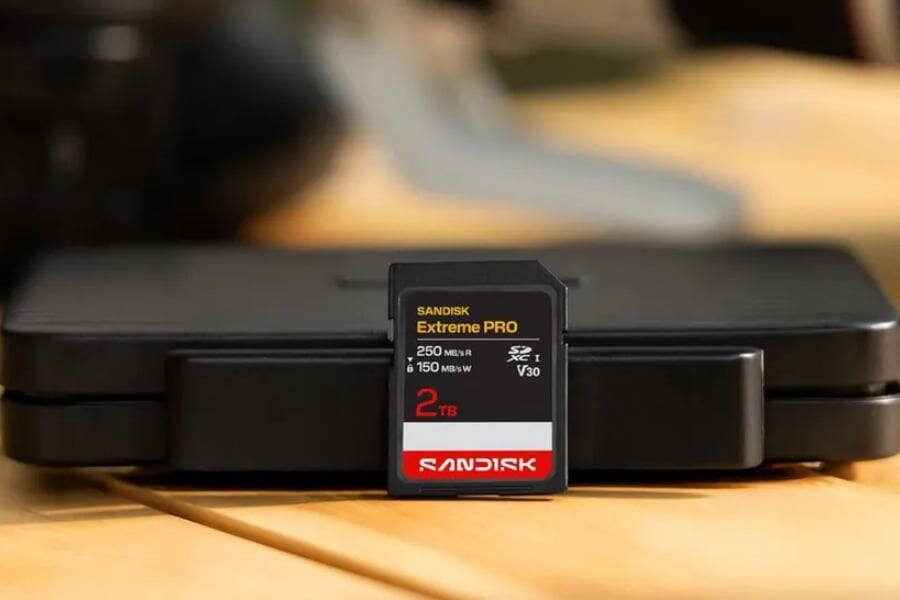
SanDisk has pushed a new 2TB Extreme Pro UHS-II SD card into the market with a price tag that makes most storage upgrades look frugal: $1,999.99. The SanDisk 2TB UHS-II SD card is aimed at professionals who need maximum capacity, high sustained speeds, and the kind of reliability that matters when a missed frame or corrupted file is not a fun anecdote.
The card is not trying to be affordable, and that is the point. It lands at more than four times the cost of SanDisk’s own 2TB UHS-I card, which sells for under $500, while also sitting in a category where newer formats are already pressuring older SD designs on speed and value.
SanDisk 2TB Extreme Pro UHS-II SD card specs
On paper, the card is built for serious work. SanDisk lists sequential read speeds of up to 310MB/s and write speeds of up to 305MB/s, putting it firmly in UHS-II territory. That makes it a fit for 8K video recording and high-resolution burst photography, where a big card that chokes under load is basically expensive optimism.
SanDisk also says the card carries an IP68 rating, so it is meant to shrug off dust, water exposure, and drops from up to six meters. That durability matters because the target buyer is not someone shuffling vacation photos off a laptop; it is the person who would rather pay a fortune than gamble on cheap storage in a camera bag.
How the SanDisk 2TB UHS-II SD card price stacks up
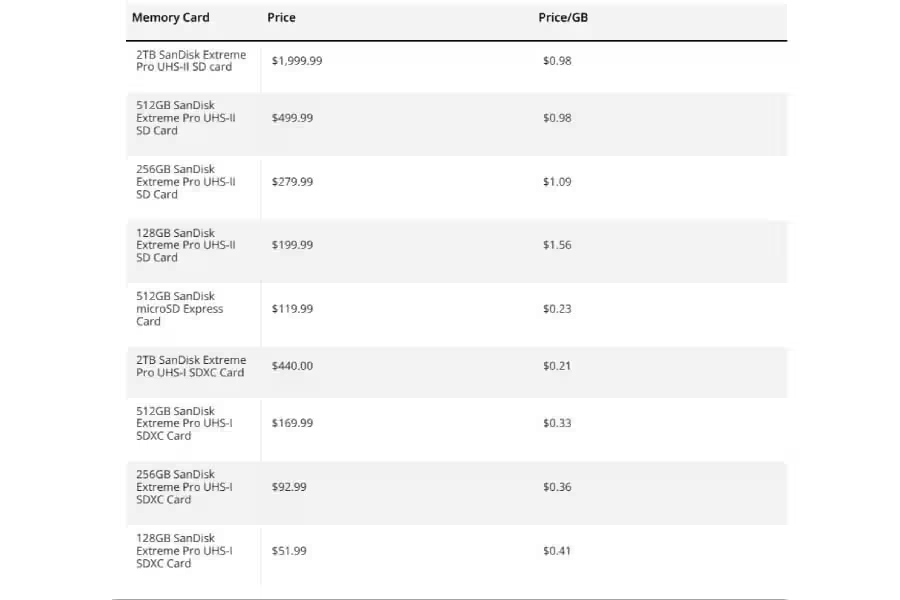
The sticker shock gets worse once you break the cost down. At roughly $1 per gigabyte, the 2TB UHS-II model lands at the same cost per GB as SanDisk’s 512GB version, but far above UHS-I alternatives that can fall as low as $0.21 per gigabyte. Even SanDisk’s newer microSD Express cards look cheap by comparison, which says plenty about where this product sits in the lineup.
- 2TB Extreme Pro UHS-II SD card: $1,999.99
- 2TB UHS-I SD card: under $500
- UHS-I alternatives: as low as $0.21 per gigabyte
- Sequential read: up to 310MB/s
- Sequential write: up to 305MB/s
This is the kind of launch that tells you exactly who it is for by ignoring everyone else. For most buyers, the math is absurd. For a narrow slice of professionals, though, the combination of capacity, speed, and ruggedness is the entire value proposition, and SanDisk knows there are people who will pay to keep those three things in one card.
The bigger question is whether this is the ceiling for premium SD pricing or just another sign that flash storage is splitting into a cheap mainstream tier and a deeply specialized pro tier. If you need a portable archive that can also keep up with demanding camera work, SanDisk has made its offer very clear. If not, there are plenty of less painful places to spend two grand.