

Samsung has officially introduced the Exynos 1680 chipset, aimed at powering midrange smartphones like the upcoming Galaxy A57. Instead of chasing headline specs, this chip prioritizes stable, smooth performance for everyday use and smarter AI capabilities.
Built on an updated 4nm manufacturing process, the Exynos 1680 features a CPU setup with one high-performance Cortex-A720 core clocked up to 2.9GHz, four additional Cortex-A720 cores, and three energy-efficient Cortex-A520 cores. While this core arrangement is fairly standard for midrange processors, Samsung claims the new cores will enable more seamless app switching and consistent performance during extended sessions.
Graphics receive a modest upgrade with the Xclipse 550 GPU, based on AMD’s RDNA 3 architecture, delivering around 15% better performance compared to the previous generation. This improvement should enhance gaming stability and provide smoother animations. The chip supports Full HD+ displays running up to 144Hz-refresh rates that are increasingly common beyond flagship smartphones.
Exynos 1680 chip features improved AI and memory support
A standout feature is the boost to AI processing. The integrated NPU (Neural Processing Unit) can handle up to 19.6 TOPS (trillions of operations per second), roughly a 30% increase over its predecessor. This promises enhanced image processing and smarter AI-driven features in Samsung’s One UI.
Memory and storage support also see an upgrade. The Exynos 1680 supports LPDDR5X RAM and UFS 4.1 storage-technologies traditionally reserved for higher-end devices. This should translate to faster app launches and snappier system responsiveness on mid-tier phones.
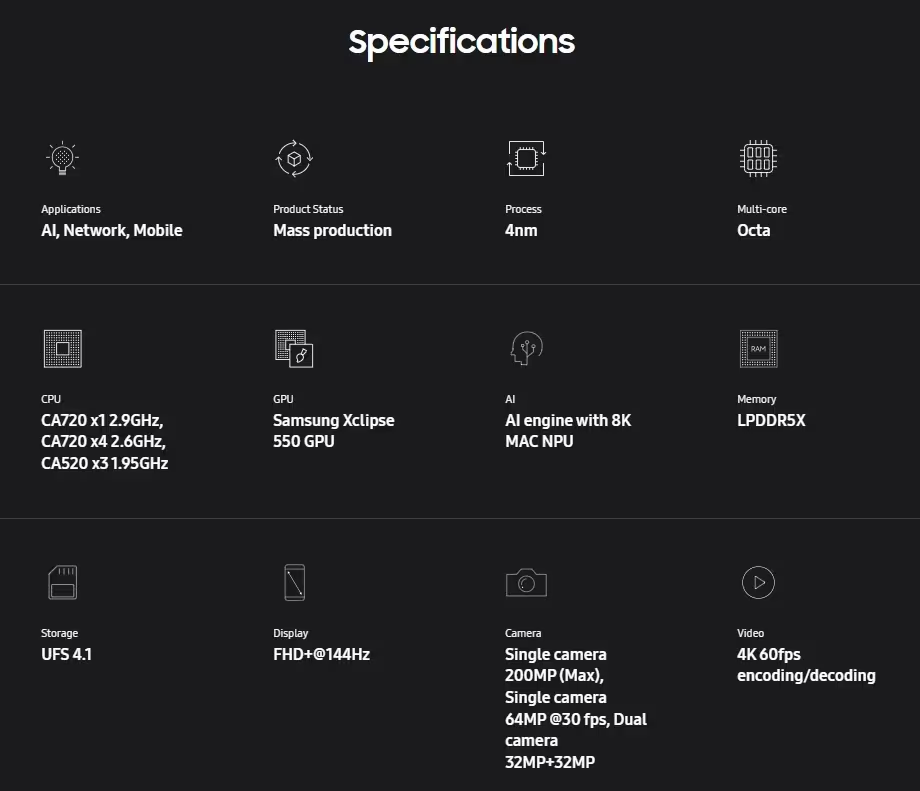
Camera and connectivity capabilities of the Exynos 1680
Camera support includes sensors up to 200MP, 4K video recording at 60fps, and 10-bit HDR capture. Connectivity covers essentials like 5G, Wi-Fi 6E, and Bluetooth 6.1.
How the Exynos 1680 compares to competing midrange processors
Samsung’s Exynos 1680 doesn’t aim to rewrite the midrange playbook but represents a balanced step forward in stability, AI, and performance. If Samsung optimizes well, the Galaxy A57 could deliver a noticeably smoother and more responsive daily experience, helping it stand out amid stiff competition from Snapdragon and MediaTek processors commonly used in this segment.
With midrange chipsets increasingly packed with features once exclusive to flagships, the question will be how Samsung’s Exynos 1680 fares in real-world benchmarks and battery life tests compared to rivals. Its success could signal Samsung doubling down on keeping more components in-house to better control performance and cost in its popular Galaxy A lineup.