

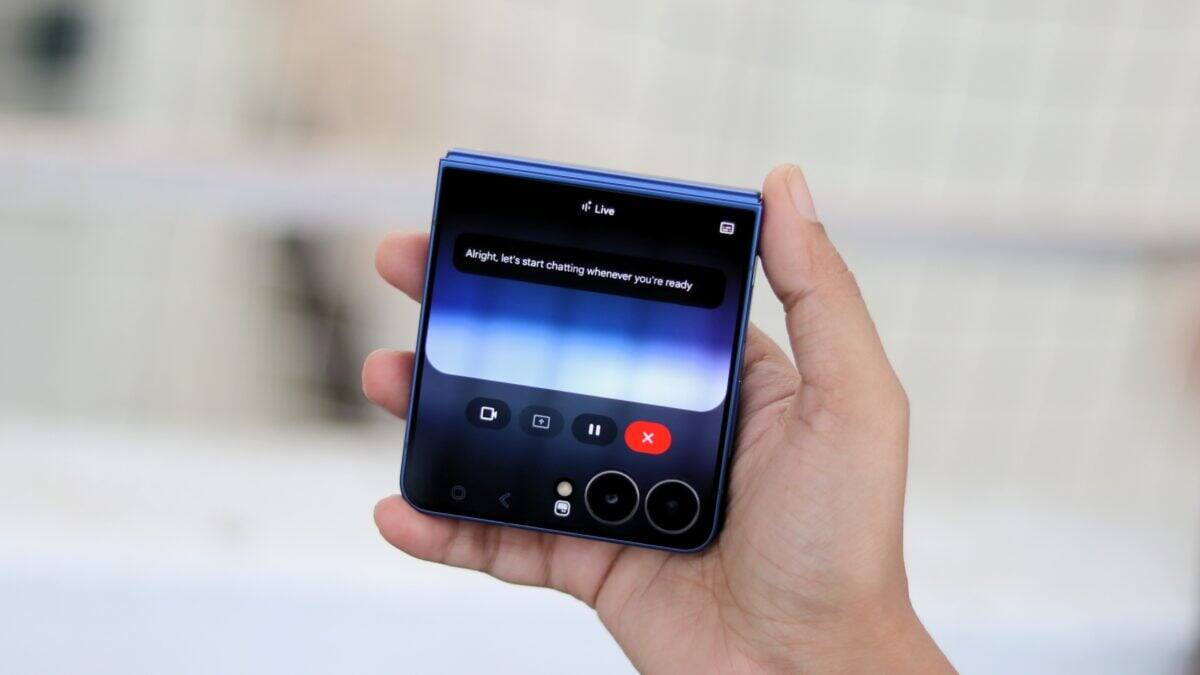
Samsung’s Galaxy smartphones have become the largest real-world testing ground for Google’s Gemini AI, highlighting a complex dynamic where Samsung’s hardware scale fuels Google’s AI ambitions, while Apple quietly fine-tunes its own assistant with the same underlying technology. Despite years of attempts to establish its own software ecosystem-from Bixby to Tizen-Samsung remains tethered to Google’s Android platform, which powers most of its devices and AI interactions worldwide.
Samsung’s early bets on alternatives to Google services mostly fell short. Bixby, designed to rival Google Assistant and Apple’s Siri, never gained traction and has now been rebooted using AI from Perplexity. Samsung’s efforts to escape Google’s ecosystem haven’t succeeded largely because the Android licensing model mandates Google apps on its devices, cementing Google’s control. Meanwhile, Apple’s tight integration allows more flexibility to collaborate with Google without exposing itself to the same dependencies.
Google’s Gemini AI benefits from Samsung’s global Galaxy footprint, which dwarfs the distribution of Google Pixel phones. This broad device coverage allows Google to gather diverse data points-queries, language usage, network conditions-that refine Gemini’s performance across multiple scenarios. Samsung users effectively power an AI engine they don’t control, as all improvements cycle back to Google’s platform. This large-scale integration puts Samsung in a familiar role: delivering impressive hardware but relying on others to define key software experiences.
How Samsung’s Galaxy devices fuel Google’s Gemini AI development
Samsung’s extensive Galaxy device base is crucial for Google to test and improve Gemini AI in real-world conditions. The scale and diversity of Galaxy users provide Google with a rich dataset from various regions and usage patterns. This testing ground accelerates Gemini’s refinement, enabling more accurate and responsive AI capabilities across languages and network environments.
Apple’s approach to integrating Gemini AI into Siri
Apple announced in early 2025 its plan to embed Gemini-powered AI into the next-generation Siri. By running these AI models on its Private Cloud Compute, Apple enhances privacy, restricting the data that flows back to Google from Apple devices. This approach allows Apple to improve Siri’s capabilities using Google’s AI technologies while maintaining tight control over user data. For consumers, Gemini-based improvements will be branded as Apple’s own AI advancements, simplifying the experience without exposing the underlying AI model.
Comparing Samsung and Apple’s AI strategies in mobile technology
The contrast between Samsung and Apple illustrates two different strategies in leveraging AI technology. Samsung contributes tremendous scale to Google’s AI development but gains little direct control over the technology’s direction. Conversely, Apple selectively leverages the same AI foundation, layering it with privacy measures and branding tailored for its ecosystem. Samsung’s journey underscores how dominating hardware presence alone isn’t enough to own the AI experience in mobile. By pushing Galaxy devices, Samsung fuels an AI engine powered by Google, while Apple quietly benchmarks and tailors the future of digital assistants with the same core technology.