

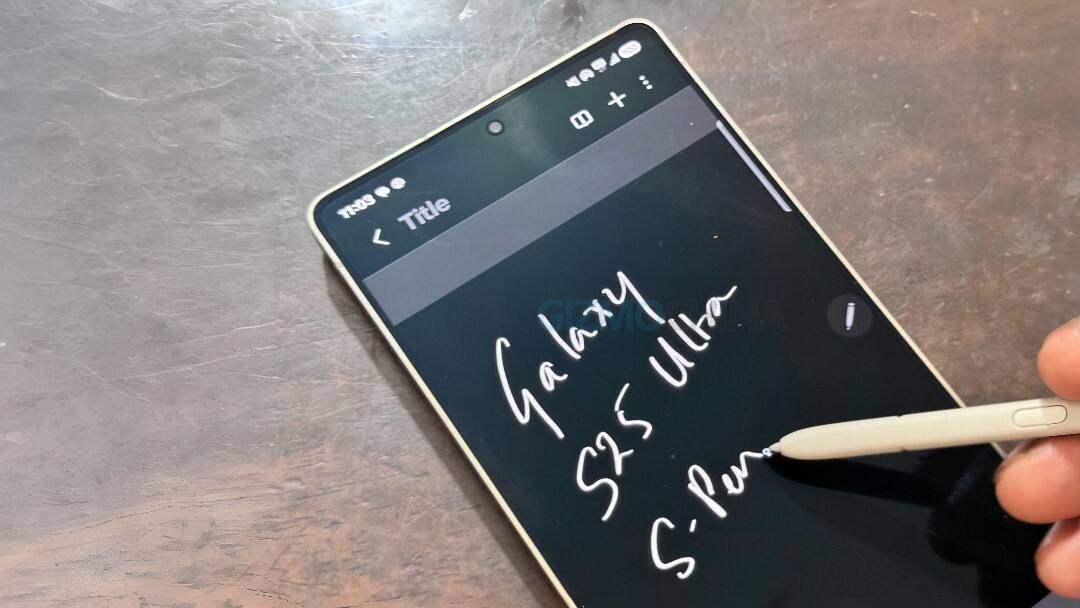
Samsung’s Galaxy S27 Ultra will continue using the current Electromagnetic Resonance (EMR) S Pen technology, postponing the expected upgrade to a new stylus system. Although rumors suggested a switch to Active Electrostatic (AES) technology, recent reports confirm the company is sticking with the tried-and-true EMR system for now.
The EMR system powers Samsung’s S Pen by enabling the stylus to work without an internal battery. It uses a magnetic field generated by a digitizer embedded in the phone’s display. This method has delivered precise tracking for over a decade but faces challenges, such as interference from magnets in cases or accessories.
In contrast, AES technology-considered by Samsung as a potential upgrade-relies on a battery-powered pen that interacts directly with the touchscreen, similar to Apple’s Pencil. AES removes the need for a digitizer layer, potentially allowing for stronger internal magnets without compromising stylus performance. However, this design requires the pen to have a battery, which would change the user experience of the S Pen.
There were also rumors of a hybrid system aiming to combine EMR’s battery-free operation with AES’s digitizer-free design. This hybrid approach would eliminate the digitizer layer while keeping the pen battery-free. However, the complexity of this solution appears to have delayed its arrival in Samsung’s lineup.
Samsung’s choice to retain EMR technology for the Galaxy S27 Ultra suggests a cautious approach to S Pen innovations. While the next Galaxy Ultra phone might not introduce major changes to the stylus, the company seems to be preparing for more significant enhancements in future models.
Users can expect incremental improvements in the S Pen technology over time as Samsung refines its design. The S Pen remains a defining feature of Galaxy Ultra devices, with future upgrades likely to balance new innovations and the usability that has made the stylus central to Samsung’s flagship smartphones.