

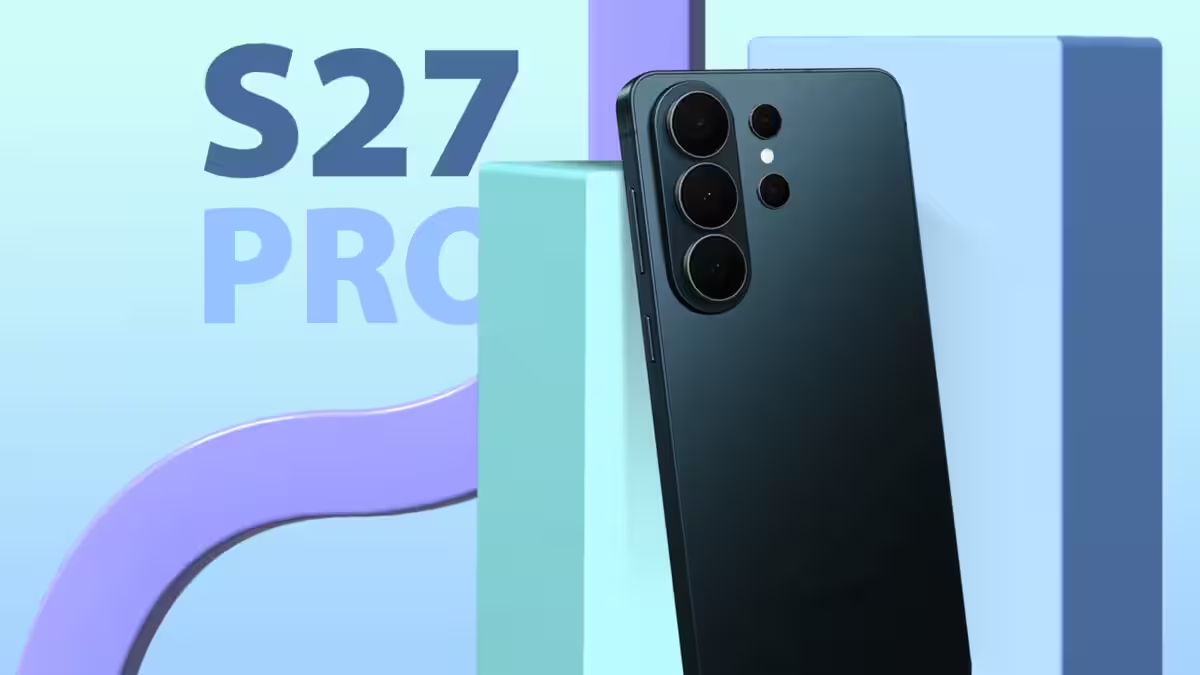
Samsung’s Galaxy S26 series has landed with few surprises, sticking close to what enthusiasts expected. Yet, the anticipated arrival of a Galaxy S26 Pro and Edge model never materialized, leaving a notable gap in the lineup and setting expectations high for what the S27 Pro must deliver.
The Galaxy S26, S26 Plus, and Ultra each hit their marks to varying degrees, but there’s a growing consensus that the ”Pro” tier hasn’t yet found its place in Samsung’s ecosystem – especially since the S25 Edge’s underwhelming sales likely shelved the Pro/Edge variations this cycle.
Rethinking premium design with real flair
Samsung’s design language for the Galaxy S line has veered toward subtlety in recent years, favoring minimalism over flamboyance. The S26 Ultra offers a glimpse of a more stylish direction, but the S26 and Plus remain restrained. The S27 Pro should borrow heavily from the Ultra’s bolder elements to justify its ”Pro” badge.
Material choices have also been conservative. Samsung’s recent decision to avoid titanium-an ideal material for both premium feel and heat management-is a missed opportunity. While Armor Aluminum 2 is a solid frame choice, integrating titanium accents could raise the S27 Pro’s aesthetic and tactile appeal, distinguishing it from the regular lineup without veering into over-the-top luxury.
Camera upgrades that actually matter
Shooting quality is often a decisive factor for premium phone buyers, and Samsung generally excels here. However, the S26’s cameras, while strong, don’t carry the same heft as the Ultra’s 200MP main and 50MP ultrawide lenses.
The S27 Pro will need to close this gap by incorporating at least the main and ultrawide sensors from the Ultra, combined with the existing 10MP telephoto zoom to solidify its Pro credentials. Retaining the Ultra’s 50MP telephoto keeps a clear hierarchy at the top-an essential marketing and user distinction-but the Pro needs to land well above the base model’s camera capabilities to make sense.
Charging speeds: catching up to rivals
Samsung’s stubborn adherence to 25W wired charging on the S26 is increasingly untenable. For a flagship phone priced as a premium device, this charging speed feels laughably outdated.
Contemporary competitors from brands like Google, Motorola, and Apple offer faster charging options, some exceeding 30W, without sacrificing battery health. The S27 Pro must deliver at least 30W, if not push closer to 45W, to stay relevant and avoid embarrassment in an area where Samsung’s rivals have already gained ground.
More storage, more flexibility
Eliminating the base 128GB storage tier across Samsung’s recent flagships was a welcome step. The S26 starts at 256GB, a necessary baseline in 2026 when apps and media files demand more space.
But the Pro needs to offer an upper-echelon storage option-such as 1TB-to appeal to power users who want room for extensive media libraries, high-resolution videos, and professional-grade apps. It’s not about pushing everyone to high limits but about giving the Pro a meaningful advantage over lower-tier models.
Replacing Plus with Edge: a strategic move for the Pro
Samsung’s lineup logic can be confusing, notably with three similar tiers (standard, Plus, Ultra) in play. The Plus variant often feels like a midweight compromise, caught between the standard and Ultra.
Ditching the Plus in favor of an Edge model (with its characteristic curved display) could clear a pathway for the S27 Pro to become a true smaller Ultra rather than just a ”mini-Plus.” This would let Samsung sharpen the Pro’s identity, offering a premium compact form factor with top-tier hardware and unique design flair-a clear alternative to the broader Ultra and slim Edge devices.
Setting the Pro apart by embracing the Edge design could also capitalize on a niche that Samsung has struggled to fully own, especially as others push foldables and ultra-premium devices. The Pro could be the phone for anyone wanting a premium experience that’s not quite as massive or pricey as the Ultra, yet more capable than the base model or Edge alone.
Samsung’s Galaxy S27 Pro has a unique opportunity next year to mature from an underdefined offering into a bona fide flagship contender. By investing in bolder design cues, camera improvements, faster charging, expanded storage, and a fresh lineup configuration, Samsung could finally give the Pro its moment in the sun. But it must act deliberately-these upgrades aren’t optional if Samsung wants the S27 Pro to feel like a serious step forward.