

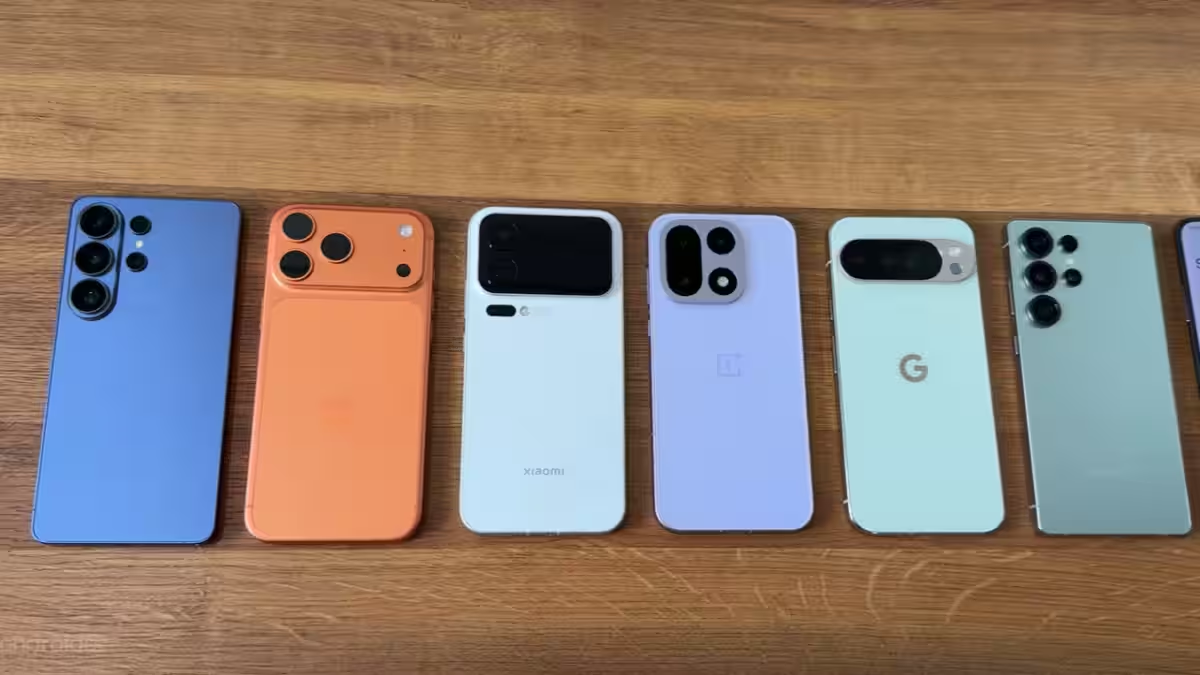
After more than six years, Samsung’s Galaxy S flagship line continues to rely on a 5,000mAh battery, now found in the Galaxy S26 Ultra. While competitors like Xiaomi and OnePlus have ramped up their battery capacities past 7,000mAh, Samsung is pushing efficiency improvements through Snapdragon’s latest chips and software upgrades rather than raw power. But how does this strategy hold up in everyday use?
Recent testing by Tech Droider simulated typical smartphone activities-including browsing, gaming, video playback, and photography-and found the Galaxy S26 Ultra lasted just over 9 hours before needing a recharge. This marks a modest improvement over last year’s S25 Ultra, which managed around 8 hours and 40 minutes under the same conditions, signaling some progress in efficiency.
However, when compared to flagships packing larger batteries, the S26 Ultra falls behind. The iPhone 17 Pro Max reached almost 9 hours and 45 minutes, Xiaomi’s 17 Pro Max edged over 10 hours, and the OnePlus 15 dominated with an impressive 12 and a half hours. The clear differentiator here is battery capacity: OnePlus includes a 7,300mAh cell, Xiaomi pushes 7,500mAh, dwarfing Samsung’s steady 5,000mAh.
This gap underlines a growing trend in the Android premium segment, where manufacturers eager to outlast rivals are increasing battery size by 30-40 percent or more. While software and chipset efficiency tweaks can claw back some time, when raw capacity dramatically increases, those gains are hard to match.
Samsung has hinted at future innovations such as silicon-carbon batteries, which could allow for denser cells without making phones bulkier or heavier. If that technology arrives soon, Samsung might finally boost its battery capacities to rival those of its Chinese competitors. Until then, the Galaxy S26 Ultra’s endurance remains competitive but no longer class-leading.
Whether Samsung’s measured approach pays off in balancing battery life, design, and device weight will be a key factor for customers deciding between these flagship heavyweights. As rivals keep pushing the envelope on battery capacity, the question becomes: will efficiency alone ever be enough to keep the top spot?