

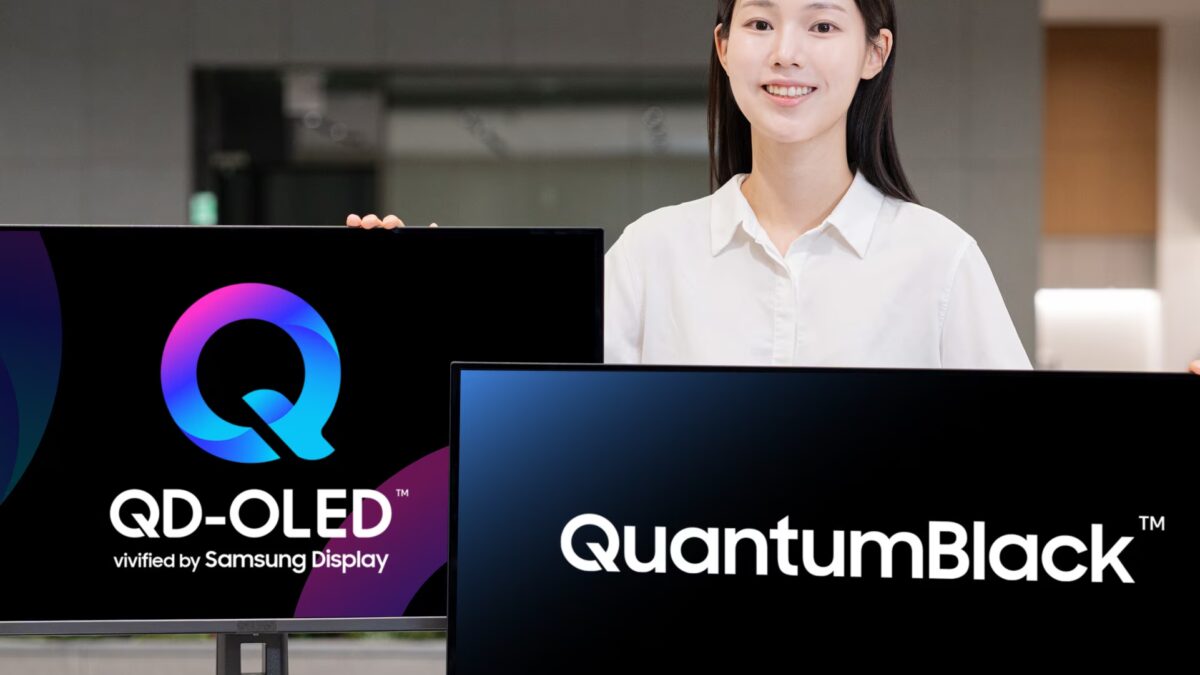
Samsung Display has introduced QuantumBlack, a new anti-reflective coating for its QD-OLED screens that reduces light reflections by 20% compared to previous coatings and increases surface hardness from 2H to 3H on the pencil hardness scale.
This upgrade is already standard on all QD-OLED monitors Samsung has released in 2024. The company has also completed trademark registration for the QuantumBlack name.
QD-OLED technology is prized for delivering ”true black” levels by completely shutting off individual pixels. However, in real-world use, ambient light reflections can wash out contrast and diminish the deep blacks these displays promise.
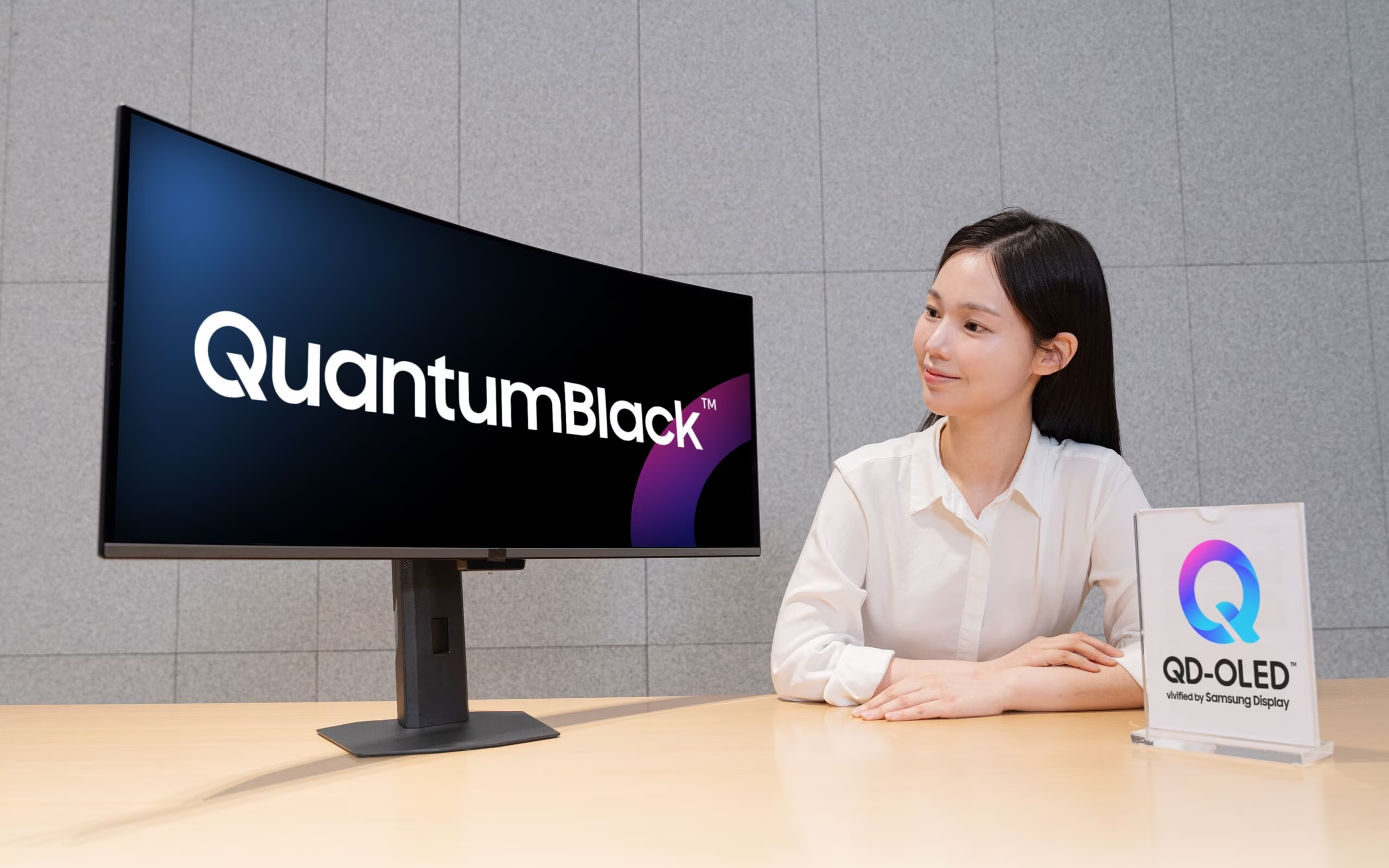
Anti-reflective coatings have been a key feature of Samsung Display’s QD-OLED monitors from the start, but QuantumBlack represents the next step in enhancing screen clarity and durability.
A 2H hardness rating typically leaves surfaces vulnerable to scratches from daily handling, like carrying or cleaning. Samsung’s internal tests show the tougher 3H QuantumBlack layer resists scratches even from fingernails.
Other manufacturers have adopted their own variants of this enhanced coating: ASUS calls theirs Black Shield, Gigabyte brands it Obsidian Shield, and MSI uses the name Dark Armor.
These coatings are important for boosting QD-OLED’s appeal in the premium monitor segment, where glare control and screen longevity are key factors for demanding users. Samsung’s move to improve both reflection reduction and surface hardness aims to keep its QD-OLED panels competitive against rival OLED and mini-LED displays from Apple, LG, and others.
It will be important to monitor how QuantumBlack performs across a wider range of lighting conditions and intensive use cases. If durability claims hold true, this coating technology could become standard not only for monitors but potentially for TVs and mobile displays as well.