

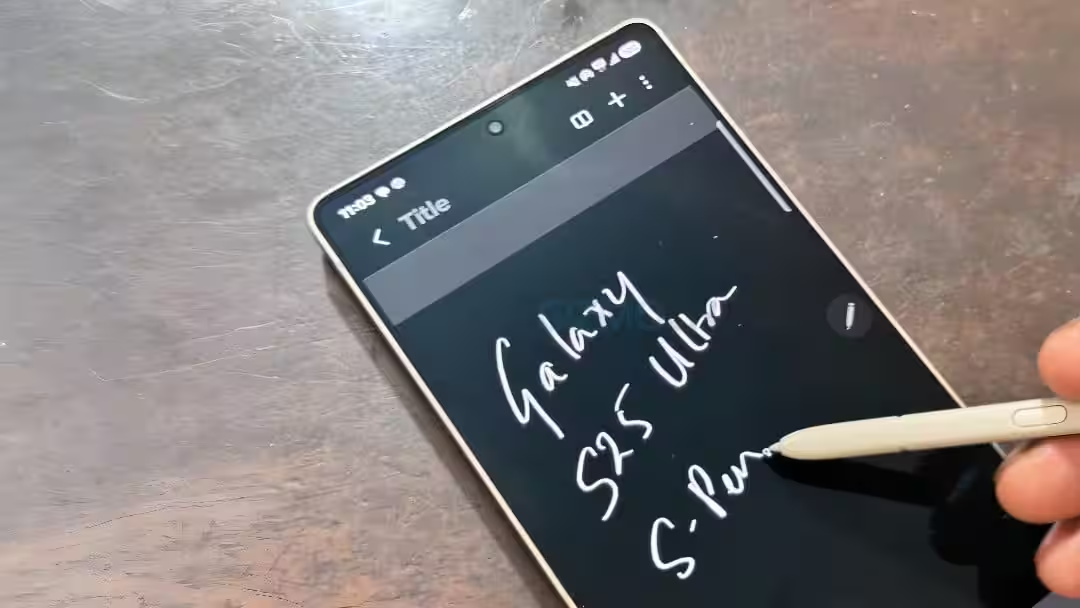
Samsung’s S Pen is far from obsolete, despite recent doubts sparked by missed features and small tweaks. Rumors argued the stylus might be fading away after Samsung removed Bluetooth support starting with the Galaxy S25 Ultra. The latest Galaxy S26 Ultra kept the familiar S Pen slot but offered little innovation, stirring questions about its future.
But Samsung’s mobile division COO, Won-Joon Choi, has put those concerns to rest. He confirmed the S Pen remains central to Samsung’s identity and teased that the company is working on a next-generation S Pen technology that involves rethinking how the display itself is built.
This is more than just adding new software features or subtle hardware tweaks. Choi mentioned that Samsung aims to reduce the usual compromises tied to including the stylus – namely, space taken inside the phone, battery trade-offs, and issues with magnetic accessories. Achieving that means creating a new display architecture designed specifically to integrate with the S Pen more seamlessly.
Although Samsung hasn’t revealed specifics, reengineering the display could entail slimmer digitizer layers or new input recognition technology. It might even tie into emerging charging standards like Qi2, potentially improving wireless charging while the stylus is docked.
Meanwhile, the current Galaxy S26 Ultra holds onto the built-in S Pen slot but does not restore Bluetooth features, which some users read as a sign of simplification. In reality, Samsung appears to be preparing a longer-term evolution of the stylus that goes beyond superficial updates.
Samsung’s recognition of the S Pen as a ”core technology” paired with an ambitious plan to alter the display stack is a rare move in a smartphone industry that largely sidelines styluses in favor of touch-only designs. Apple’s iPad and Microsoft’s Surface line remain stylus-centric, but flagship phones with integrated styluses have remained Samsung’s niche.
If Samsung can develop a way to embed the stylus with less internal compromise and more functionality, it will help the Galaxy Ultra line stand out in an increasingly competitive Android landscape where devices battle over sleekness and battery life. This strategy suggests Samsung isn’t just protecting the S Pen but doubling down on it as a differentiator.
That said, this evolution won’t be visible immediately. Any display-level innovation will likely debut in future Galaxy Ultra models beyond the S26 series, meaning current users will have to wait to see meaningful improvements.
What’s clear is Samsung’s hesitance to abandon the stylus despite industry moves away from accessories that complicate hardware design. The S Pen’s enduring presence and promised overhaul hint at Samsung’s confidence in its unique appeal and its bet on advanced hardware integration to keep it relevant.