

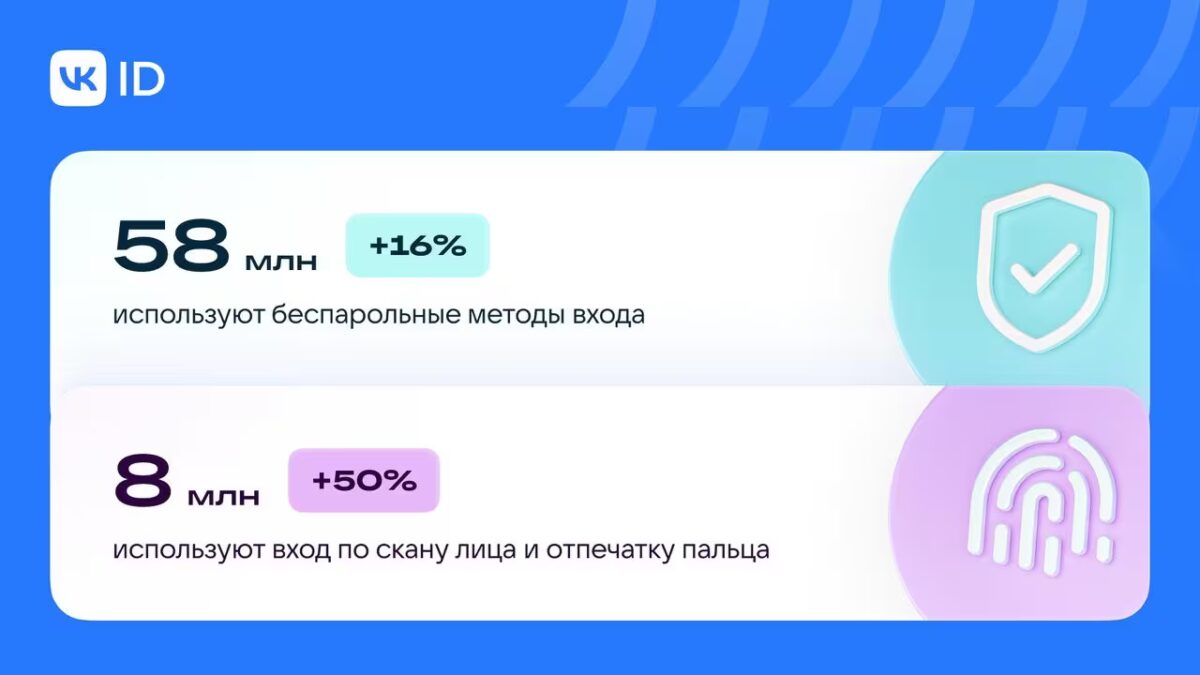
Russian users have doubled their use of face and fingerprint recognition to log into websites and apps over the past year, according to VK ID, the authentication service handling 133 million monthly users. VK ID supports access to 50,000 platforms, including major VK-owned services.
VK ID offers multiple password-free login methods: QR codes, one-time codes, facial scans, and fingerprint recognition. These biometric options not only speed up sign-in and reduce errors, but also bolster account security by eliminating the need for passwords. The biometric system relies on passkeys-cryptographic keys stored locally on the user’s device-making unauthorized access much harder.
Over the last year, the number of users opting for passwordless authentication has jumped 16%, reaching 58 million. This growth is notable given VK ID’s extensive user base.
Ivan Smirnov, director of VK’s ecosystem services business unit, attributes this surge to the convenience and speed of biometric logins, along with higher success rates during authentication since the process is simplified for end users.
Biometric login growth among Russian users
Biometric logins in Russia now include face and fingerprint recognition methods that have doubled in usage over the past year. These methods are integrated across thousands of apps and websites through VK ID’s extensive platform support.
VK ID passwordless authentication methods
VK ID supports a variety of password-free login options:
- Facial scans
- Fingerprint recognition
- QR codes
- One-time codes
These methods use passkeys, which store cryptographic keys locally on the device to enhance security and prevent unauthorized access without relying on traditional passwords.
International trends in biometric authentication
Worldwide, major platforms like Apple, Google, and Samsung are adopting biometric logins and passkey technology to replace passwords. VK ID’s rapid growth reflects Russian users catching up to these global trends in secure authentication.
Future biometric use cases in Russia
Beyond initial login, biometric authentication in Russia is expected to expand into transaction approvals and multi-factor verification, further improving security and user experience across various digital services.