

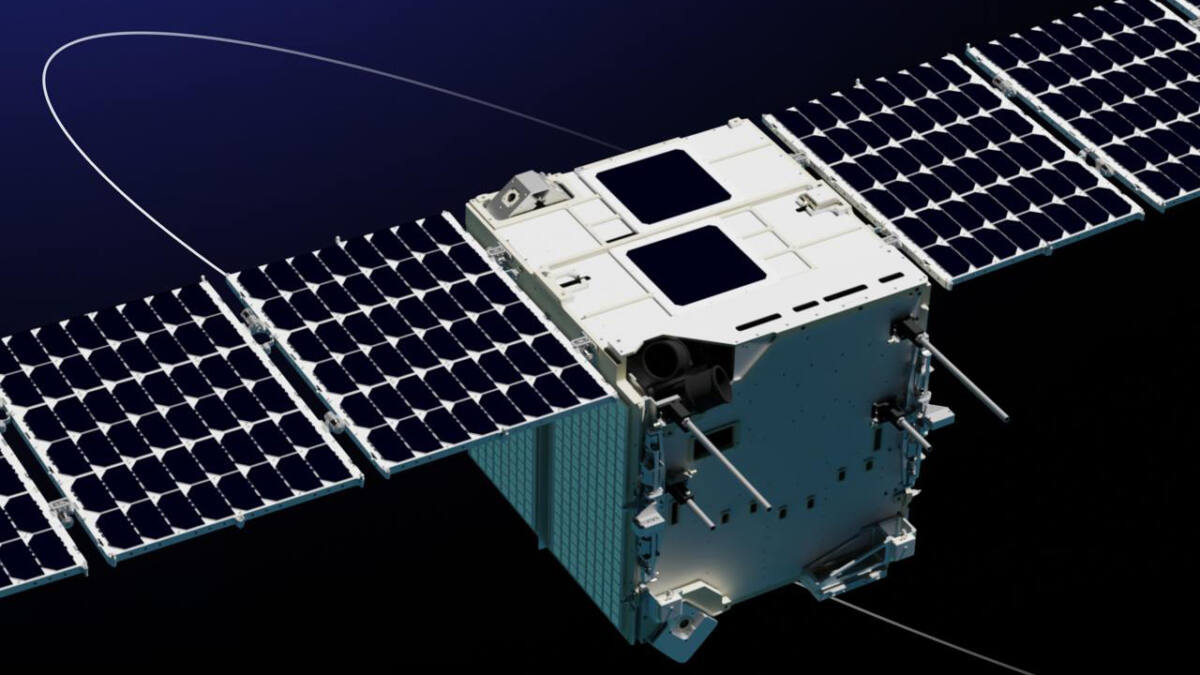
Russia says it will field a domestic alternative to Starlink. The Rassvet constellation – a project of Bureau 1440 – aims to put the first satellites into orbit in the first quarter of 2026, with 16 spacecraft already built and declared ready for launch.

That short sentence masks why the project matters: Moscow is trying to reclaim control over high-speed, global-capacity connectivity that, until now, has been supplied largely by foreign commercial constellations. Rassvet is being sold as a sovereign option – up to 1 Gbit/s per link, two build phases (300 satellites for basic coverage, then expansion to 950), and launch plans that reportedly include Soyuz‑2.1 flights from Plesetsk.
The immediate problem Rassvet is trying to solve
Russia faces two intertwined pressures. First, there is a practical connectivity gap: vast Arctic corridors, the Northern Sea Route and sparsely populated regions still lack reliable high-throughput links. Second, there is strategic vulnerability: reliance on foreign satellite operators leaves state and military users exposed to geopolitical risk. Rassvet is pitched as an answer to both.
What Moscow is promising – and what it leaves out
Publicly released targets are straightforward: phase one at 300 satellites, full build to 950; peak per-link throughput up to 1 Gbit/s; initial launches in Q1 2026, using Soyuz‑2.1 from Plesetsk. Sixteen satellites have been completed so far. Those are concrete milestones. What officials don’t detail are the commercial model, expected retail pricing, ground segment readiness, or how spectrum and orbital slots will be coordinated globally.
Claiming ”up to 1 Gbit/s” is also a common marketing move in this industry: theoretical peak rates are not the same as typical user experience once capacity has to be shared across many customers and beam footprints. Anyone comparing vendor claims should expect real-world speeds to vary widely by location, device and congestion.
How this stacks up to what’s already in orbit
Commercial players already operate at much larger scale. SpaceX’s Starlink has deployed thousands of satellites and operates a global service; other operators and partnerships have also pursued multi‑hundred‑satellite constellations. Rassvet’s 300‑satellite baseline is a credible starting point for national coverage, but it is modest next to fleets measured in the thousands.
There are also practical differences in launch strategy. Western constellations have leaned on high‑cadence, high‑payload vehicles – often reusable boosters – to rapidly build capacity. Rassvet’s reliance on Soyuz‑2.1 launches from Plesetsk ties the program to a smaller, less reusable launch supply chain, which could slow rollout and raise per‑satellite launch costs.
History and the hard parts Russia will face
Russia is not starting from zero: it has experience with small communications constellations and with national satellite programs that prioritize strategic access. But large LEO internet constellations demand mass manufacturing, frequent launches, global ground infrastructure, and roaming or regulatory agreements for service beyond national borders. Those are expensive and logistically complex undertakings – exactly the areas where past state projects tend to stall or stretch timelines.
Orbit management and space‑traffic coordination will also matter. Adding hundreds of new satellites into LEO increases collision risk and requires robust tracking and deconfliction. Operators in the West have faced scrutiny over this; any new large constellation will draw similar attention from regulators and other satellite operators.
Who stands to gain – and who might lose
Winners, at least on paper: state agencies and military customers that want a domestic, controllable connectivity layer; remote communities and maritime operators along the Northern Sea Route if the service is rolled out affordably; domestic aerospace suppliers and Bureau 1440 itself if manufacturing and launch contracts stay local.
Losers or skeptics: international commercial operators renting global capacity; Russian taxpayers if the program becomes a long, expensive state project; end users if the service is priced above comparable Western alternatives. Finally, anyone who hoped that international satellite services would remain a low‑friction commercial market may find it increasingly politicized.
My read: feasible but uphill
Rassvet is technically feasible – the components exist and Russia has engineering talent. But scaling to hundreds or nearly a thousand satellites, building ground networks, and achieving reliable service at competitive cost are different beasts. Expect a phased rollout that delivers niche, state‑prioritized coverage first, with consumer ambitions deferred or limited by budget and launch cadence.
If 2026 brings only a handful of satellites and a government-centric service, that will still meet the project’s core strategic goal: sovereign capability. If Moscow wants mass-market competitiveness, it will need faster launches, sustained manufacturing rates, and clear commercial plans – all areas that have historically tripped up ambitious national space programs.
What to watch next
Key indicators over the next 12-24 months will be: actual launch cadence and whether Soyuz‑2.1 can deliver the expected payloads; announcements about ground stations and user terminals; pricing and availability for civilian customers; and international reactions on spectrum and orbital traffic coordination. Those will tell whether Rassvet remains primarily a strategic national asset or tries to compete in the wider commercial market.
For now, Rassvet is a reminder that satellite internet is no longer only a commercial battleground – it’s also a tool of national infrastructure and sovereignty. That makes the technical details interesting, but the politics decisive.