

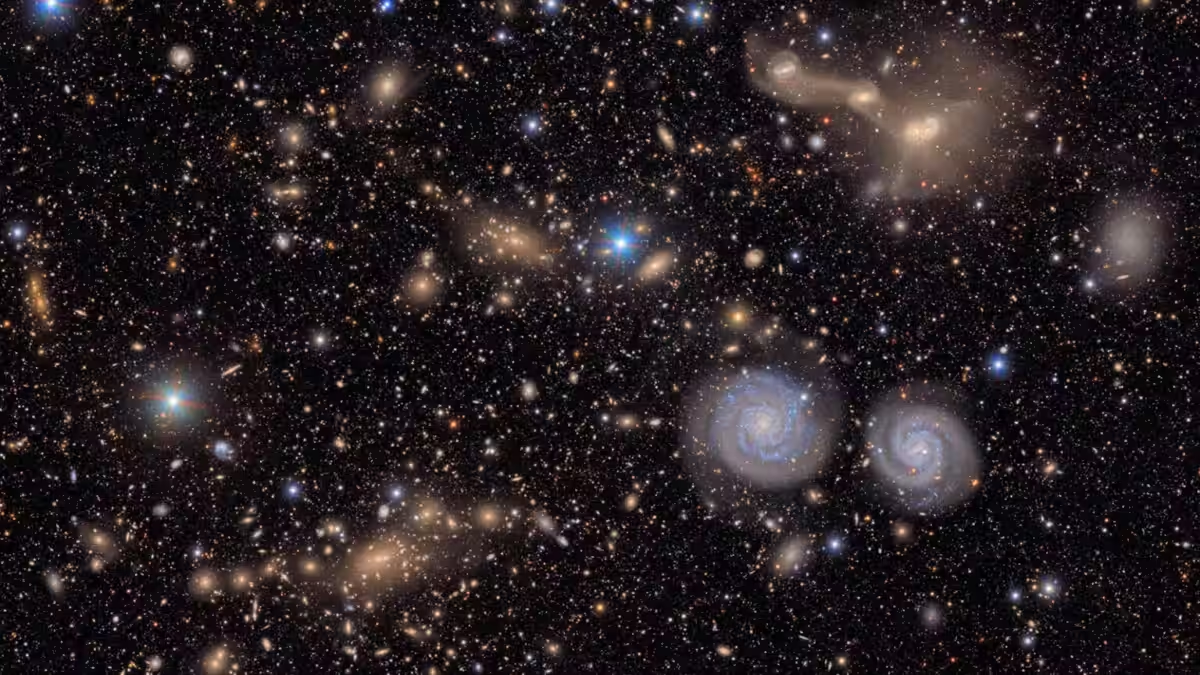
The Vera C. Rubin Observatory has switched on a breakthrough alert system that inundated astronomers with roughly 800,000 notifications during its very first night of operation. This deluge of data signals a profound shift in how we monitor cosmic phenomena, from asteroids speeding past Earth to distant supernovas flashing into view.
Since February 24, the observatory’s Legacy Survey of Space and Time (LSST) camera-about the size of a car-has been snapping roughly 1,000 images each night. It immediately contrasts these fresh snapshots against previous reference images and sends automated alerts within minutes whenever something new or changing pops up. In an age when capturing the fleeting nature of space events is crucial, this speed is a major advantage.
But this isn’t just a firehose of raw data. Thanks to filtering options that sort alerts by event type, brightness, or frequency, astronomers can focus on what really matters without drowning in noise. Still, the surge from hundreds of thousands to potentially millions of notifications nightly will test both human and machine capacity to dig through space’s transient secrets.
The Rubin Observatory’s alarm bells ring at a time when traditional sky surveys are being dwarfed by the volume and pace of new discoveries. While past attempts at automated detection struggled with slower turnaround and less comprehensive coverage, this system exemplifies the scientific community’s push for real-time cosmic vigilance.
Competitors like the Zwicky Transient Facility and Pan-STARRS have pioneered alert-driven astronomy, but Rubin’s LSST ups the ante with larger image captures and more frequent updates. This promises to accelerate research and coordination, enabling telescope networks worldwide to respond quickly to capricious phenomena.
Still, questions remain on how best to handle these enormous data streams. Effective alert triage, improved algorithms, and international collaborations will be critical to avoid alert fatigue among scientists and maximize discovery potential. If Rubin Observatory’s early behavior is any indication, we’re entering an era where astronomy becomes an action-packed alert sport.
Looking ahead, as the alert volume grows, expect advances in AI and machine learning to play an even bigger role in parsing signals from cosmic noise. The stars are sending out signals like never before-our challenge now is to learn how to listen without getting lost in the cosmic chatter.