

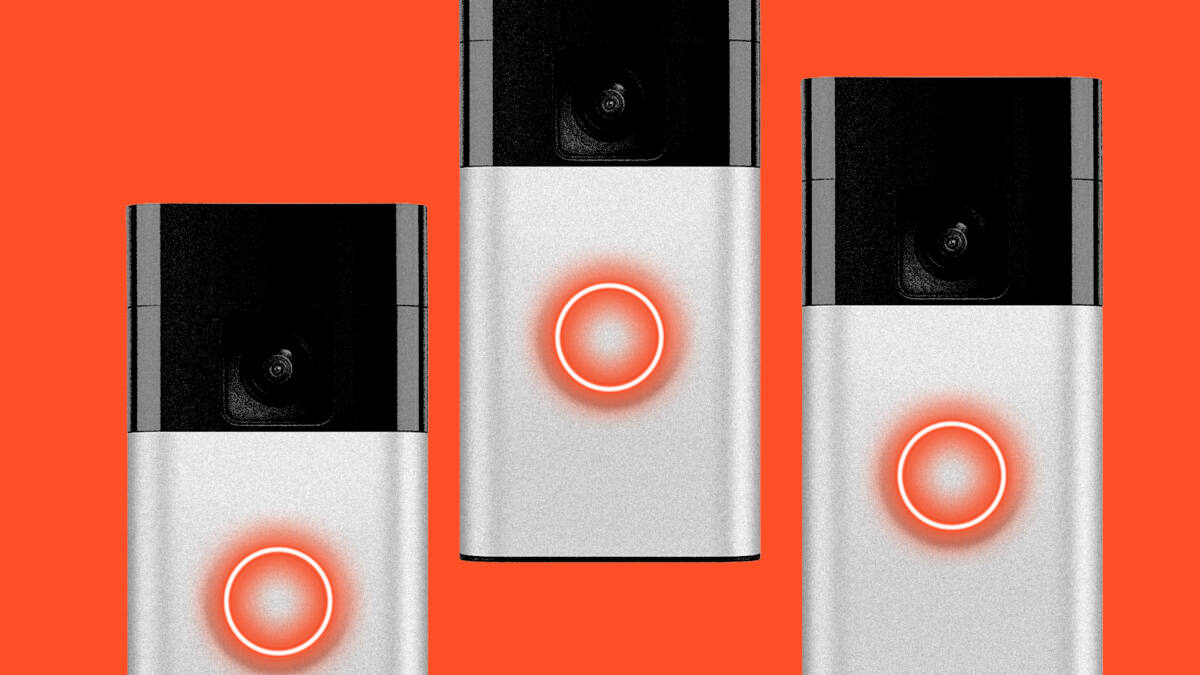
Ring pulled the plug on a planned integration with Flock Safety this week, but don’t let the phrasing fool you: this is not primarily a product pivot. It’s a PR retreat that leaves the same surveillance plumbing intact.
The company’s explanation was short and familiar – the Flock integration would ”require significantly more time and resources than anticipated.” That line reads like corporate damage control. What actually matters is that Ring’s law‑enforcement video request tool, Community Requests, remains active and routed through Axon, a vendor deeply embedded with U.S. federal agencies.
What changed – and what didn’t
Public: Ring has canceled the planned Flock Safety integration. Community Requests – the feature that lets authorized local police request video from Ring users (response is optional) – is still live and continues to route footage into Axon Evidence. Axon has been awarded more than 70 contracts and, according to public records, received more than $96 million between 2003 and 2024 for equipment and software, and the company acquired Fusus in 2024.
In practical terms, canceling Flock only pauses an expansion of Community Requests to the roughly 5,000 local agencies Flock works with. It does not remove a pathway for law enforcement to ask for private footage, nor does it change the fact that Ring devices are already ubiquitous on American porches.
Why the move matters
This isn’t about a single partner. It’s about the architecture of private surveillance networks and how quickly camera data can be folded into policing systems. Ring’s statement plays like an apology without a plan: stop the expansion that got headlines, keep the feature that lets investigators collect footage, and hope the optics improve.
That gamble matters for three reasons. First, scale: millions of Ring doorbells and cameras already record public and semi‑public life. Second, integration: tools like Axon Evidence and platforms built to ingest camera feeds (the Fusus acquisition is a clear example) make it trivial to centralize and analyze those streams. Third, policy gaps: in places where local police share data or authority with federal immigration enforcement under 287(g) arrangements, footage could be used in ways residents never anticipated.
How competitors and privacy advocates respond
Other consumer security vendors have tried different balances. Some – including major smart‑home providers – emphasize strict user consent and require legal process before handing over footage. Others have been cautious about tight integrations with police tech. Still, none have a footprint as large on front porches as Ring does, and few have Axon‑level links to law‑enforcement infrastructure.
Privacy groups have long warned that networks of private cameras, when hooked into evidence management and real‑time fusion platforms, can become de facto surveillance grids. The fear is not hypothetical: experiments and pilots have shown how automated plate readers and stitched camera feeds can be repurposed beyond local crime fighting.
Who wins, who loses
Winners: incumbent vendors and police agencies gain continuity. Axon keeps a steady stream of potential evidence into its systems. Municipal departments that already use Axon or that opt into Community Requests still have access to Ring footage when residents consent.
Losers: community trust and anyone worried about mission creep. Canceling one partnership doesn’t undo the broader mechanics that let private cameras, corporate platforms, and police software connect. For users who wanted a clear firewall between their front‑door cameras and expansive law‑enforcement systems, this is a half‑measure.
What Ring needs to do next
If Ring’s goal is genuinely to rebuild trust, the company has to move beyond vague statements. Practical steps would include: a transparent, public policy that defines which agencies can request footage and under what circumstances; independent audits of how Community Requests data flows into third‑party systems; and user‑level controls that make participation granular, reversible, and clearly explained at the moment a request is made.
Absent those steps, canceling Flock reads like rearranging deck chairs. The same surveillance ecosystem – consumer cameras feeding into sophisticated evidence platforms tied to federal contracts – stays intact.
Outlook
Expect more scrutiny. Ring’s Super Bowl ad backlash and broader public unease mean regulators, local governments, and privacy advocates will keep pressing for limits. Companies building the scaffolding for real‑time camera fusion are only going to draw more attention as those systems are tested in the wild.
Call it what it is: a tactical retreat, not a change of heart. Ring can still choose to close the gaps – or to keep offering features that let third parties stitch private cameras into larger law‑enforcement networks. The difference will be whether the company publishes a clear boundary or keeps hoping consumers forget the optics.