

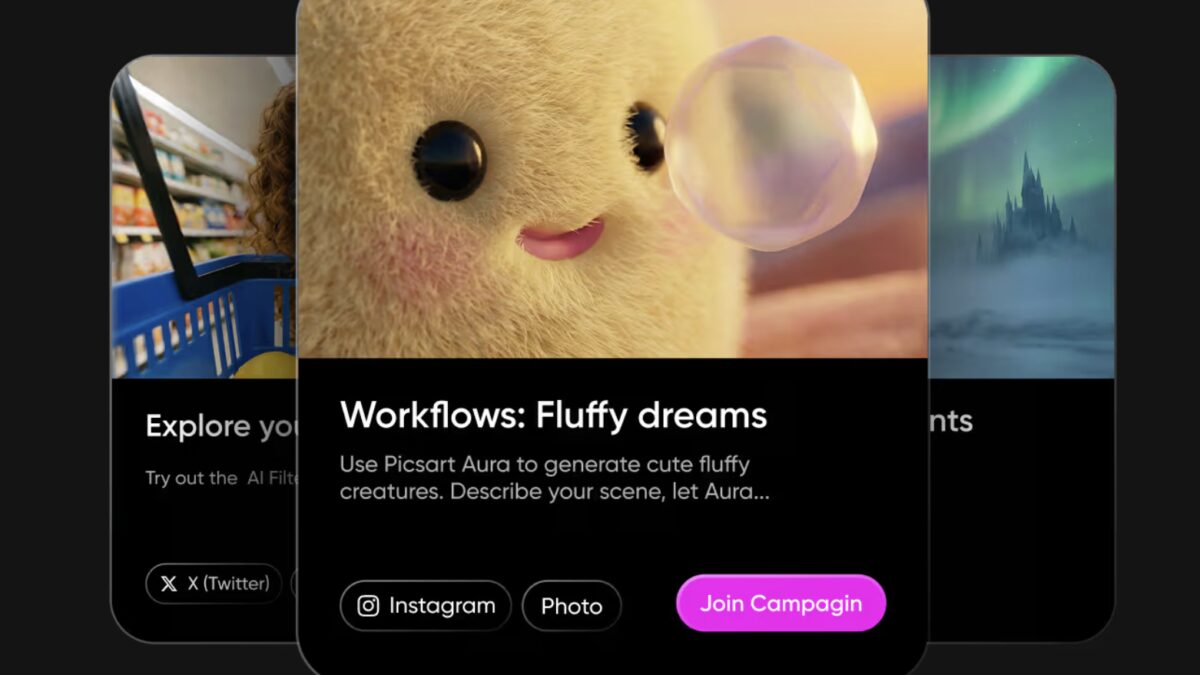
Picsart is trying to turn its editing app into a place where creators can actually get paid, not just churn out pretty posts for free. The AI-powered design platform has launched a creator monetization program that is open to everyone, with no invite list and no minimum audience size, and it pays based on how content performs rather than how many followers someone already has.
That pitch is aimed squarely at the part of the creator economy that platforms love to celebrate and rarely finance: the smaller accounts that still make content worth watching. Picsart is betting that a structured campaign model will bring in more serious users while keeping the company’s own tools at the center of the workflow.
How Picsart’s creator monetization program works
Creators sign up, check a dashboard for available prompts and creative challenges, and make original content using Picsart tools for a specific campaign. They then post that work to their own Instagram, TikTok, YouTube, or X accounts, fill out a short form with the live URL, tag it to match the campaign, and explain how they made it inside Picsart.
Payments are tied to engagement signals: views, comments, shares, and reach. Creators can track earnings on the dashboard and cash out through Stripe. In other words, Picsart is trying to make monetization feel less like a lottery and more like a repeatable job, which is a far more attractive sales pitch for people who are tired of begging an algorithm for scraps.
Why Picsart wants creators to do more than post AI art
Picsart says the program is not meant to reward raw output alone. Simply generating and uploading AI images without extra effort, the company says, will not produce meaningful engagement or meaningful earnings. That matters because the market is already crowded with AI tools that can spit out competent images in seconds; the harder part is persuading people to care enough to share them.
One example campaign could ask users to create cute fluffy creatures with Picsart Aura, the company’s AI conversational assistant that can generate and animate images and videos from text or voice prompts. It is a tidy way to keep the platform inside the loop: the creator brings the audience, Picsart supplies the tool, and the company takes a cut of the attention economy without calling it a cut.
Picsart’s bet on creator economics
Picsart founder and CEO Hovhannes Avoyan framed the launch as a fix for what he called a structural problem in the creator economy: platforms have not truly paid everyday creators. The message is conveniently broad, but the strategy is specific. Picsart, founded in 2011, already has more than 130 million users worldwide, and turning part of that base into a paid contributor network gives the company a stronger reason for people to stay inside its ecosystem.
The move also lands a few weeks after Picsart said it was launching an AI agent marketplace where creators can hire AI assistants for tasks such as resizing and remixing social content or editing product photos on Shopify. That makes the monetization push look less like an isolated feature and more like a deliberate attempt to build a full creator stack: make, manage, distribute, and now earn. The obvious question is whether enough people will treat Picsart as a business platform rather than just a fast way to make visuals.
- Open to all creators, with no invite required
- No minimum audience size
- Payouts based on views, comments, shares, and reach
- Funds withdrawn through Stripe
If the program works, Picsart gets something many design tools still lack: a reason for creators to come back every week instead of only when they need a quick graphic. If it does not, it will join the long list of platforms that discovered that ”open to everyone” is easy to say and much harder to make profitable.