


OpenAI is getting the kind of attention no company wants while it is still chasing bigger ambitions: a Florida investigation into ChatGPT. Florida Attorney General James Uthmeier says the probe will examine whether the company’s technology, data handling, and safety practices have created harm, including possible exposure to foreign adversaries and misuse tied to criminal activity and self-harm concerns.
The timing is awkward, which is putting it mildly. OpenAI has been widely viewed as a possible IPO candidate, with valuations floating in trillion-dollar territory, and regulatory heat tends to make investors reach for the aspirin. A fresh government probe also pushes the conversation away from flashy product launches and back toward a harder question: how much oversight should an AI platform with this reach face before it becomes even more embedded in daily life?
What Florida is investigating
According to Reuters, the inquiry is focused on whether OpenAI’s technology or data could end up in the wrong hands. That includes concerns about foreign access, but also the more immediate messiness of generative AI: harmful outputs, unsafe advice, and the occasional decision to act like a confident intern with no adult supervision.
The subpoena phase suggests this is moving past political chest-thumping and into formal legal pressure. That matters because OpenAI is no longer a research darling in a sandbox; it is a company pushing ChatGPT deeper into work, education, and consumer life while trying to convince the market it can scale safely enough to justify those lofty expectations.
Why the pressure is spreading beyond OpenAI
OpenAI may be the headline name here, but the bigger pattern is familiar: once one regulator starts asking hard questions, everyone else in the AI sector starts checking their own paperwork. That is especially true after a string of high-profile debates about AI safety, content moderation, and data provenance have made it clear that the era of ”move fast and apologize later” does not play well with governments.
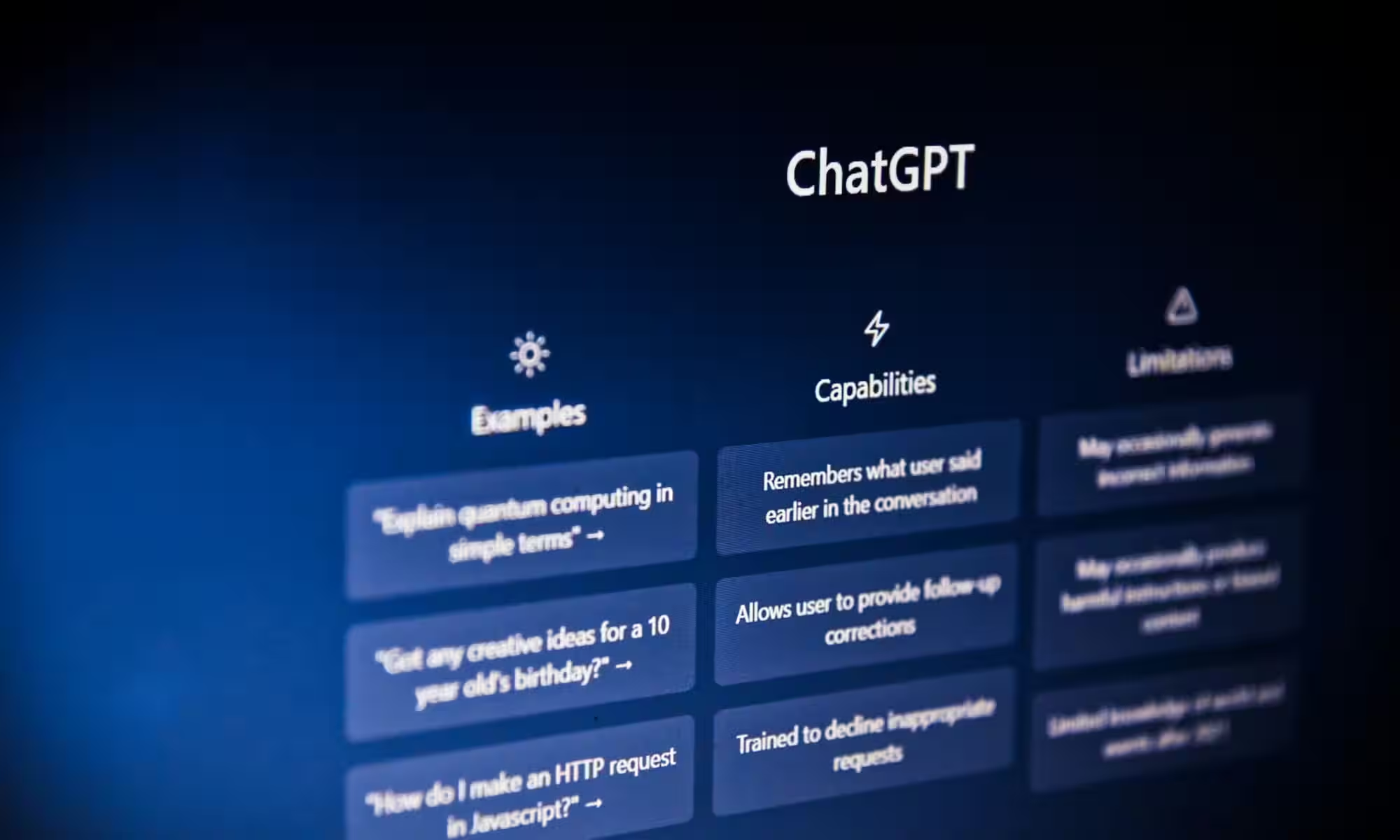
What happens if the probe escalates
If Florida’s investigation widens, OpenAI could face a familiar but unwelcome mix of legal friction, reputational damage, and slower product rollout. The company is still trying to project momentum, but scrutiny over child safety, misuse, and data security tends to hang around longer than any product launch cycle.
The real question is whether this becomes a one-state headache or a template for broader enforcement. If other attorneys general decide ChatGPT deserves the same treatment, OpenAI may find that the next phase of AI growth is less about raw speed and more about proving it can survive adult supervision.