

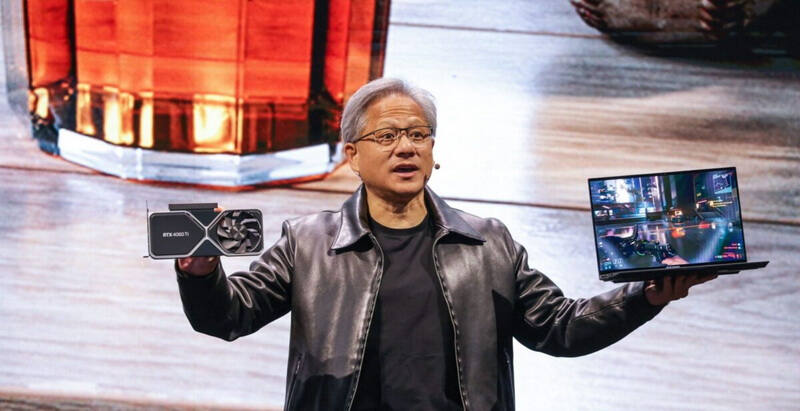
Nvidia CEO Jensen Huang made a striking claim at the Morgan Stanley technology conference, calling the ongoing chip shortages ”simply wonderful” for his company’s position in the AI infrastructure race. Far from lamenting supply chain disruptions affecting the tech industry, Huang sees scarcity as a driver pushing customers toward high-end, performance-focused solutions where Nvidia excels.
The chip shortage isn’t just a gaming hardware headache, Huang emphasized, but a factor shaping the massive AI deployment infrastructure. Constraints in memory chips, silicon wafers, chip packaging, power, and data center capacity mean companies must optimize every investment. Huang confidently states that Nvidia has secured key supply chains-including DRAM, silicon, and packaging components-allowing it to meet enterprise demand that other players find challenging.
”Launch a new DRAM fab, because I’ll use its output,” Huang declared, highlighting Nvidia’s financial muscle to reserve scarce manufacturing capacity. This stance was in sharp contrast to other industry voices warning that supply limitations could throttle gaming hardware markets. While gamers facing empty shelves may find Huang’s optimism tone-deaf, the biggest winners appear to be cloud providers and AI companies willing to pay premiums for guaranteed performance.
AI demand reshapes chip priorities and market power
Huang’s enthusiasm for scarcity reveals a wider tension in the tech supply chain. As AI infrastructure grows, it gobbles up critical materials and manufacturing slots, often at the expense of consumer segments like gaming PCs. Smaller chipmakers and GPU partners struggle to secure components, squeezed out by Nvidia’s ability to lock in supply. This dynamic amplifies Nvidia’s already dominant market position and raises concerns about ecosystem concentration.
This situation echoes past industry inflection points where scarce resources accelerated consolidation. For example, during previous chip supply crunches, companies with the deepest pockets and strongest relationships consistently outpaced rivals. Huang’s comment about ”no choice but to pick the best” succinctly captures a forced shift toward premium solutions driven both by scarcity and the demands of AI workloads.
However, this strategy risks alienating consumers who rely on a more balanced supply and competitive pricing, such as gamers. Nvidia’s open embrace of supply constraints as an advantage might pressure competitors to pivot more heavily toward AI clients or face shrinking market shares. It also poses questions about the sustainability of such supply chain tightness as AI demand balloons globally.
Looking forward, the chip shortage’s impact will be a litmus test for how well Nvidia can maintain its privileged supply chain while global semiconductor capacity attempts to catch up. The race to build the next generation of AI ”factories” isn’t just about technology-it’s also a high-stakes battle for resources, and Nvidia appears ready to capitalize on every scarcity-induced opportunity.