

Nvidia CEO Jensen Huang pushed back hard against the backlash over DLSS 5, calling gamers’ complaints a complete misunderstanding of the technology.
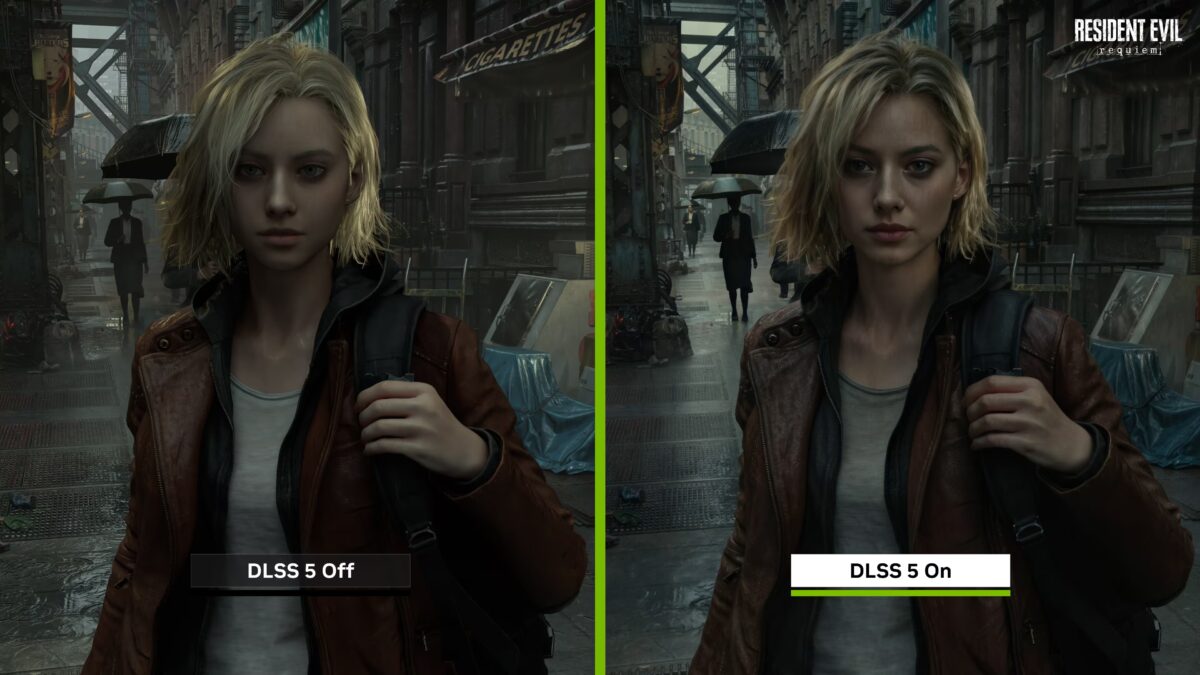
The new generation of Nvidia’s AI-powered upscaling technology, unveiled at GTC 2026, sparked concerns among players that it overly smooths graphics and alters the artistic style of games. Titles like Resident Evil Requiem, Starfield, and Hogwarts Legacy drew particular criticism for character faces that now appear unnatural, slipping into the so-called ”uncanny valley.”
Gamers singled out characters such as Leon Kennedy and Grace Ashcroft from Resident Evil Requiem, likening their updated looks to overdone ”beauty filters” or excessive AI manipulation.
Jensen Huang dismissed this view outright. In an interview, he said, ”First of all, they’re completely wrong.” Unlike previous DLSS versions that worked at the final image stage, DLSS 5 integrates generative AI directly into geometry and texture processing.
This ”neural rendering” approach gives developers fine-grained control over lighting, details, and visual style rather than imposing a one-size-fits-all filter across the frame. Huang emphasized that DLSS 5 is a ”controlled generative AI” tool, not an automatic smoothing overlay.
DLSS, Nvidia’s AI-driven frame upscaling technology, debuted in 2019 and has helped gamers achieve higher resolutions and better frame rates without taxing hardware. DLSS 5 marks a significant leap by applying AI during earlier rendering stages, unlike Apple’s and Google’s approaches that primarily rely on post-processing and image sharpening.
Despite Huang’s reassurances, some players worry that allowing AI to influence core visual elements risks diluting a game’s unique artistic identity. This skepticism is fueled by the fact that several major titles are already planning to implement DLSS 5.
Nvidia calls DLSS 5 the biggest graphics breakthrough since ray tracing, promising more realistic visuals with minimal performance cost. The technology is slated for release in fall 2026, but its true impact will become clear once it’s widely adopted.
As generative AI becomes a bigger part of game rendering, the tension between creative control and AI efficiency will intensify. The next few years will show if DLSS 5 can win over skeptics or if players will push back against AI-driven changes to their favorite worlds.