

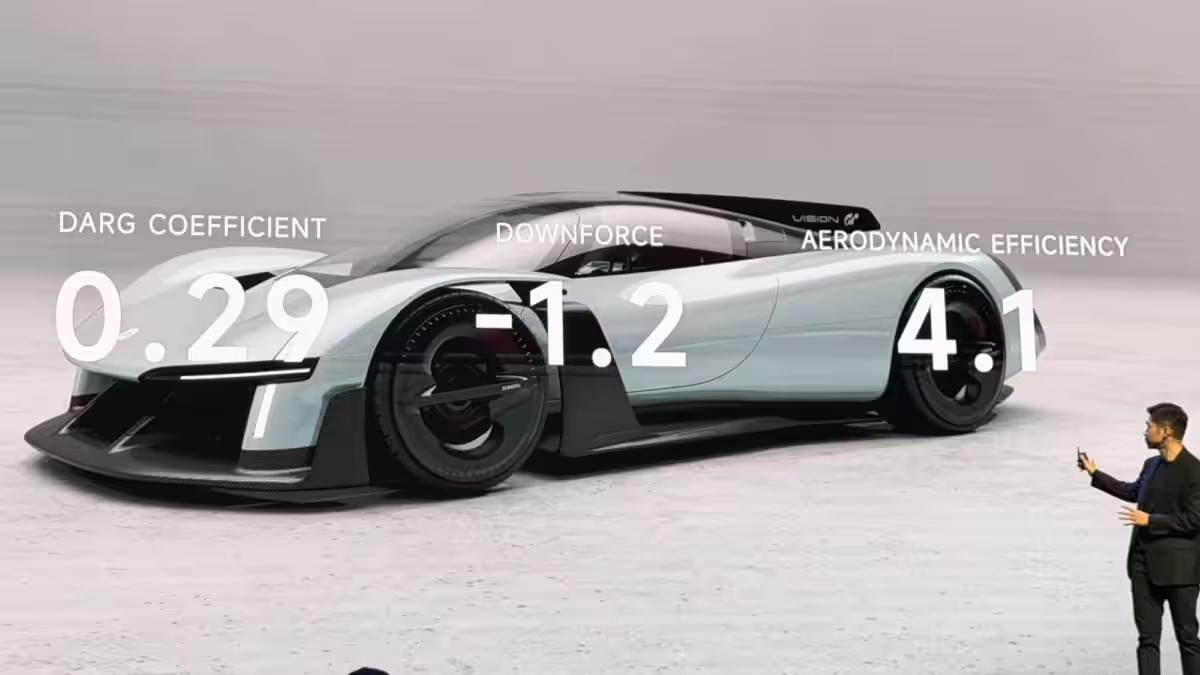
Xiaomi is best known for smartphones and smart home gadgets, but at Mobile World Congress 2026 in Barcelona, it boldly stepped into uncharted territory: an ultra-streamlined hypercar designed to tame airflow in ways few vehicles do. The Vision Gran Turismo concept reveals the Chinese tech giant’s ambitions to blend automotive engineering with futuristic design, raising eyebrows beyond its usual product lineup.
What stands out most is the car’s radical approach to airflow management. Built ”sculpted by the wind,” the body channels air through intricately designed tunnels and vents that promise enhanced performance and efficiency-an approach that seems inspired by race cars but taken to an extreme. The cockpit itself appears alien compared to traditional cars, challenging conventions about what driver interaction should look like.
This isn’t Xiaomi’s first flirtation with automotive innovation; the company unveiled its first electric vehicle last year. But this hypercar shows a leap in design boldness, with a focus on aerodynamics that hints at ambitions beyond everyday EVs. It’s a reminder that tech companies increasingly eye automotives not merely as a market for more electronics, but as a new canvas for innovation and brand identity.
Yet, Xiaomi enters a fiercely challenging arena. Established automakers like Tesla, Rimac, and Porsche have poured billions into harnessing airflow and electric performance, refining lessons learned over decades. Xiaomi’s Vision Gran Turismo will have to prove not just its eye-catching form, but also its real-world function. Will the car transition from science-fiction spectacle to road-ready reality? That remains to be seen when the physical model hits the MWC show floor.
Such tech-to-auto crossovers are a growing trend. Apple and Sony have toyed with automotive projects for years, mostly under wraps. Chinese brands like BYD and Nio are aggressively reshaping electric vehicle expectations with deep tech integration. Xiaomi’s move signals how hardware makers want in on the excitement-and stakes-of vehicle innovation, despite steep engineering hurdles and regulatory challenges.
In short, Xiaomi’s Vision Gran Turismo isn’t just a wild design; it’s a statement that the future of cars is being drafted by diverse players, not just legacy manufacturers. It’s too early to call this hypercar practical, but as the lines between gadgets and cars blur, expect more tech giants to tinker with steering wheels and drag coefficients as aggressively as they tweak phone cameras.